
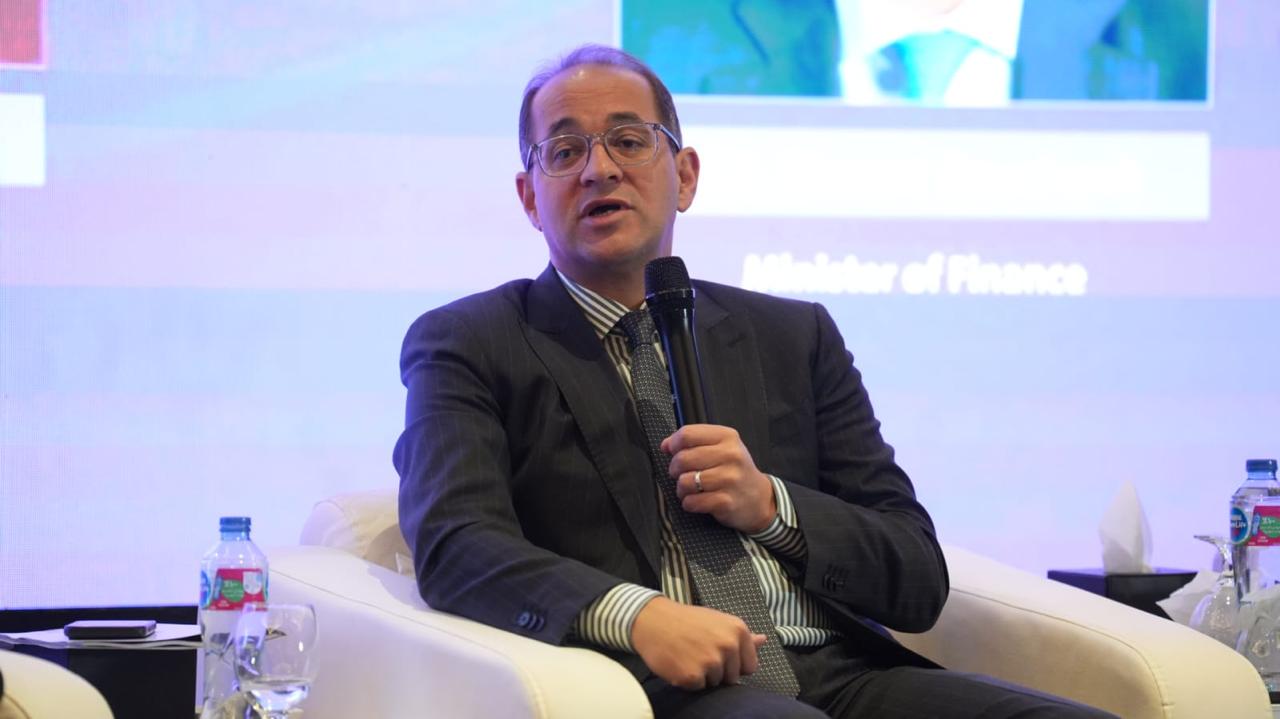
Speaking at the 9th Capital Markets Summit, Kouchouk revealed that yields on Egyptian international bonds have dropped by approximately 4 percent. He noted that the cost of Credit Default Swaps (CDS)—the insurance against sovereign default—is retreating rapidly, approaching levels seen in countries with higher credit ratings.
"The Egyptian market has become more attractive for
investment, with the private sector injecting more capital into economic
sectors," Kouchouk said. He highlighted the growing presence of firms
within the Suez Canal Economic Zone (SCZONE) and various industrial hubs as a
key driver for diversifying national exports.
The Minister addressed public concerns regarding national
debt, affirming a commitment to a rigorous deleveraging strategy. The
government is committed to reducing the external debt of budget entities by $1
billion to $2 billion annually. Authorities aim to diversify financing tools
and extend debt maturities to secure funding at the lowest possible cost. Plans
are underway to issue retail bonds for individual investors in the coming
period.
To bolster the Egyptian Exchange (EGX), Kouchouk announced
new incentives designed to encourage major corporations to list and invest.
These measures are paired with a simplified tax facility package aimed at
broadening the tax base while reducing administrative burdens on businesses.
The Minister linked the recent increase in demand for
Egyptian securities to a broader cooling of inflation and interest rates,
adding that the government is pushing for greater financial inclusion with
reduced risk profiles.
"The positive interaction from international bond investors is a testament to the improvement in Egypt's financial indicators and risk perception," Kouchouk concluded.