
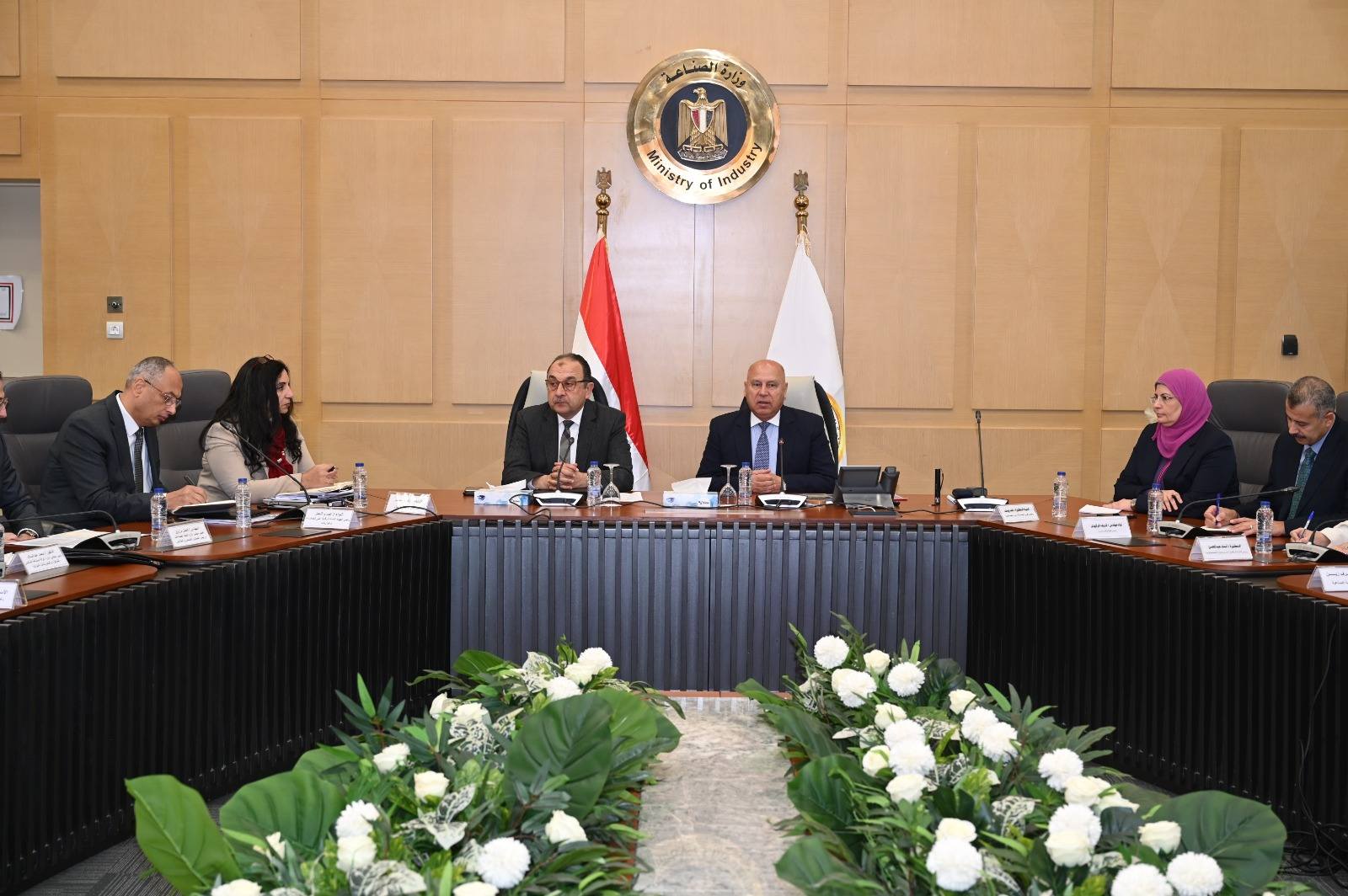
The summit, which included representatives from the Chamber of Ready-Made Garments, the Chamber of Textile Industries, and the Ready-Made Garments Export Council, focused on deepening local manufacturing and reducing the national import bill for textiles.
Al-Wazir announced that this session marks the beginning of
a recurring series of meetings aimed at revitalizing the
"Seed-to-Shelf" industry. The strategy focuses on integrating all
industrial stages including ginning, spinning, processing, dyeing, and weaving,
everaging raw materials by maximizing the use of Egyptian cotton and flax, and
closing the supply gap through providing various yarns (cotton, linen,
polyester, and wool) locally to meet the needs of garment and home textile
manufacturers.
The Minister urged local manufacturers to negotiate with
global brands currently producing in Egypt to allocate a portion of their
high-quality export production for the domestic market.
The meeting candidly reviewed obstacles hindering the
sector's growth, including:
High Capital Intensity: The massive investment required for
spinning and weaving mills compared to the quicker returns of garment
manufacturing.
Supply Constraints: Limited source countries for cotton yarn
imports and insufficient domestic production.
Human Capital: A shortage of specialized technical expertise
in modern spinning technologies.
Unfair Competition: The impact of imported textiles that may
bypass strict quality and price controls.
To protect national industry, Minister Al-Wazir highlighted
the role of a newly formed committee involving the Federation of Egyptian
Industries to tackle customs evasion.
"We will intensify inspections to ensure that raw
material imports align with actual production capacities. Oversight will be
strictly tightened on factories operating in Free Zones and those using the Temporary
Admission system to prevent market distortions," the Minister stated.
A key pillar of the new strategy is a collaborative model
where the government provides land, buildings, and machinery, while the private
sector contributes management expertise and technical "know-how."
Furthermore, the Industrial Development Authority (IDA) will
now encourage new garment factory investors to integrate spinning and weaving
operations into their licensing plans to ensure a self-sufficient ecosystem.
Engineer Mohamed Shimi, Minister of Public Business Sector, emphasized the need for a robust governance system for cotton trading to stabilize the supply chain. He announced that the Ministry’s seven specialized textile subsidiaries are fully open for partnership with the private sector. "We are ready to translate these partnerships into tangible projects that maximize value addition and bolster Egypt's position as a global textile hub," Shimi added.