
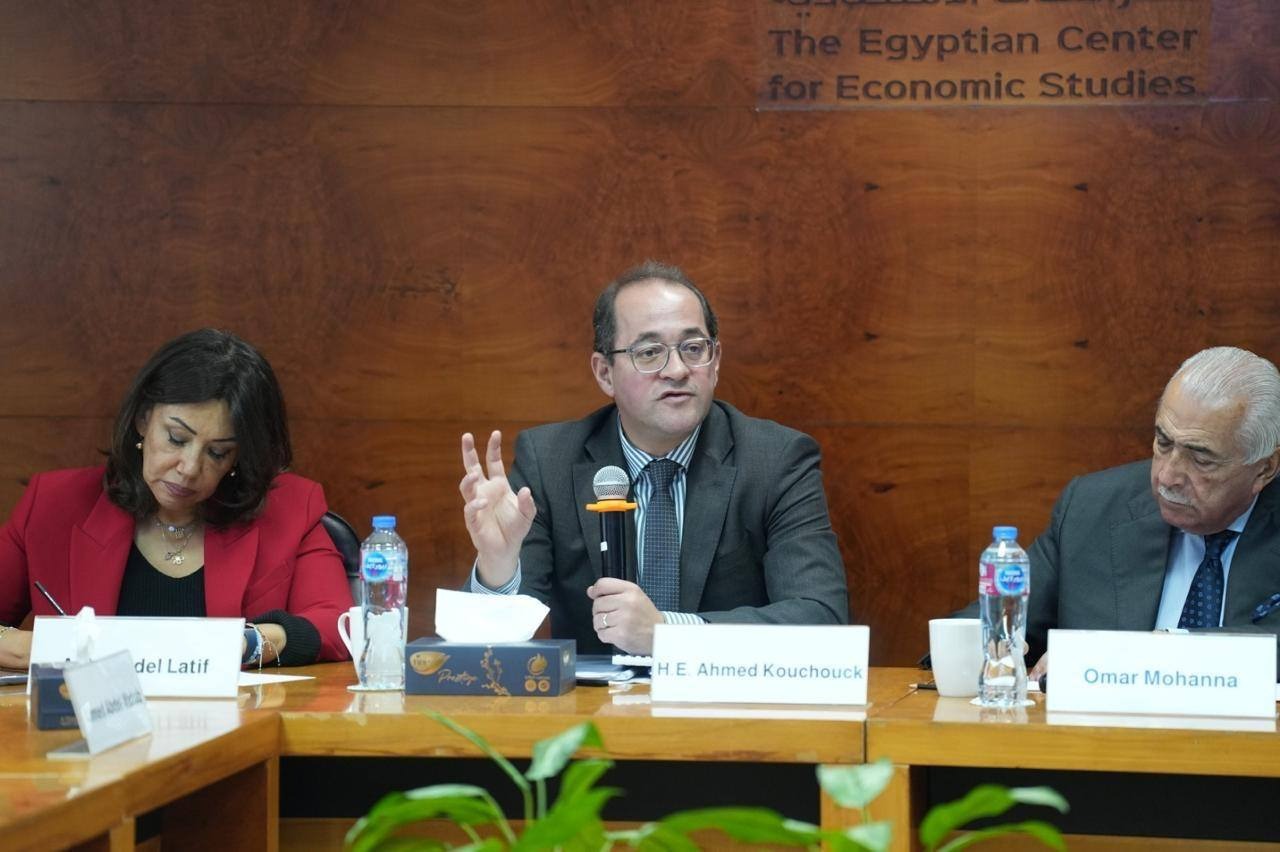
Speaking at a panel organized by the Egyptian Center for Economic Studies (ECES), Kouchouk emphasized that Egypt’s economic vision is built on openness, simplification, and creating new horizons for competition and exports.
The new measures focus on building trust with the business
community through tangible improvements in tax, customs, and real estate
services. Key highlights include:
Stock Market Incentives: Replacing capital gains tax on
trading with a stamp duty and introducing incentives for companies to list on
the Egyptian Exchange (EGX).
VAT Adjustments: Speeding up Value Added Tax (VAT) refunds
and reducing VAT on medical devices from 14% to 5%.
Real Estate Tax: Implementing a simplified flat tax of 2.5%
on unit sales regardless of the number of transactions and raising the
exemption threshold for primary residences to 4 million EGP.
Small Businesses: Offering concessional financing for the
first 100,000 taxpayers joining a simplified tax system.
"Our goal is to support the growth of taxpayers,"
Kouchouk said, adding that tax audits will be conducted on a sample basis this
year, and fines will be capped at the original tax amount.
The Minister revealed a collaborative effort with the
Ministry of Investment to reduce customs clearance times. Planned improvements
include incentives for the transit trade, a comprehensive risk management
system, and unified customs procedures across all ports.
Deputy Finance Minister Sherif El-Kilany noted that the
Advance Cargo Information (ACI) system has been instrumental in allowing the
ministry to move toward these faster clearance goals.
In a first for the Egyptian government, the ECES has been
commissioned to conduct an independent evaluation of the first phase of tax
reforms.
Dr. Abla Abdel Latif, Executive Director of the ECES, stated
that this independent assessment aims to ensure transparency and measure the
actual impact of policies on the business environment.
Kouchouk concluded by stating that the government is determined to clear the "black cloud" of debt burdens through decisive measures to reduce the expenses of the state budget.