
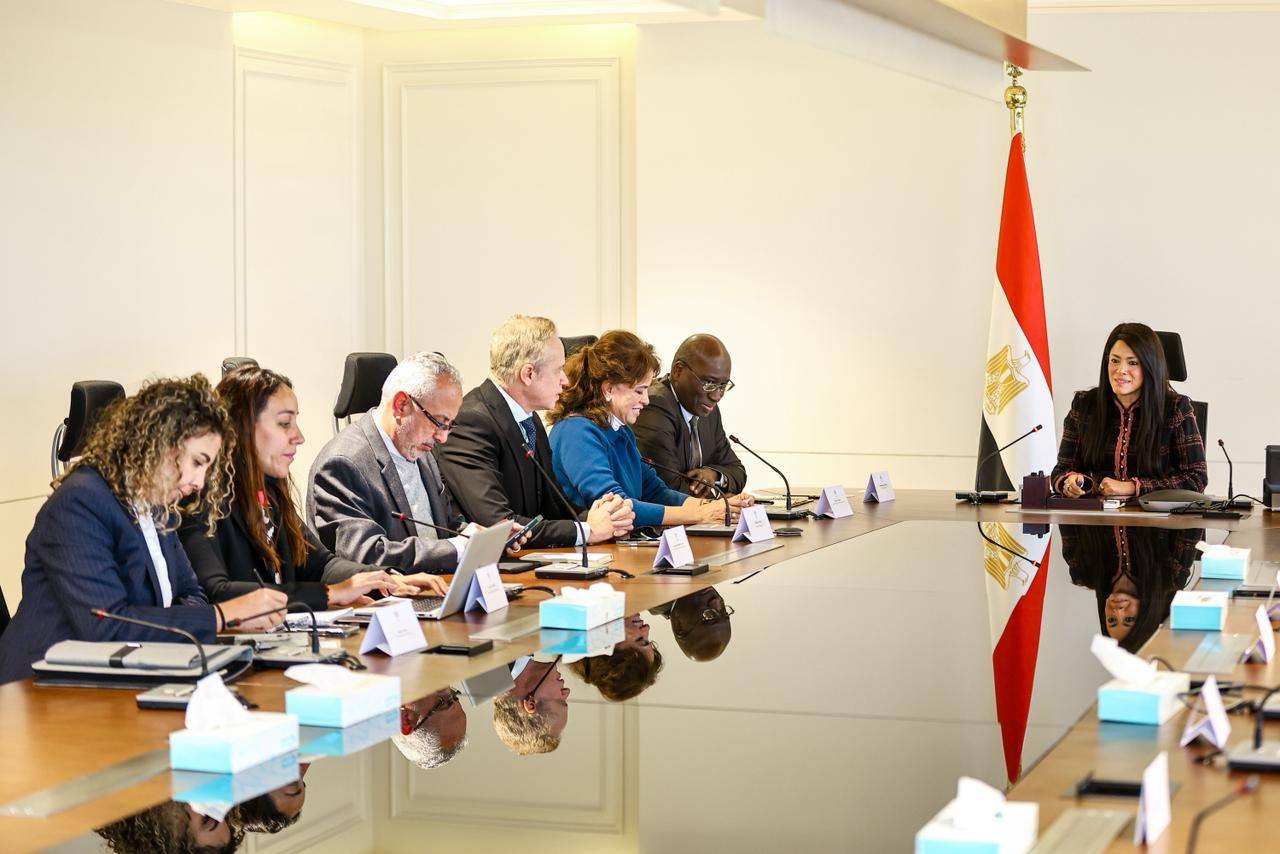
The meeting, held under the umbrella of Egypt’s "NWFE" program (Nexus on Water, Food and Energy), focused on mobilizing concessional financing and technical support to combat climate change and ensure sustainable water management.
The high-level session included representatives from a wide
array of global development partners The African Development Bank (AfDB), The
French Development Agency (AFD) and its private sector arm, Proparco, The
International Finance Corporation (IFC), The European Bank for Reconstruction
and Development (EBRD), The Japan International Cooperation Agency (JICA) and
the Japan Bank for International Cooperation (JBIC), and Germany's KfW
Development Bank
Hussein Amin, CEO of Saudi-based energy giant Egypt’s 2030 also
participated to discuss the company's plans for expanding its desalination
footprint in Egypt through public-private partnerships (PPP).
Minister Al-Mashat emphasized that water security is a
cornerstone of Egypt's national vision. She highlighted successful precedents,
such as the Bahr al-Baqar and Al-Mahsama plants, among the world’s largest
wastewater treatment facilities, which have reclaimed vast tracts of
agricultural land in the Sinai Peninsula.
"The government is providing full support to the
private sector to increase investments in vital sectors like water,"
Mashat said. "We are leveraging partnerships with international
institutions to provide the technical expertise and soft loans necessary for
these large-scale projects."
The talks build on a 2023 agreement between the IFC, EBRD,
and the Sovereign Fund of Egypt to develop four seawater desalination plants.
These facilities are expected to initially provide 335,000 cubic meters of
clean water daily, eventually scaling up to 650,000 cubic meters to serve the
Matrouh governorate and the North Coast.
The initiative aligns with Egypt’s 2030 Sustainable Development Goals, aiming to diversify water sources as the country faces increasing water scarcity and regional climate challenges.