
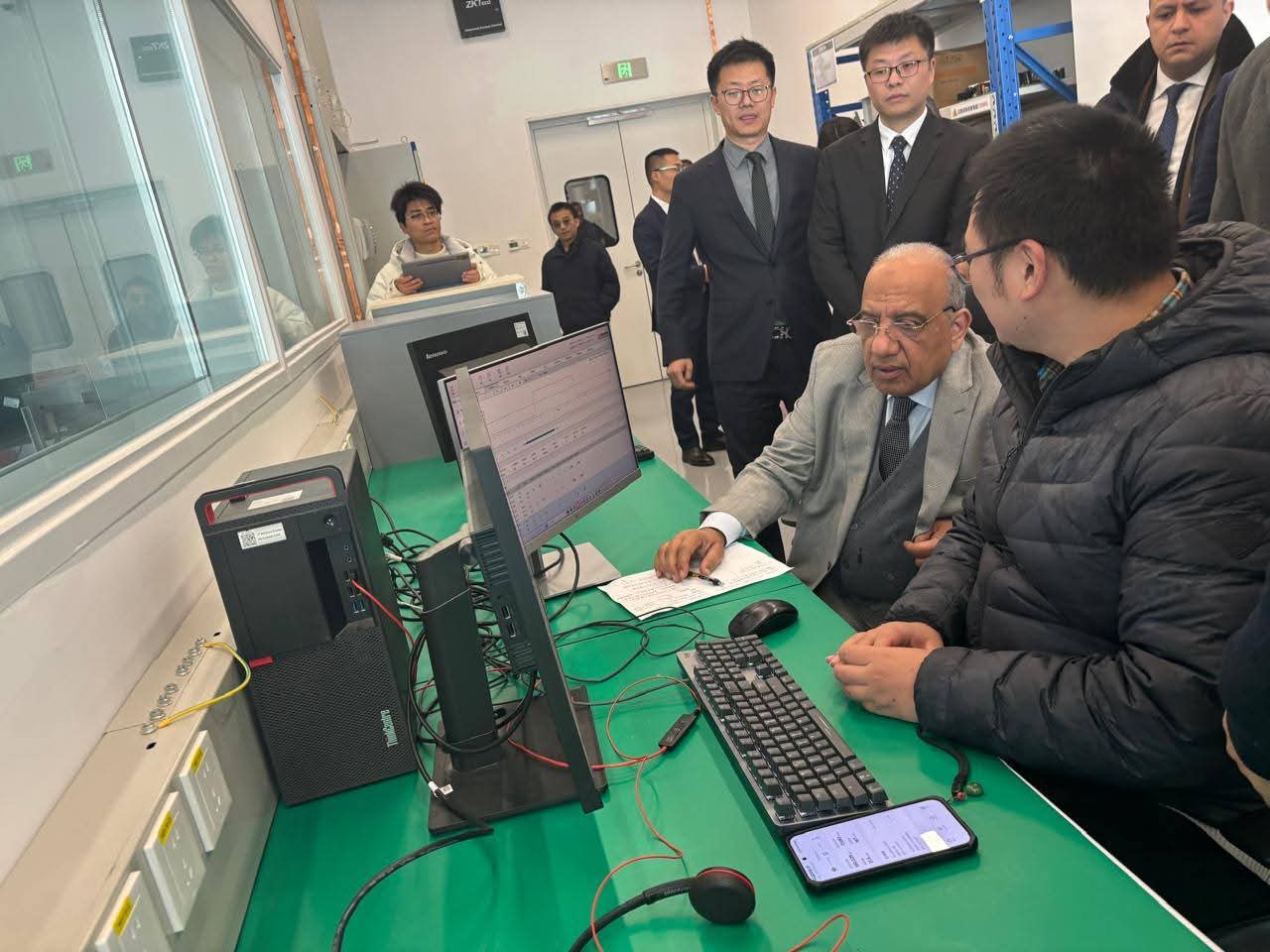
The meetings, held during Dr. Esmat’s current visit to China, are part of Cairo’s strategy to integrate modern technology and stabilize the national unified power grid as the country shifts toward renewable energy.
Accompanied by Huawei’s Northern Africa CEO Li Xin and
Huawei Egypt CEO Benjamin Hou, Esmat toured the company's research and
development centers and energy storage battery testing laboratories.
The visit focused on artificial intelligence (AI)
applications for grid management, aimed at reducing energy waste and cutting
technical and commercial losses.
"Huawei is a reliable partner," Esmat said, noting
existing collaboration in information linking for control centers. He added
that Egypt's current energy plan requires expanding storage systems to
accommodate increasing capacities of solar and wind power.
Discussions covered several key areas, including Battery
Energy Storage Systems to stabilize the grid during peak loads, smart grids as
transitioning to digital management improves service quality and reduce fuel
consumption, and AI integration i.e. utilizing smart solutions for monitoring
and efficiency.
The Minister highlighted that Egypt has overhauled its
infrastructure and legislative framework to encourage private sector investment
in the renewable energy sector.
Egypt aims to diversify its energy mix and increase the share of renewables, aligning with its national energy strategy to ensure the sustainability and stability of the country's electricity supply.