
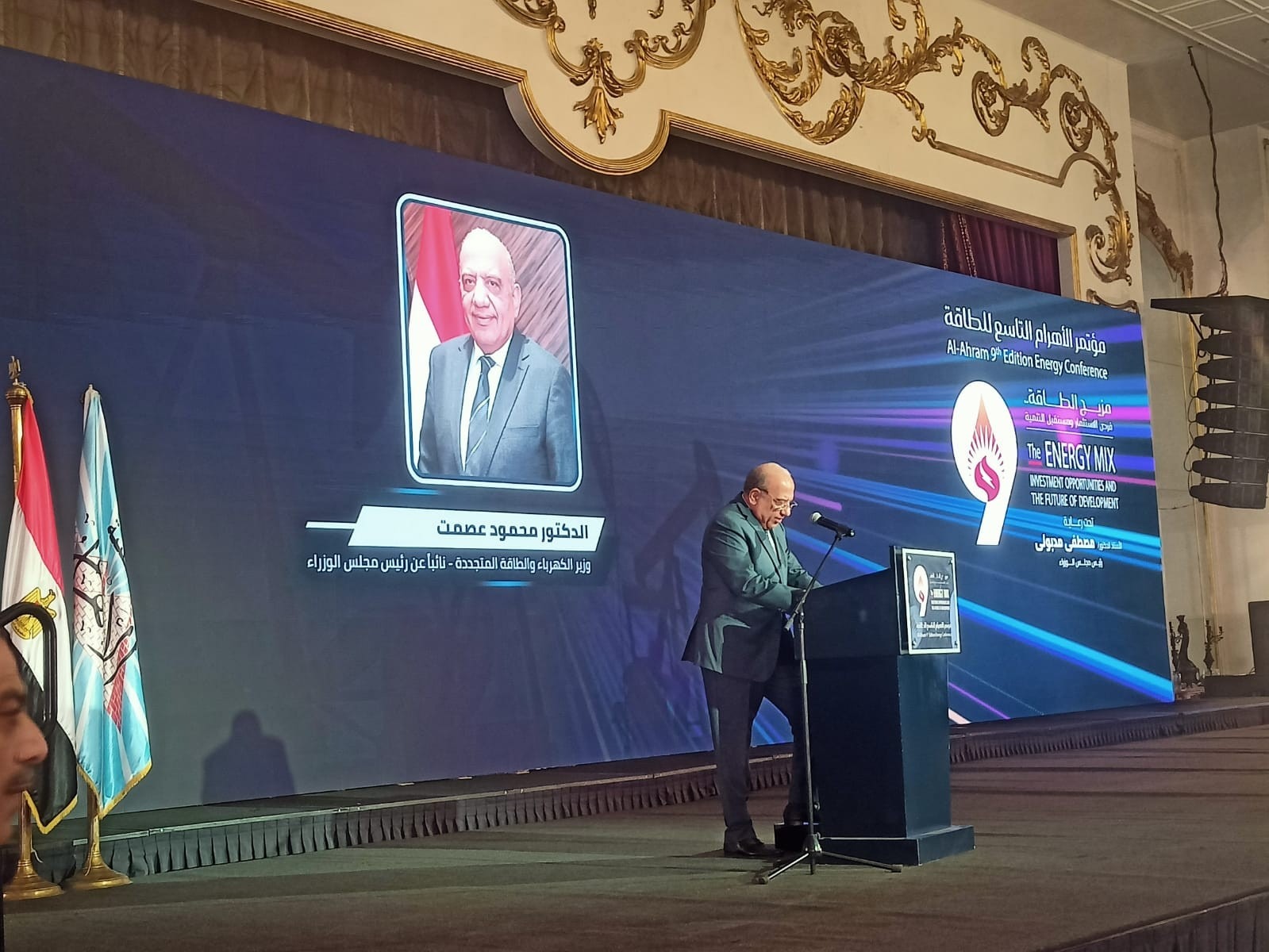
The minister highlighted the addition of approximately 32
gigawatts of generation capacity and the construction of 25 transformer
stations with a total capacity of 42,370 megavolt-amperes. In the transmission
network, 5,610 kilometers of lines have been laid, alongside 194,000 kilometers
in the distribution network. This has transformed what could be described as a
“critical shortage period” of 6,000 megawatts into a reserve and surplus of
nearly 20,000 megawatts of generation capacity, with a total expenditure of around
EGP 2 trillion.
Dr. Esmat delivered these remarks on behalf of Prime
Minister Dr. Moustafa Madbouly during
the opening session of the “Energy Mix: Investment Opportunities and the Future
of Development” conference, organized by Al-Ahram Foundation. The session was
attended by Engineer Mohamed Salah El-Din Moustafa , Minister of State for
Military Production; Engineer Mohamed Shimi, Minister of Public Business
Sector; Engineer Karim Badawi, Minister of Petroleum and Mineral Resources; Dr.
Ibrahim Saber, Governor of Cairo; Engineer Adel El-Naggar, Governor of Giza;
and Engineer Ibrahim Attia, Governor of Qalyubia.
He also emphasized the ongoing implementation of plans to
develop, modernize, and strengthen the unified electricity grid, improve
company performance, optimize operations, reduce fuel consumption, and shift
operational patterns toward renewable energy sources. Dr. Esmat noted that
battery storage systems were introduced for the first time in the history of
Egypt’s electricity grid, alongside pumped water storage projects. Modern
technologies are being applied to reduce technical and commercial losses,
inventory and utilize assets efficiently, and localize the production of
electrical equipment. He also pointed to the completion of the first phase of
the electricity interconnection project with Saudi Arabia, ongoing
interconnection projects with Europe, and the implementation of training
programs to develop skills and capacities for employees. The minister stressed
strengthening and activating the roles of the Nuclear Materials Authority, the
Atomic Energy Authority, the New and Renewable Energy Authority, the Nuclear
Power Plants Authority, and the Dabaa Nuclear Power Plant Authority, including
the establishment of a supervisory body for nuclear power projects.
Dr. Esmat added that each state sector over the past decade
has its own success story in reconstruction and development, most of which has
not yet been publicly disclosed. Only limited details of infrastructure,
economic, and service sectors have been shared. Among these, the electricity
sector has undergone a full reconstruction in generation, transmission, and
distribution. He emphasized that President Abdel Fattah El-Sisi had given a
clear and explicit mandate to spare no effort to “meet citizens’ expectations.”
This directive led to the improvement of electricity services to align with the
scale of investment made over the past years. Measures included communicating
with subscribers, listening to their feedback and suggestions, addressing
issues related to coded meters, and easing penalties for first-time electricity
theft offenders.
The minister also highlighted the unification of subscriber
service models across all affiliated companies, the permanent cessation of load
shedding without restoration, confronting, analyzing, and addressing the causes
of power outages, applying quality standards in all citizen-related services,
opening direct communication channels, and conducting field visits to all
operational sites to monitor reality and track implementation progress.