
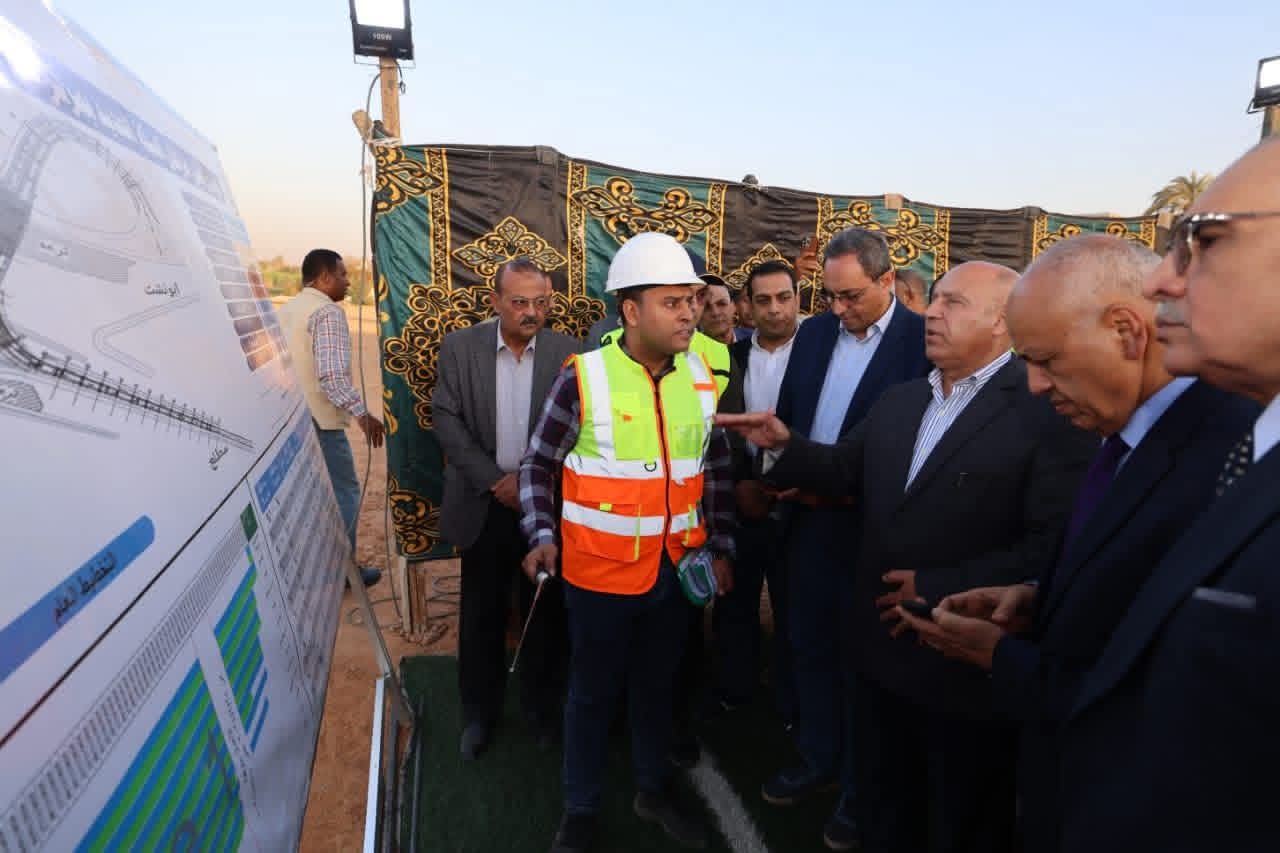
Al-Wazir, accompanied by the Governors of Luxor, Qena, Sohag, and Minya, and heads of transport authorities, monitored construction rates for the second line of the Electric Express Train (EET) network (October / Aswan / Abu Simbel), which spans 1,100 km.
The inspection covered the 200 km section between Luxor and
Sohag, reviewing progress on numerous stations designed to serve local residents,
tourists, and industrial zones, including Luxor, Qena, Nag Hammadi, and Sohag.
The Minister stressed the need to adhere to high-quality
standards and an accelerated timetable, noting the project is a massive
qualitative leap toward sustainable, green mass transit in Egypt. He
highlighted that station locations were chosen near residential areas, Nile
crossings, and major roads to ensure easy access from surrounding cities and
villages.
Engineer Al-Wazir directed the establishment of a freight
loading station at the Qous EET station to serve the Qena industrial area and
operate around the clock.
In addition to the rail line's embankment and civil works, which are being carried out by national Egyptian companies, the Minister inspected the New Qena Industrial Complex. The complex, covering 150,000 square meters, houses two concrete sleeper factories—part of the Transport Ministry's Road and Bridges Holding Company—that are considered one of the largest production bases for sleepers in the Middle East.