
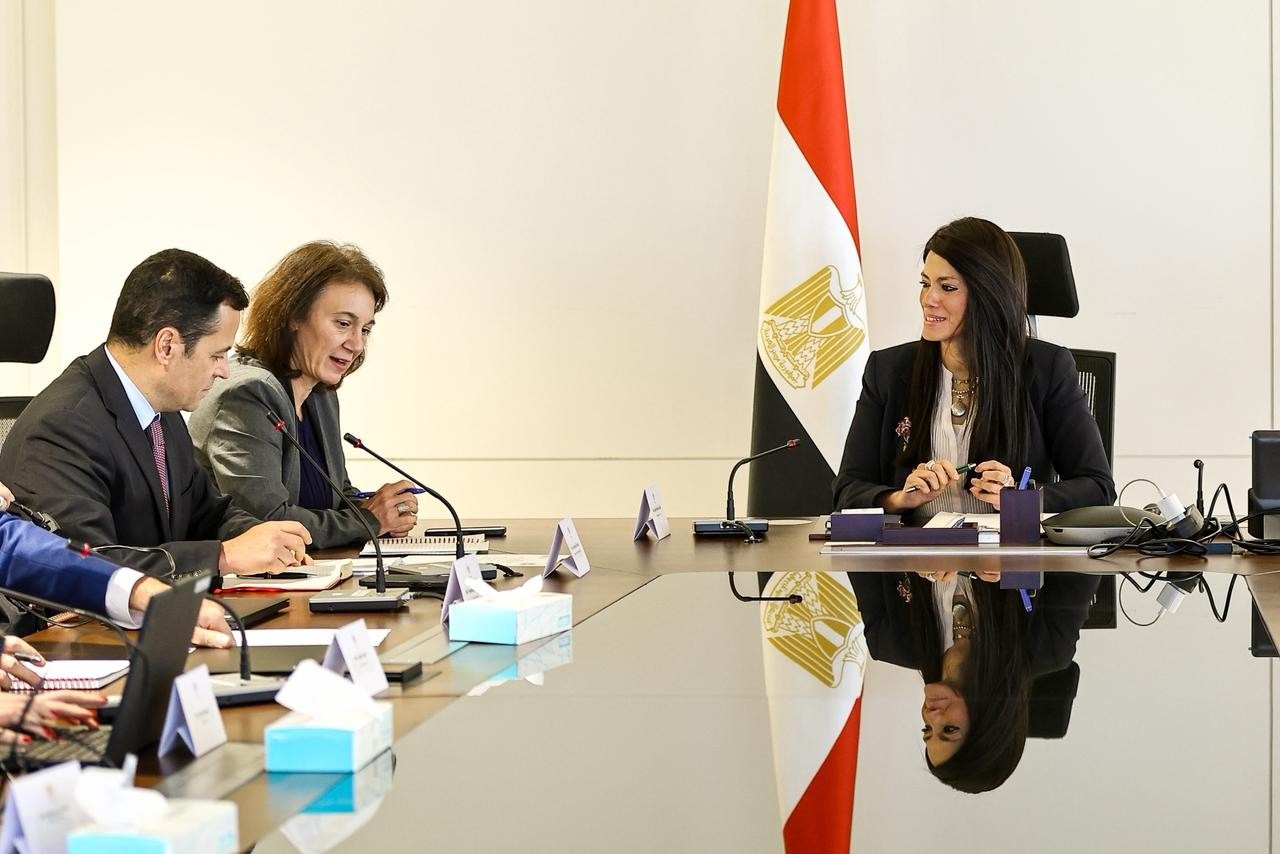
The meeting included a presentation on the latest
developments in economic and structural reforms, the growth model under the
“National Narrative for Economic Development,” the growth of Gross Domestic
Product (GDP) in the first quarter of the current year, efforts to empower the
private sector, and initiatives to enhance the governance of public
investments.
Several senior ministry officials also attended the meeting.
During the session, Dr. Al-Mashat reviewed the GDP growth
figures for the first quarter of the current fiscal year, which reached 5.3%,
exceeding expectations. She highlighted that the most notable features of this
growth include continued improvement in industrial production and higher growth
rates in several sectors, such as automotive, textiles, and ready-made
garments. This reflects Egypt’s shift toward highly productive and tradable
sectors.
The Minister noted that, for the first time, the Ministry’s
Quarterly GDP Bulletin includes structural reforms implemented during the
period, which contributed to positive economic developments. This reinforces
principles of transparency and good governance in presenting economic reform indicators.
Al-Mashat added that, with the ongoing pace of economic and
structural reforms, Egypt’s economy is expected to achieve growth of at least
5% by the end of the current fiscal year. She also presented the Public
Investment Governance Report for the previous fiscal year, which serves as a
key pillar for maintaining macroeconomic stability and enhancing the efficiency
of resource allocation. She emphasized that adherence to the investment ceiling
of one trillion Egyptian pounds last year opened the door for increased private
sector investment.
The Minister highlighted that the government launched the
“National Narrative for Economic Development,” a comprehensive framework
integrating Egypt Vision 2030 with the government program. The framework translates
sectoral strategies and policies into clear indicators and targets, and
promotes a shift in Egypt’s growth model toward greater production and
export-oriented growth.
She further explained that the state applies a
programs-and-performance methodology to strengthen monitoring, performance
evaluation, and periodic review of national, sectoral, and regional policies
and objectives through the Performance System. This ensures that all units
provide necessary data and information to monitor and evaluate programs,
projects, and activities, improving the effectiveness of development plans,
achieving targets, and ensuring efficient public spending by linking allocated
funds to the desired results.
In a related context, Dr. Al-Mashat discussed the government’s
efforts to implement the State Ownership Policy Document to empower the private
sector and the establishment of the State-Owned Companies Unit, which maximizes
the benefits of state-owned enterprises. The unit has clear authority to
implement the most appropriate scenarios for these companies.
The Ministry also presented reforms aimed at enhancing
resilience and flexibility, including the addition of two new projects under
the New and Renewable Energy (NWFE) program. The progress of climate-responsive
public investment management reforms was also reviewed, particularly regarding
the integration of environmental considerations into project evaluation and
selection criteria, assessing climate-related risks to investment assets,
developing mitigation measures, and increasing the number of green projects
listed on the NWFE platform.
Dr. Al-Mashat affirmed that the government continues to
implement reforms to boost growth, enhance economic resilience, achieve
sustainable development, and create employment opportunities.