
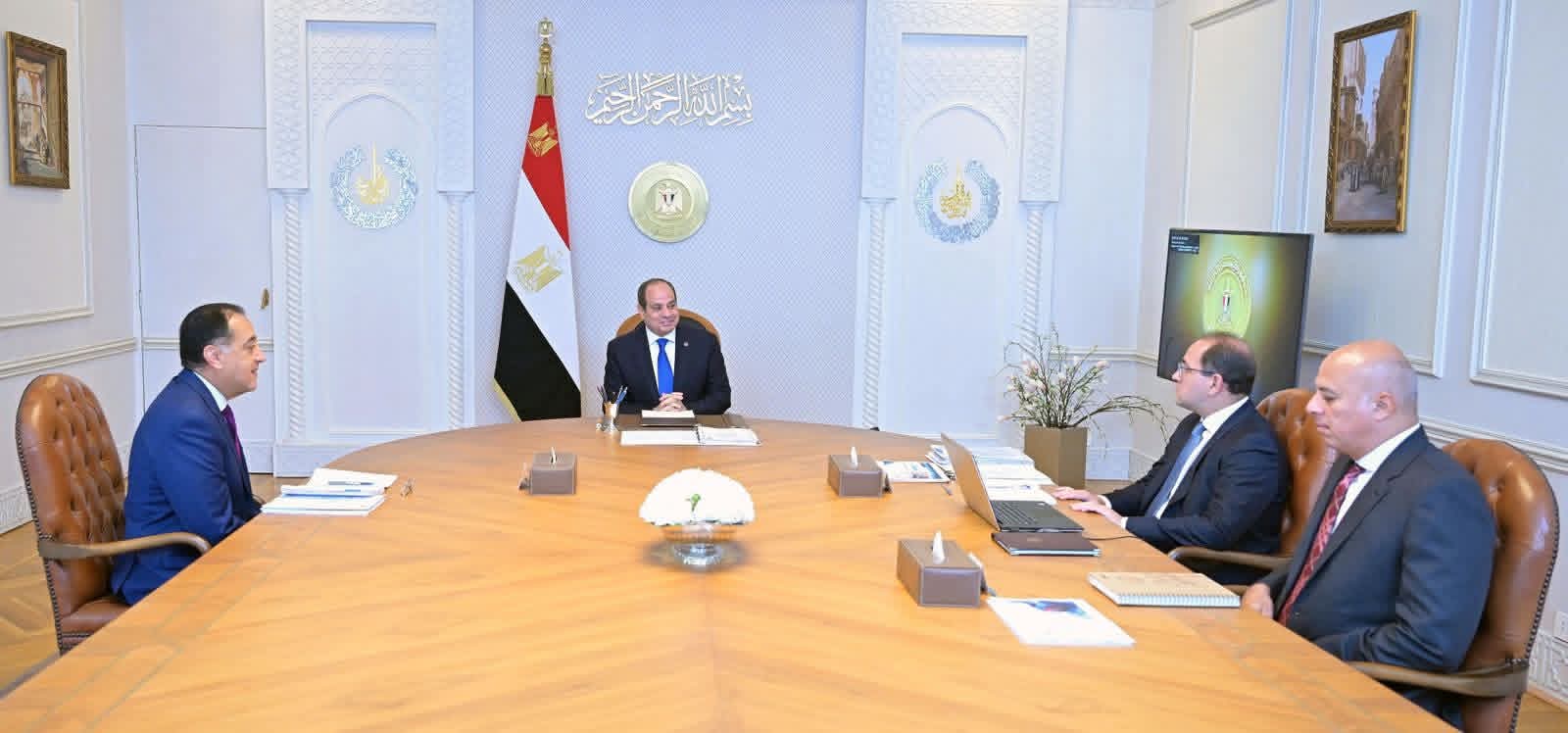
Presidential Spokesman Ambassador Mohamed El-Shenawy stated
that the meeting included a review by the President of the outlines and details
of the second tax incentive package, entitled "Supporting and Encouraging
Tax Compliance." This package is part of a tax incentive strategy
comprising four phases. The first phase aims to turn a new page and build trust
between the Tax Authority and taxpayers. The second phase aims to incentivize
tax compliance while continuing support measures, simplifying procedures,
automating processes, expanding the tax base, and ensuring tax compliance in
subsequent phases. The Minister of Finance indicated that the second tax
incentive package targets various segments of compliant taxpayers. It aims to
support compliant taxpayers through tax facilities and benefits that enhance
confidence, encourage continued voluntary compliance, help them grow and
strengthen their competitiveness, and guarantee taxpayer rights while providing
liquidity for them and their companies.
In this regard, the Minister of Finance reviewed the efforts
to complete the tax reform process, which incentivizes investment, within the
framework of a "partnership of trust" with the business community.
This was achieved through the launch of the tax relief initiative, which proved
successful in its first phase. He noted that the tax relief initiative provided
a good model for the desired change to benefit the business community and the
Egyptian economy. Specifically, 400,000 old tax files were voluntarily closed,
and 650,000 individuals submitted new or amended tax returns with additional
taxes amounting to approximately EGP 78 billion. Furthermore, a new and
additional business volume of approximately EGP 1 trillion was approved.
The Minister also indicated that the second phase of the tax
relief initiative includes improving the efficiency and effectiveness of the
value-added tax (VAT) refund system, launching specialized tax support service
centers, and approving a package of incentives and benefits for compliant
taxpayers, in addition to several other reforms in response to requests from
the business community, taxpayers, accountants, and tax experts.
El-Shenawy stated that the President directed the launch of
the second package of tax incentives, emphasizing the importance of continuing
to develop the tax system and building new relationships among all stakeholders
based on trust, credibility, and certainty. This includes improving all tax
services, providing additional facilities, and building confidence with
investors.
Kouchouk reviewed the progress in preparing and implementing
the real estate tax incentives. He explained that the tax vision aims to reduce
the tax burden, taking into account both social and economic dimensions,
simplifying tax procedures, implementing digital transformation, and addressing
shortcomings revealed during practical application. He added that the
incentives offered by the state include simplifying tax returns, extending the
assessment period to seven years, increasing the tax exemption limit for
private residences, waiving or exempting taxes in times of crisis, waiving tax
debt and late payment penalties in specific cases, reforming, developing, and simplifying
the tax appeal mechanism, enabling electronic tax payment, and setting a
maximum late payment penalty that does not exceed the original tax amount.
The Presidential Spokesman explained that the meeting also
reviewed developments in financial and economic performance, and efforts to
restore investor confidence, within the framework of a comprehensive and
coherent economic vision that contributes to increasing the competitiveness of
the Egyptian economy.
In this context, the Minister affirmed that economic
activity is moving in a positive direction, and that private investments
recorded a growth rate of 73% during the last fiscal year. He noted the
existence of balanced and positive indicators that encourage further
restoration of investor confidence in the Egyptian economy, and emphasized the
commitment to maintaining a large primary surplus that enables increased
spending on human development and social protection programs, and contributes
effectively to stimulating manufacturing and exports.
The Presidential Spokesman stated that the Minister of
Finance also reviewed the plan to develop the customs system, indicating that
the development plan was prepared in full cooperation and coordination between
the Ministries of Finance (Customs Authority) and Investment and Foreign Trade.
He added that the plan reflects the demands of productive projects and chambers
of commerce, and aims to address the challenges facing the business community
and establish the necessary policies to support and incentivize investors,
thereby contributing to increased exports and enhancing the competitiveness of
the Egyptian economy. This will be achieved through joint efforts to simplify
procedures and develop the customs system.
The Minister of Finance added that the customs system
development plan has three main pillars: reducing customs clearance times,
streamlining and automating customs procedures, and strengthening controls and
combating smuggling. He noted that the plan aims to implement a unified and
expedited inspection system, expand the pre-clearance system and accept
electronic payments, and train customs officials to enhance their technical
capabilities.
The Presidential Spokesman indicated that the Minister of
Finance also reviewed, during the meeting, efforts to reduce the debt-to-GDP
ratio of government entities as a top national priority. He emphasized the
continued implementation of the government debt management strategy, adding
that the private sector has demonstrated significant confidence in the potential
of the Egyptian economy and the investment climate, which has enabled major
investment deals such as the Ras El Hekma and Alam El Roum projects.
El-Sisi stressed the need to build upon the current
improvement in economic indicators and to work towards increasing private
investment, thereby reinforcing the private sector's ability to drive growth
and development.
He also emphasized the importance of working towards
enhancing investment in human capital through innovative programs, initiatives,
and ideas, alongside training and development, to ensure improved performance
in service of the economy. He stressed the need to take all necessary measures
to implement a digital system within the Ministry of Finance, including in the
areas of customs and taxes, and emphasized the importance of ensuring continued
governance of all procedures.