
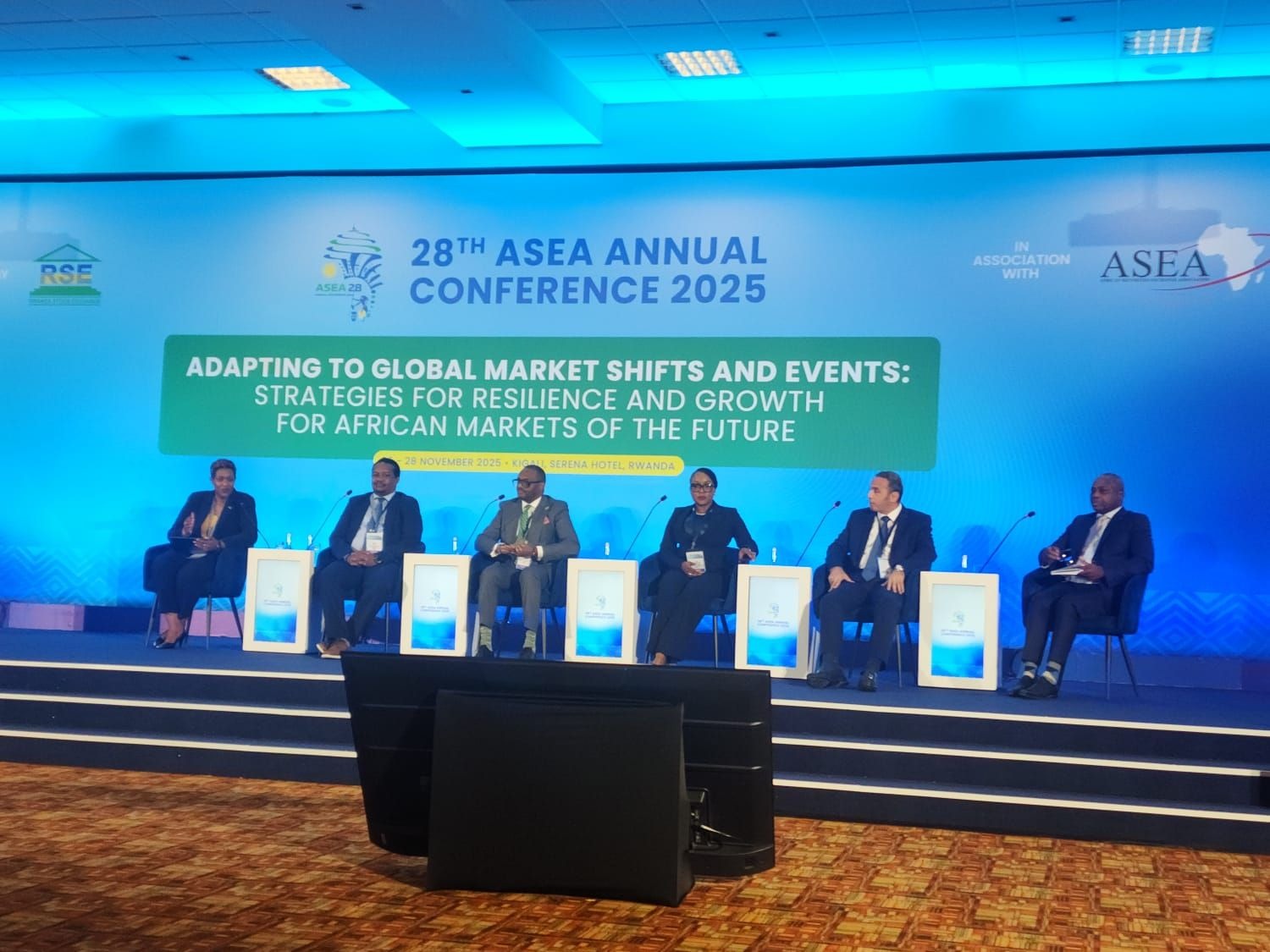
The session, titled "Untapped Capital: Eastward – Islamic and Sustainable Finance Strategies to Enhance African Companies and Governments," focused on new funding opportunities to boost the continent's economy.
Dr. Azzam emphasized that Africa possesses enormous
potential for economic growth, and capital markets are playing a central role
in mobilizing the long-term financing necessary for development,
infrastructure, energy, and the green transition.
He stated that integration among African exchanges has
become a strategic necessity to overcome funding challenges, expand the
investor base, and facilitate the movement of capital across the continent.
Azzam highlighted the significant developments the EGX has
undergone in recent years, including improvements to market infrastructure, the
evolution of listing and disclosure rules, technological upgrades, and the
launch of new indices and financial instruments designed to attract diverse investors.
The EGX Chairman noted that the Egyptian Exchange was one of
the first in the region to adopt the concept of sustainability, launching its
first index over 14 years ago, before developing a broad institutional
framework for responsible investment.
Azzam explained that the launch of the Egyptian Climate
Exchange (EGCX) represents a qualitative leap, allowing the trading of Carbon
Credits and other financial instruments related to renewable energy and the green
economy. This initiative enables companies to access innovative financing
markets, supports the green transition, and helps bridge Africa's climate
finance gap, estimated at billions of dollars annually.
He also reviewed the EGX’s efforts to develop Sharia-compliant
instruments through the launch of the EGX33 Shariah Index, which tracks 33
highly liquid, Sharia-compliant companies. The index has risen by more than 38%
since the beginning of the year.
Azzam added that the EGX is working closely with the Financial
Regulatory Authority (FRA) to enhance regulatory frameworks supporting new
issuances, including index-tracking funds and Islamic Sukuk (bonds), stressing
that Islamic finance is a promising avenue for attracting massive investments
into African markets.
Addressing the future of regional integration, the EGX
Chairman called for strengthening cooperation between African exchanges in exchanging
expertise, harmonizing accounting and regulatory standards, and linking trading
and settlement systems.
He believes these steps will increase liquidity, improve
market efficiency, and enhance competitiveness against global emerging markets.
Azzam concluded by reaffirming the EGX's commitment to expanding cooperation with ASEA, supporting initiatives to build robust markets capable of funding economic growth, and enhancing the role of exchanges in promoting financial literacy and enabling SMEs to access innovative funding tools. He stressed that the next phase will feature deeper cooperation, financial innovation, and increased transparency to achieve comprehensive and sustainable development across the continent.