
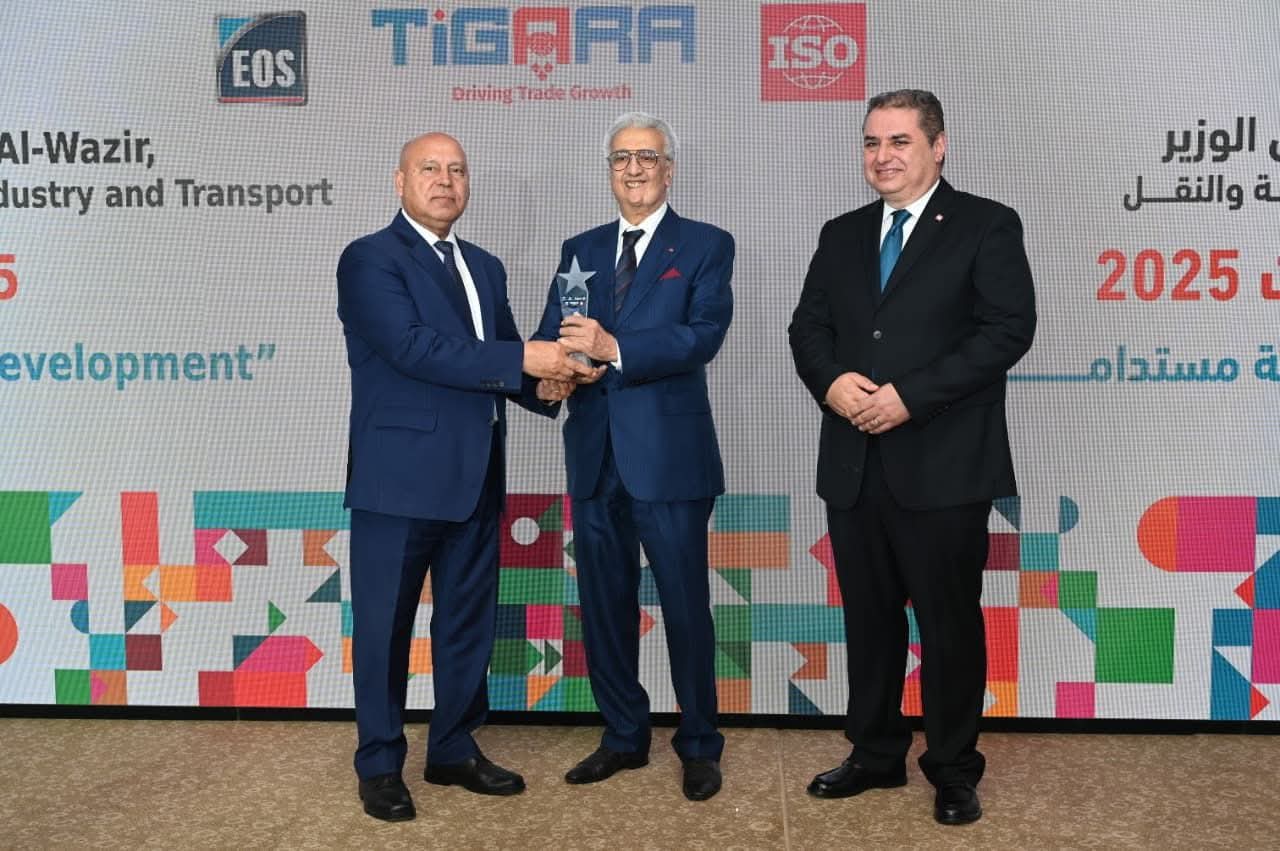
Attendees included Dr. Khaled Soufy, EOS Chairman and President of the International Organization for Standardization (ISO); Dr. Gehan Bayoumi, UNIDO Deputy Representative in Egypt; representatives from the European Union Delegation; as well as experts, industrial companies, and government officials.
Minister Al Wazir emphasized that sustainable industrial
development is the essential pillar for building the New Republic. He stated
that this development relies on a solid foundation of standards and quality,
noting that the progress of Egyptian industry is guided by a clear national
vision: the National Strategy for Industrial Development 2025–2030 and the Urgent
Plan for Industrial Advancement.
The Minister explained that the Urgent Plan translates
the National Strategy into clear, operational steps, setting responsibilities,
timelines, costs, and monitoring mechanisms. He stressed that product quality
was a top priority in this plan, viewing it as the most critical tool for
enabling Egyptian industrial products to compete locally and regionally.
"Investing in quality is not an option to be
postponed, but a real necessity to ensure the sustainability of industry and
enhance its competitiveness," he stated. He added that while implementing
quality systems may seem costly, the cost of non-quality later is far higher.
The Minister outlined three core pillars enabling
Egyptian industry, which align with the New Republic's principles of
sustainability and green production:
Advanced National Standards and Quality System: This
involves harmonizing local standards with the best global criteria to raise
product quality, supporting factories in adopting clean production, and
enhancing the efficiency of the national measurement and calibration system.
Localization of Technology and Green Industries: This
focuses on transitioning to a low-emission economy by supporting eco-friendly
industries, promoting energy efficiency, and encouraging investments in sectors
like electric vehicles, green hydrogen, and sustainable production solutions.
Effective Partnerships: Adopting the day's theme, "A
Shared Vision for a Better World," the Minister stressed that genuine
development requires partnerships between the government, the private sector,
academic/research institutions, and regional/international organizations.
Al Wazir highlighted that Industry and Transport are
integrated systems that cannot be separated. Strong manufacturing requires a
modern logistics and transport network to reduce costs and shipping times,
thereby boosting export competitiveness.
The Ministry of Transport is actively developing
integrated logistics infrastructure, including dry ports, logistics zones,
modern railways, and smart roads, to ensure a shift towards eco-friendly
transport means (like electric trains) and directly support sustainable development
goals.
On the sidelines of the event, Minister Al Wazir
presented awards to companies and entities that demonstrated success in quality
marks, environmental performance, and energy efficiency. Recognitions were also
given to:
Small and Medium Enterprises (SMEs) developed by UNIDO.
Six members of technical committees for standards and
quality.
Menoufia University, as the first university to receive a
Carbon Footprint Report from EOS.
Engineer Ibrahim El-Hawla, the new President of the
International Accreditation Forum (ILAC), the first Arab and African to hold
the position.
Dr. Khaled Soufy, EOS Chairman and ISO President, emphasized that standardization is not just documents, but the true guarantee for a competitive product and consumer trust. He affirmed that Egypt’s presidency of ISO is a national achievement that proves the country’s capability to lead the global standards and quality system. He stressed that EOS plays a pivotal role in supporting factories' compliance with international standards, opening new horizons for Egyptian products globally.