
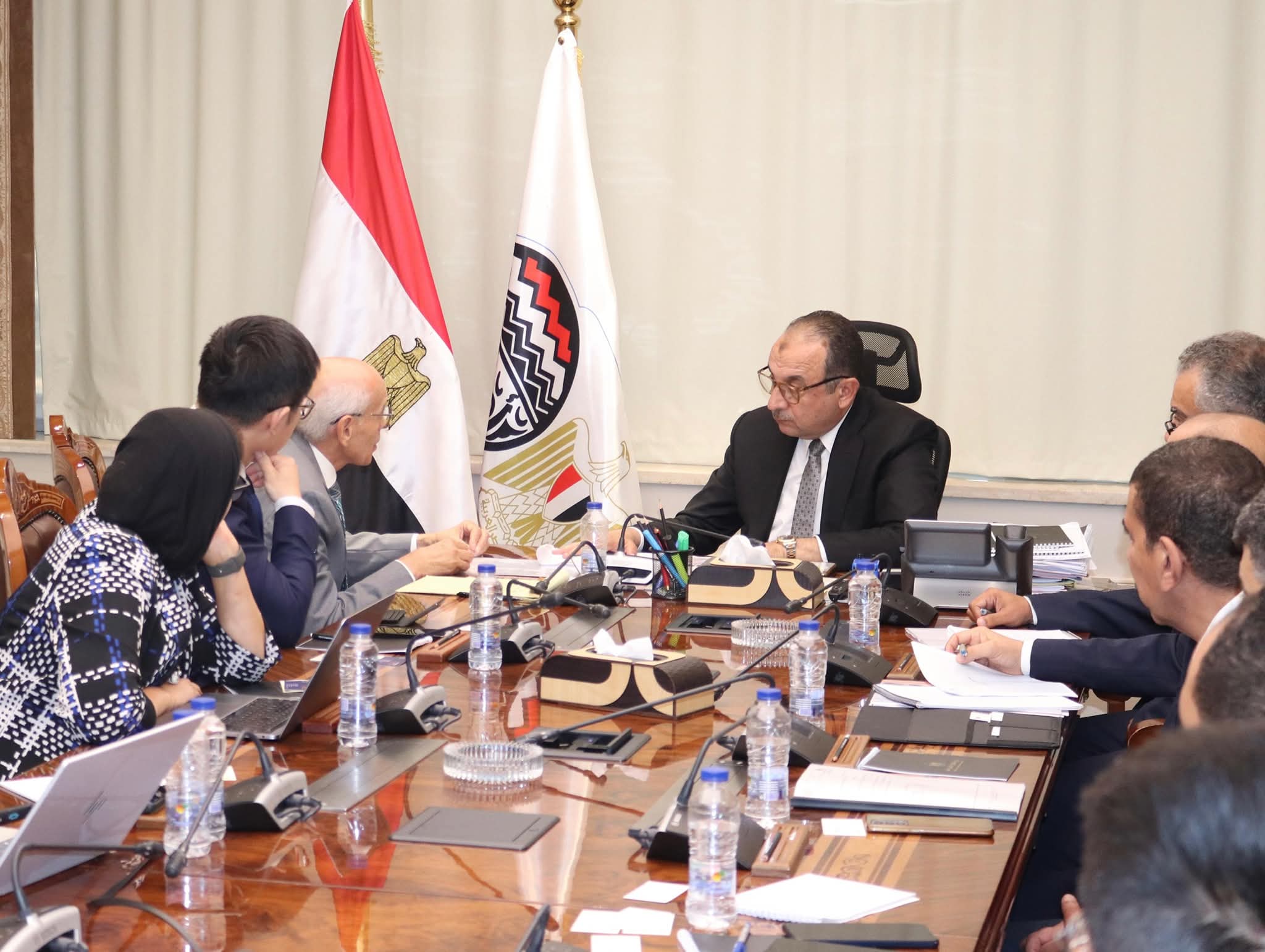
Dr. Esmat made the remarks while chairing the Ordinary
General Assembly of the Egyptian Electricity Transmission Company (EETC), held
at the ministry’s headquarters in the New Administrative Capital, in the
presence of Dr. Rania Al-Mashat, Minister of Planning, Economic Development,
and International Cooperation. The assembly approved the EETC’s budget for the
fiscal year 2025–2026. He emphasized the importance of ensuring electricity
supply for strategic projects and agricultural reclamation projects,
highlighting reliance on high human and technological capacities, efficiency,
and safe execution of works.
Esmat explained that the EETC works on optimal operation of
the grid to achieve efficiency, stability, and reliability, meeting consumer
needs and improving the national electricity network by increasing transformer
station capacities and the lengths of high- and extra-high-voltage lines and
cables. This is done in coordination with the Egyptian Electricity Holding
Company and electricity distribution companies. The company also implements
electricity transmission projects at high and extra-high voltages with the
highest quality and efficiency, as well as interconnection projects with
neighboring countries according to relevant agreements. These efforts support
the state’s strategic goal of positioning Egypt as a regional energy hub,
regulate electricity sale and purchase according to the rules set by the Electricity
Utility and Consumer Protection Regulatory Agency, meet increasing demand, and
maintain high-quality electricity supply for national development purposes,
ensuring optimal economic operation and security of the transmission network.
Engineer Mona Rizk, Chairwoman of the Board of the EETC,
presented the company’s report, noting that the company aims to achieve several
targets in the 2025–2026 budget. Total planned investments will reach EGP 44.9
billion. Of this, 53% is allocated to completing ongoing projects, and 47% to
new projects, replacements, renewals, and regional controls, to improve network
performance in response to increased demand. Cash reserves are expected to
reach EGP 4.556 billion by the end of the 2025–2026 fiscal year. Fixed assets are
projected to reach EGP 202.708 million, reflecting project additions of EGP
30.284 million during the fiscal year and EGP 5.459 million in 2024–2025. The
company follows necessary procedures to reduce losses by maintaining voltage
levels, improving power factor at high and extra-high voltages through the
installation of reactive power compensation units, optimizing load
distribution, and performing thermal imaging of equipment. The company also
continues asset replacement and upgrades. Losses are targeted to reach 3.40%
during the fiscal year.
The report highlighted the enhancement of the National
Energy Control Center and regional control centers, which currently include one
national center and seven regional centers. Three additional regional control
centers are being implemented and upgraded to support renewable energy
projects.
Dr. Esmat concluded the assembly, praising the EETC’s
efforts to support the transmission network nationwide, in line with continuous
support from the political leadership to secure electricity as a cornerstone
for reconstruction, sustainable development, and improving services for
citizens. He emphasized increasing network efficiency, reducing losses, and
enhancing the capacity to accommodate generated energy, including additional
renewable energy capacities. The sector’s strategy ensures sustainability, with
ongoing projects to reinforce the transmission network through new lines,
upgrades to existing lines, construction of new transformer stations, and
expansion of existing stations. He affirmed adherence to the latest quality
standards and modern technological systems to operate the network, ensure
stability and sustainability of power supply, enhance workforce skills, provide
training in advanced electricity and energy technologies, transfer expertise,
and expand training programs. He also stressed the importance of expanding
renewable energy reliance, improving energy efficiency, and accelerating
digital transformation in the coming period.