
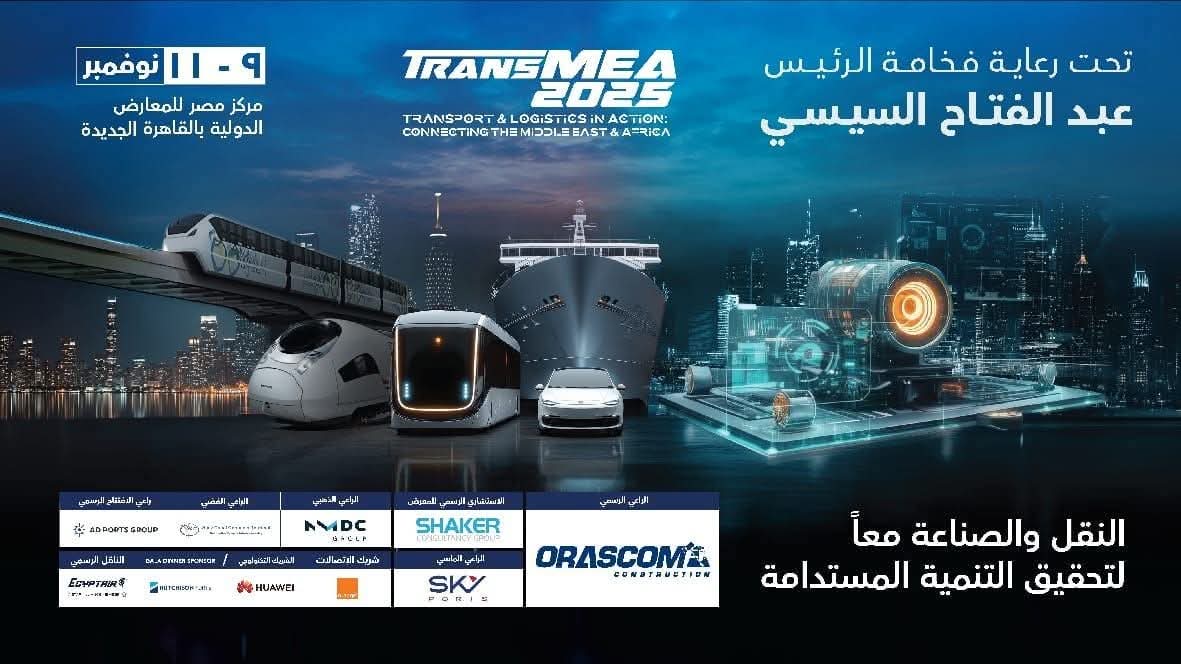
The exhibition and conference are launched based on the
premise that industry and transport are two pillars for building the new
republic and achieving the goals of Egypt’s Vision 2030, as well as President
El-Sisi’s directives to transform Egypt into a regional hub for transport,
logistics, transit trade, and a regional industrial center.
The exhibition will feature over 500 international and local
companies from 30 countries.
Organizing this exhibition comes at a crucial time, as the
country is witnessing an unprecedented renaissance in local manufacturing and
transportation infrastructure. Industry has become a key driver for increasing
growth rates, deepening local manufacturing, achieving self-sufficiency, and
enhancing the competitiveness of Egyptian exports. Simultaneously, the
transportation system, with its various sectors—including sustainable,
environmentally friendly green transport, railways, roads, bridges, seaports,
land ports, dry ports, logistics zones, and river transport—represents a vital
artery supporting this renaissance and facilitating trade and investment.
The exhibition will highlight numerous opportunities,
initiatives, partnerships, and plans, in addition to export support strategies,
showcasing advanced technologies for improving product quality, stimulating
increased local content, connecting manufacturers of both components and
finished products, providing and developing industrial land, and linking with
logistics zones to facilitate export operations. This will be further
streamlined for manufacturers through the Ministry of Industry's launch of the
Egypt Digital Industrial Platform, which allows for the automated allocation
and distribution of industrial land and units across all governorates, as well
as the issuance of necessary licenses and permits.
The exhibition will also feature an outdoor display of
various modern transportation methods and models for localizing industry.
The exhibition aims to showcase achievements in developing
national production capabilities, encourage integration between local
industries and supply chains, and strengthen public-private partnerships. This
contributes to localizing modern technology and building a strong and
sustainable industrial base.
The exhibition will also feature a passive industry platform
to inform the industrial community about import needs versus local
manufacturing capabilities. This will enhance industrial integration, reduce
imports, and contribute to increasing the competitiveness of Egyptian industry.
It will serve as a distinguished meeting place for manufacturers and suppliers
to exchange expertise and explore opportunities for manufacturing production
inputs locally according to required specifications and costs. This supports
industrial development, saves foreign currency, and strengthens supply chains
linked to all sectors of the Ministry of Transport and other relevant
government ministries. Previous editions of the passive exhibition have
achieved positive results in manufacturing a number of production inputs for
local companies.
The exhibition also aims to highlight the state's
achievements in smart and sustainable transportation projects, linking various
modes of transport to an integrated logistics network that supports regional
and international trade and solidifies Egypt's position as a global hub for
transport, logistics, and transit trade. In addition, a number of seminars and
workshops will be held.
The exhibition coincides with the 38th session of the
Council of Arab Ministers of Transport, which embodies one of the most
important aspects of joint Arab cooperation in a field that is among the most
influential in achieving economic integration and sustainable development in
the Arab world.