
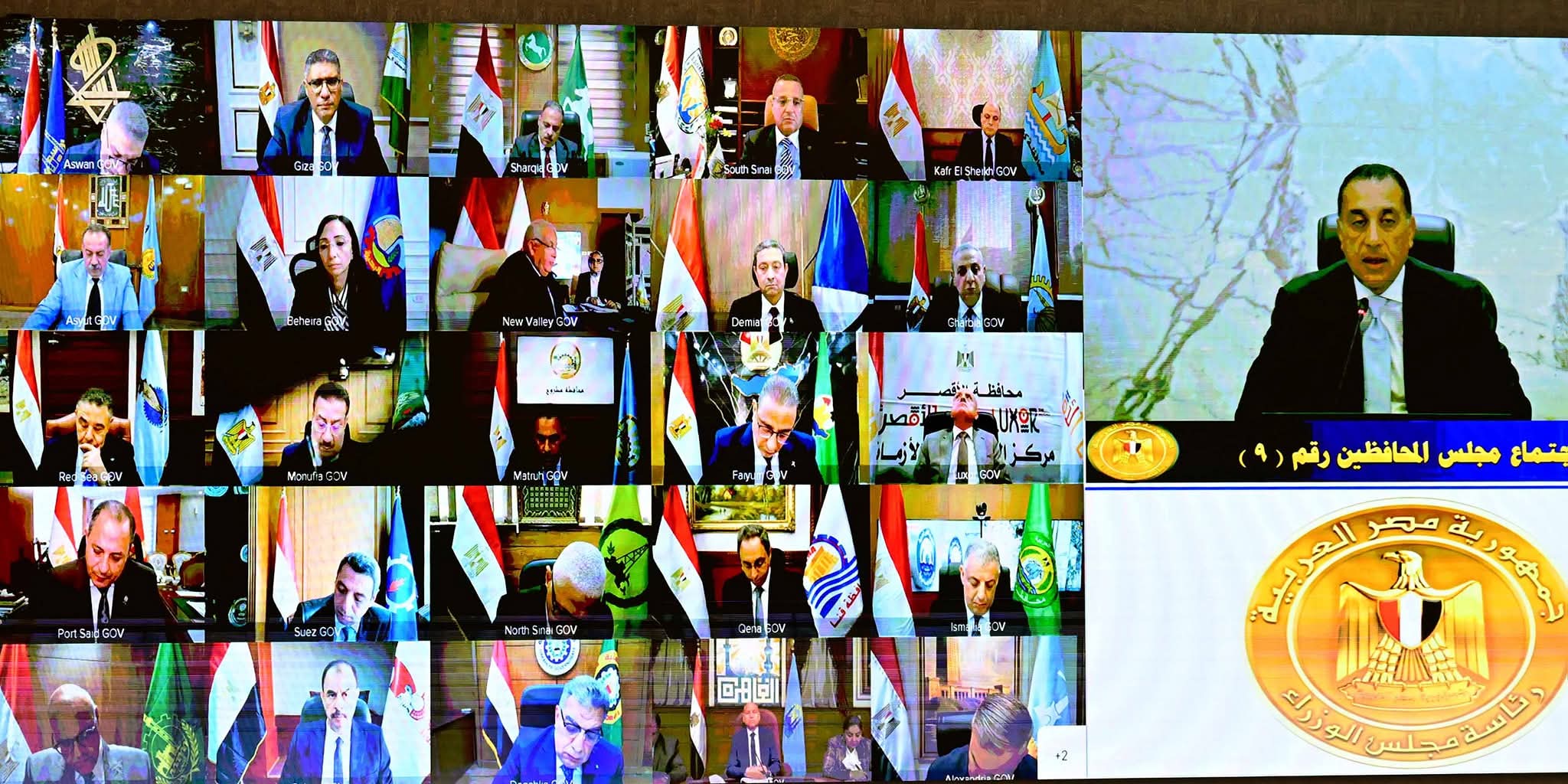
The meeting was held with the attendance of Local Development Minister Dr. Manal Awad, who is also the acting Environment Minister, and with the participation of governors via video conference.
Madbouly praised the efforts of all government bodies and
governorates for ensuring the success of the 2025 Senate elections, and urged
them to intensify preparations for the upcoming House of Representatives
elections.
Madbouly, chairing the ninth meeting of the Council of
Governors, stressed the need for full coordination with the National Elections
Authority to ensure a smooth parliamentary vote, according to a cabinet
statement. He also instructed all governors to evaluate procedures from the
Senate elections and apply the lessons learned to avoid potential difficulties
in the forthcoming lower house ballot.
Government spokesman Mohamed El-Homossany said the agenda
included discussions on monitoring commodity prices, regulating markets,
preparing for the coming winter season, and addressing the reconciliation in
building violations file.
Following a recent decision by the petroleum products
automatic pricing committee, Madbouly stressed that new fare increases for
public and mass transit—both within and between governorates—must be determined
and strictly enforced. He ordered decisive action against any violations of the
set fares to prevent unjustified increases.
The premier demanded continuous, daily monitoring in all
governorates to ensure the availability of basic and strategic goods and to
control prices. He insisted that traders and shops must clearly announce prices
to consumers and that oversight be tightened to ensure all goods are available.
Madbouly called for coordination with Chambers of Commerce to expand the
establishment of outlets distributing essential goods at reasonable prices.
Regarding preparations for the winter season, Madbouly
underscored the importance of reviewing the readiness of emergency and
operations rooms in the governorates and linking them to central operations
rooms.
He also ordered ensuring the availability of necessary
equipment, such as sewage suction vehicles, and close daily monitoring of
meteorological warnings and forecasts.
In a related context, Madbouly stressed that governorates
along the Nile River must take all necessary measures to remove encroachments
on the riverbanks to avoid water level increases and recurrent problems. He
called for continued monitoring by Nile Protection administrations to halt any
encroachment attempts early, with a precise study of all technical and legal
aspects to determine the best course of action.
He also stressed the need for firm and decisive action
against any building violations or encroachments on agricultural land during
the parliamentary election period, prohibiting any leniency on the matter.
Madbouly noted that the Cabinet’s Information and Decision
Support Center had prepared a report evaluating 11 different services in the
governorates based on citizen feedback. Services evaluated included water,
sanitation, electricity, paving, street lighting, and health services. This
report will be sent to all governors to help them improve services, with
Madbouly stating: "Our collective goal is to serve the citizen and meet
their demands."
The Prime Minister also addressed the intensive preparations
by all ministries for the global opening ceremony of the Grand Egyptian Museum
(GEM), which is scheduled for the first week of November. He noted that the
world is anticipating the event and that work is proceeding rapidly to organize
the celebration and finalize the surrounding area's development. Madbouly
instructed the relevant governorates to be on maximum alert and focus on
cleanliness, lighting, and site coordination.
Dr. Manal Awad highlighted that governors and their deputies
are conducting intensive field tours to monitor compliance with the new public
transit fares and ensure the smooth flow of passenger transport. They are also
monitoring fuel stations to guarantee the availability of petroleum products at
the official price.
Awad also detailed the ministry's efforts to control commodity prices through continuous monitoring and coordination with suppliers and traders. These efforts include setting up mobile and fixed sales outlets for discounted goods in coordination with the Supply Ministry and activating the role of NGOs to offer goods at suitable prices in densely populated or low-income areas. The Minister also discussed the need to regulate the status of governorate regulations and the new mechanism for issuing licenses for mobile phone towers.