
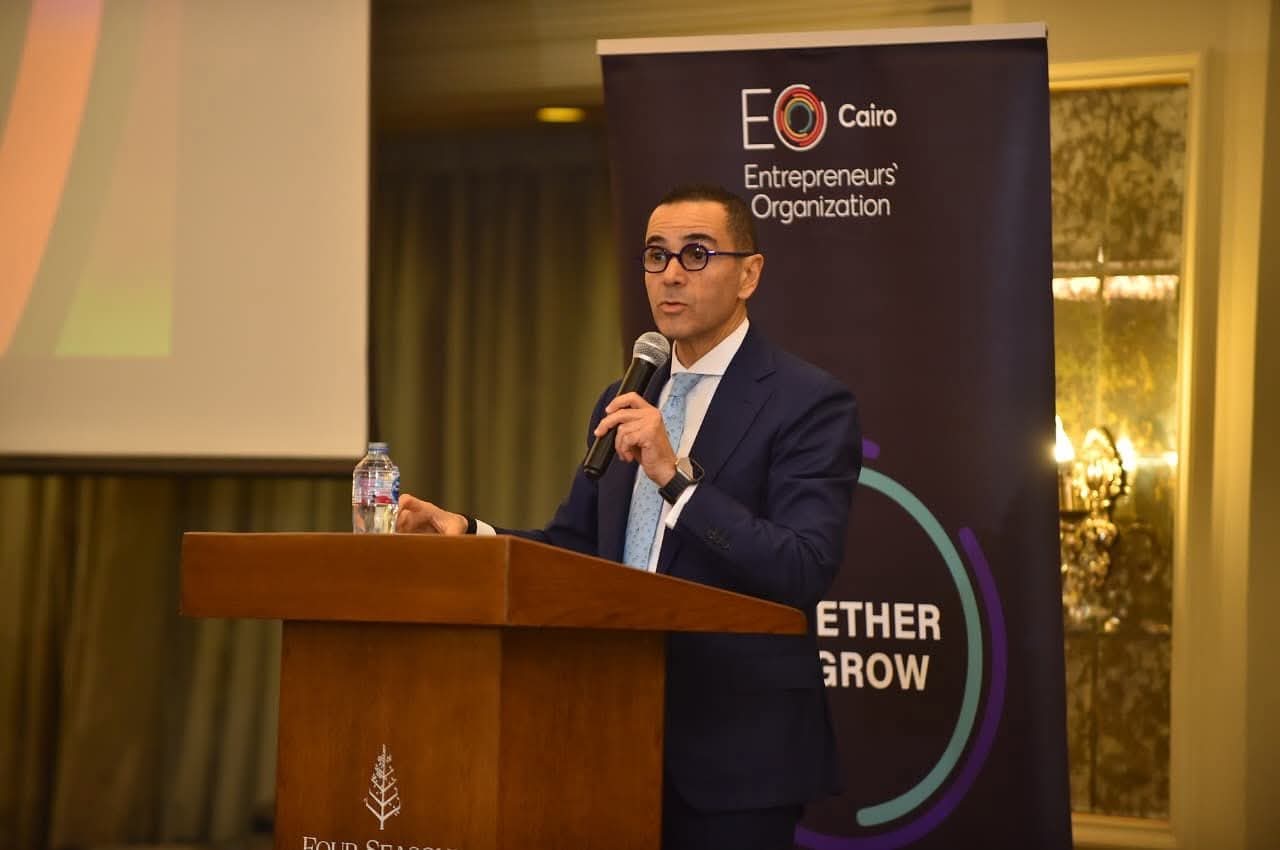
El Khatib detailed efforts to strengthen the economy and attract investment, telling business leaders that the state has carried out a massive investment programme over the last decade, including the development of infrastructure, new cities, and renewable energy networks.
He affirmed the government's commitment to sustainable
financial management, aiming to lower the country's debt-to-GDP ratio.
The Minister said Egypt is uniquely positioned to become a regional
hub for investment, trade, and exports, and highlighted a new economic vision
resting on four key pillars: monetary policy, fiscal policy, trade, and the
state’s role, intended to balance growth and stability.
He pointed to major reforms aimed at easing the burden on
businesses: Tax Reform: Simplifying procedures and fees has led to increased
revenues and a reduction in public debt.
Trade Facilitation: The government aims to reduce customs
release time by 63 percent and have ports operating seven days a week to reach
an average release time of just two days before the end of the year.
Digitalisation: A unified digital platform for business
establishment has reduced the required steps to start a commercial activity
from 34 to only nine. The ministry has implemented about 60 percent of 300
reform measures to improve the investment climate.
Public Asset Governance: A specialised unit is being
established to improve the governance and production efficiency of public
companies.
The Minister stressed that effective administrative
practices are crucial for attracting Foreign Direct Investment (FDI) in the
face of fierce global competition.
El Khatib identified several key growth sectors:
Tourism: The government seeks to reduce the approval cycle
for new tourism projects from two years to just one month. The minister noted
that popular destinations, particularly the North Coast, have reached their
capacity.
Industry: El Khatib called for a long-term plan to provide
clarity for investors, stressing that localising industry is a national
priority.
Energy: The country aims to become a regional energy export
hub. Efforts are underway to expand renewable energy, especially solar power,
and produce green hydrogen and ammonia, with plans to secure concessional
financing for such projects.
In a Q&A session, El Khatib confirmed that Egypt
currently has a surplus in electricity production and is cooperating with major
global companies to localise the production stages of solar energy components.
He affirmed that the government aims to double industrial capacities in the
coming years.
Addressing the technological shift, the minister said Egypt
is closely monitoring Artificial Intelligence (AI) developments and preparing
specialised cadres to enhance national competitiveness.
He concluded that Egypt has a historic opportunity to strengthen its economic position by completing fiscal and trade reforms, supporting local manufacturing, and attracting investment in renewable energy and AI to cement its status as a leading regional centre for investment and technology.