
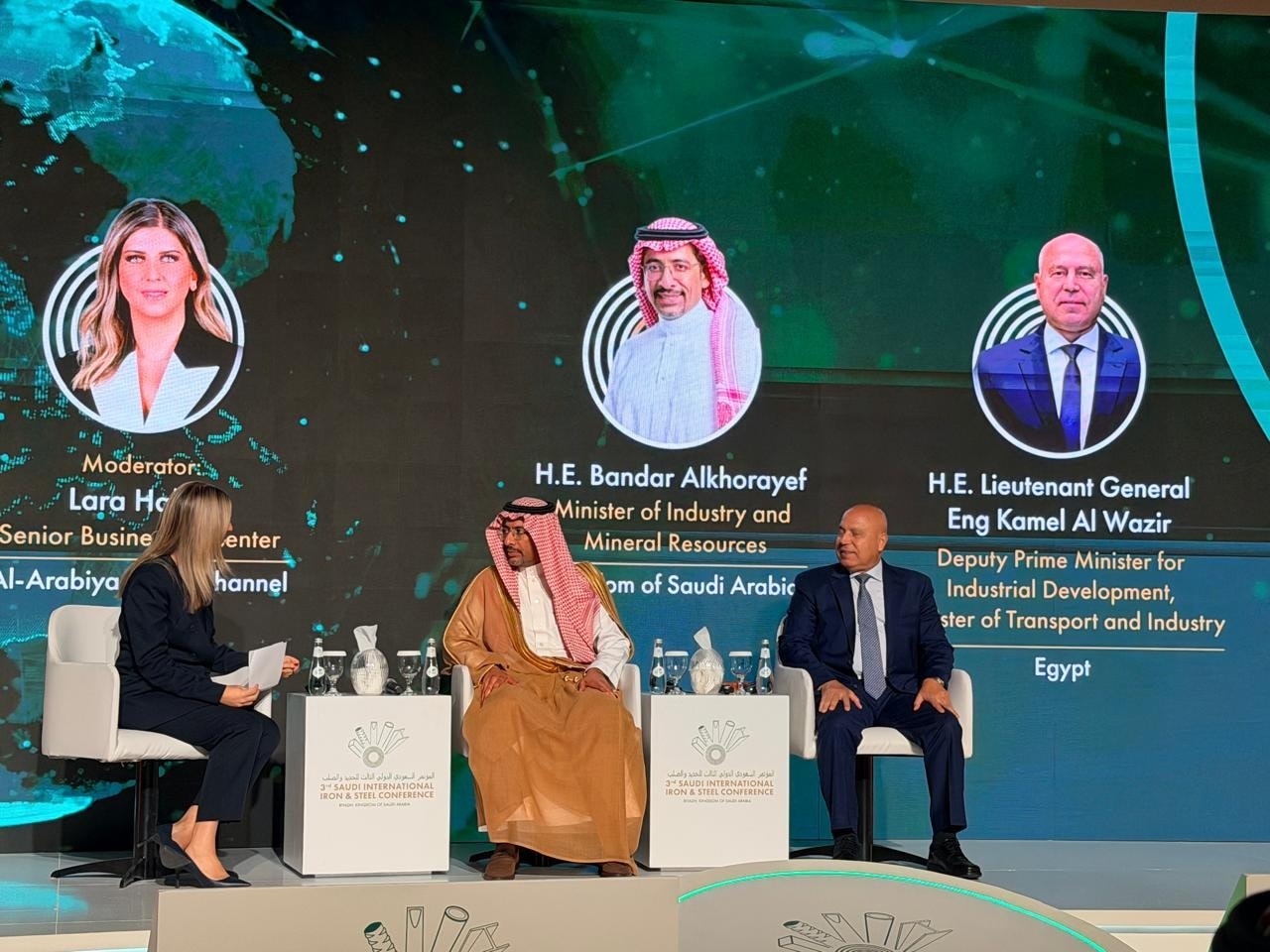
Minister Al-Wazir emphasized that Egyptian-Saudi cooperation in the steel sector is a strategic choice for regional industrial security, aiming to build an integrated Arab economy. He highlighted that this cooperation could serve as a model for successful regional partnership, enabling both countries to: achieve regional self-sufficiency in strategic steel products, reduce production costs through vertical integration, enhance the global competitiveness of Arab products, and attract foreign direct investment.
He stressed that, given global geopolitical and economic
changes, this partnership is essential for achieving shared prosperity for both
nations.
The Minister commented on the agreement to end the war in
Gaza, describing it as a "new dawn" for the Middle East that will
open the door for reconstruction. He noted that approximately 80% of Gaza's
facilities have been demolished, requiring comprehensive rebuilding for people
to return to normal life. Since iron is essential for all aspects of life in
Gaza, he stated that the large quantities needed can be provided through Arab
cooperation, particularly with Egypt and Saudi Arabia, confirming Egypt's
contribution of various iron products.
Al-Wazir underlined that the iron and steel industry is a
fundamental pillar of the Egyptian economy and central to the state's
industrial and urban development plans, closely linked to major infrastructure,
housing, transport, and energy projects. Following the directives of President
Abdel Fattah El-Sisi, the Egyptian government adopted an integrated national
vision to develop the industry by deepening local manufacturing, enhancing the competitiveness
of Egyptian products, and achieving regional integration, especially with Saudi
Arabia.
He affirmed that Egypt now has a developed industrial
infrastructure and production capacity ready to meet local demand and expand
exports, supported by policies for localizing feeder industries and adopting
the latest green and sustainable production technologies. He added that Egypt's
participation in the conference confirms the deep partnership with Saudi Arabia
and the shared goal of building a strong, globally competitive Arab industry.
The Minister detailed the state's integrated vision to
ensure the sustainability and development of the strategic steel industry,
focusing on:
1. Raw Materials and Localization:
Localizing the Billet Industry: A clear strategy is in place
to localize billet production—a crucial intermediate product—to reduce imports
and ease pressure on foreign currency. New licenses have been approved, aiming
for a total licensed capacity of 15.8 million tons.
Scrap Collection: A national initiative is being prepared to
collect iron scrap from household, industrial, and automotive sources to
maximize reliance on this sustainable local resource, in line with previous
decisions to limit its export.
Local Ore Utilization: Studies are underway to utilize iron
ore reserves for four companies in areas like Bahariya Oasis and Wadi
Al-Allaqi. Technical development will raise their concentration to facilitate
the local production of high-quality iron pellets.
2. Energy Pricing and Supply:
Gas and Electricity Pricing Review: The government maintains
a continuous dialogue with manufacturers to review energy prices for heavy,
energy-intensive industries. The goal is to reach a price formula that balances
production costs with international prices to maintain the competitiveness of
local products.
Gas Pricing Equation: The gas pricing formula is currently
being reviewed to base it on the average price of both locally produced and
imported gas, rather than just the imported price, ensuring a balanced cost.
Electricity Supply: Due to the large surplus in electricity
generation, there is no longer a concern about providing stable, cost-effective
electricity supplies to the industrial sector.
Temporary Reductions: The possibility of granting temporary
cost reductions to promising strategic industries, like iron and steel, is
being examined to accelerate their development.
3. Strategic Localization:
The state’s vision also includes localizing automotive and
component industries, specifically the production of cold-rolled, galvanized,
and colored sheet and coil steel. This is part of a national strategy to
transform Egypt into a leading industrial hub that meets the needs of
mega-projects and boosts exports. He invited Saudi partners to invest,
positioning Egypt as the optimal gateway to serve the local, Arab, and
promising African markets.
The Minister commended the momentum in the Saudi steel
industry, viewing it as a strategic opportunity for an alliance, not
competition. He proposed a strong regional industrial alliance based on
integration:
Value Chain Integration: Saudi Arabia offers an abundance of
energy and hydrocarbons for primary industries, while Egypt provides a wealth
of trained labor and proximity to African and European markets. Partnerships
could focus on completing the value chain from primary production to advanced
manufacturing.
Joint Projects and R&D: Establishing joint investment
projects for high-value products and developing joint research centers for
innovation.
Knowledge Exchange: Sharing expertise on modern technologies
and the transition to the green economy in the industry, alongside cooperation
in training and capacity building.
Logistical and Commercial Integration: Utilizing Saudi and Egyptian ports, establishing joint logistical corridors for African and Arab markets, and coordinating export policies to global markets to enhance regional competitiveness and develop unified standards for quality and sustainability.