
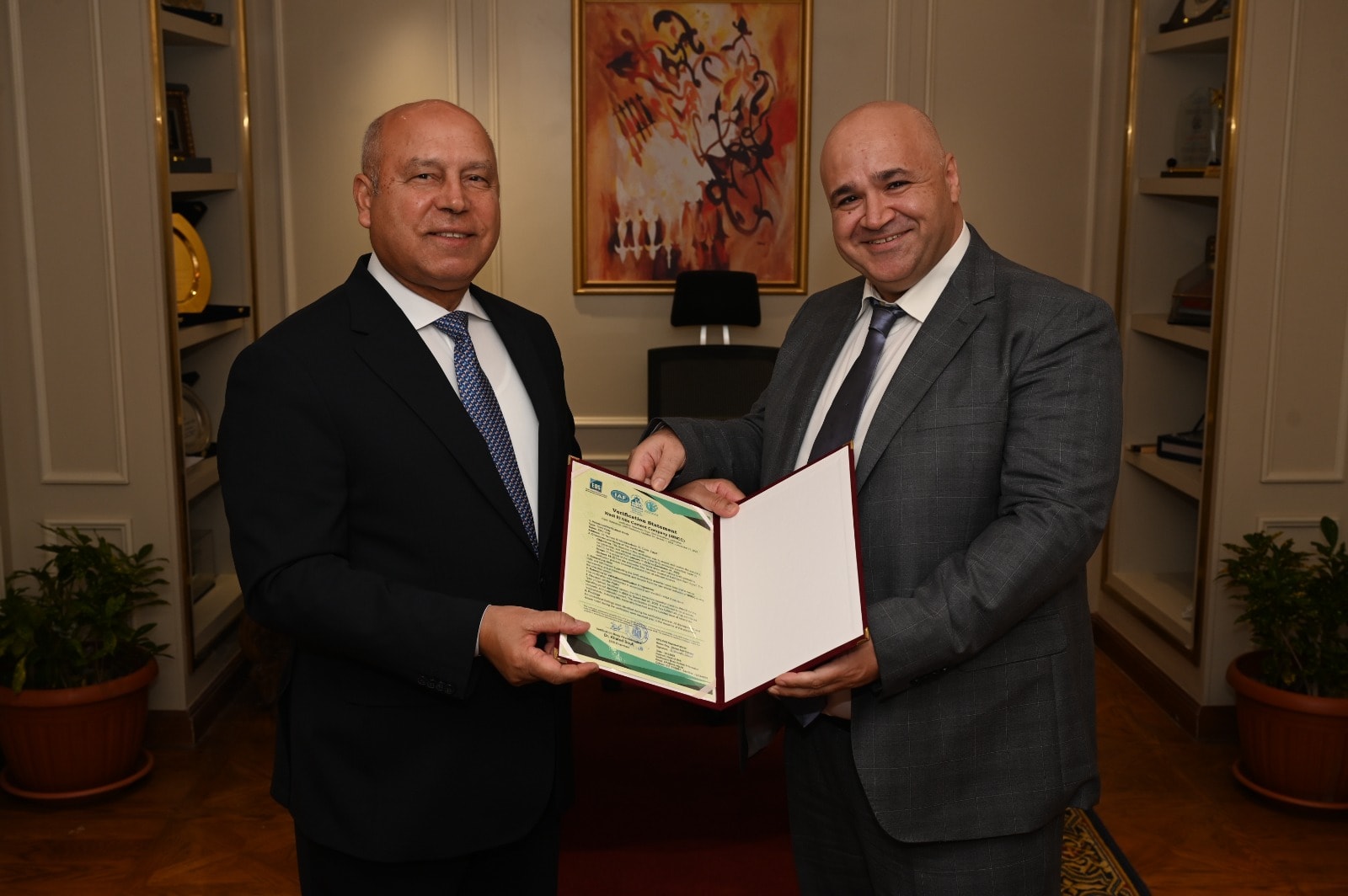
The handover ceremony, attended by Dr. Khaled Hassan Soufy, Head of the Egyptian Organization for Standardization and Quality (EOS), is part of the state's drive to support the transition to a green economy and enhance sustainability in the industrial sector.
The companies that received the carbon footprint
verification certificates included Ezz Steel Dekheila, Ethydco for
Petrochemicals, Marakeby Steel, Wadi El Nile Cement, Elsewedy Cement, and El
Giza Cables.
During the ceremony, Al-Wazir emphasised that this move is
part of the state's efforts to achieve the goals of "Egypt's Vision
2030" and its commitment to reducing carbon emissions and improving
resource efficiency. This, he noted, contributes to enhancing the competitiveness
of Egyptian products locally and internationally.
He indicated that the verification of the companies' carbon
footprint reports was carried out by the Environmental Performance Unit of the
EOS, which is the national body responsible for monitoring and evaluating the
environmental performance of industrial establishments according to
international standards and best practices.
Al-Wazir expressed his appreciation for the efforts of the
EOS and its Environmental Performance Unit team in supporting national industry
and encouraging Egyptian companies to adopt sustainable practices that help
reduce the carbon footprint and achieve sustainable development.
The Minister stressed that Egypt is moving steadily towards
enhancing its regional and international position in the fields of quality and
sustainability. He asserted that the Egyptian experience in measuring and
verifying the carbon footprint is a "pioneering model" that can be
leveraged across the Arab region and the African continent, reinforcing Egypt's
position as a leading country in supporting global efforts to combat climate
change and achieve sustainable development.
EOS Head Dr. Soufy explained that the organization, through
its Environmental Performance Unit, continues to perform its national role in
supporting Egyptian industry and boosting the competitiveness of local products
by providing technical support and training to industrial companies. This
assistance, he said, helps companies improve energy and resource efficiency and
implement clean and sustainable production practices, especially since carbon
footprint verification has become essential for companies seeking access to
global markets. He affirmed that the EOS will remain a key partner in
implementing state policies to achieve sustainable development goals.
Engineer Ekram Said, Head of the Environmental Performance Unit at the EOS, affirmed that the unit constantly seeks to enable Egyptian companies to accurately measure and analyse their carbon emissions and provide the necessary technical support to develop effective plans to reduce these emissions. She added that the unit is working to build qualified national cadres capable of applying modern systems in environmental management and sustainability, in cooperation with government agencies and development partners.