
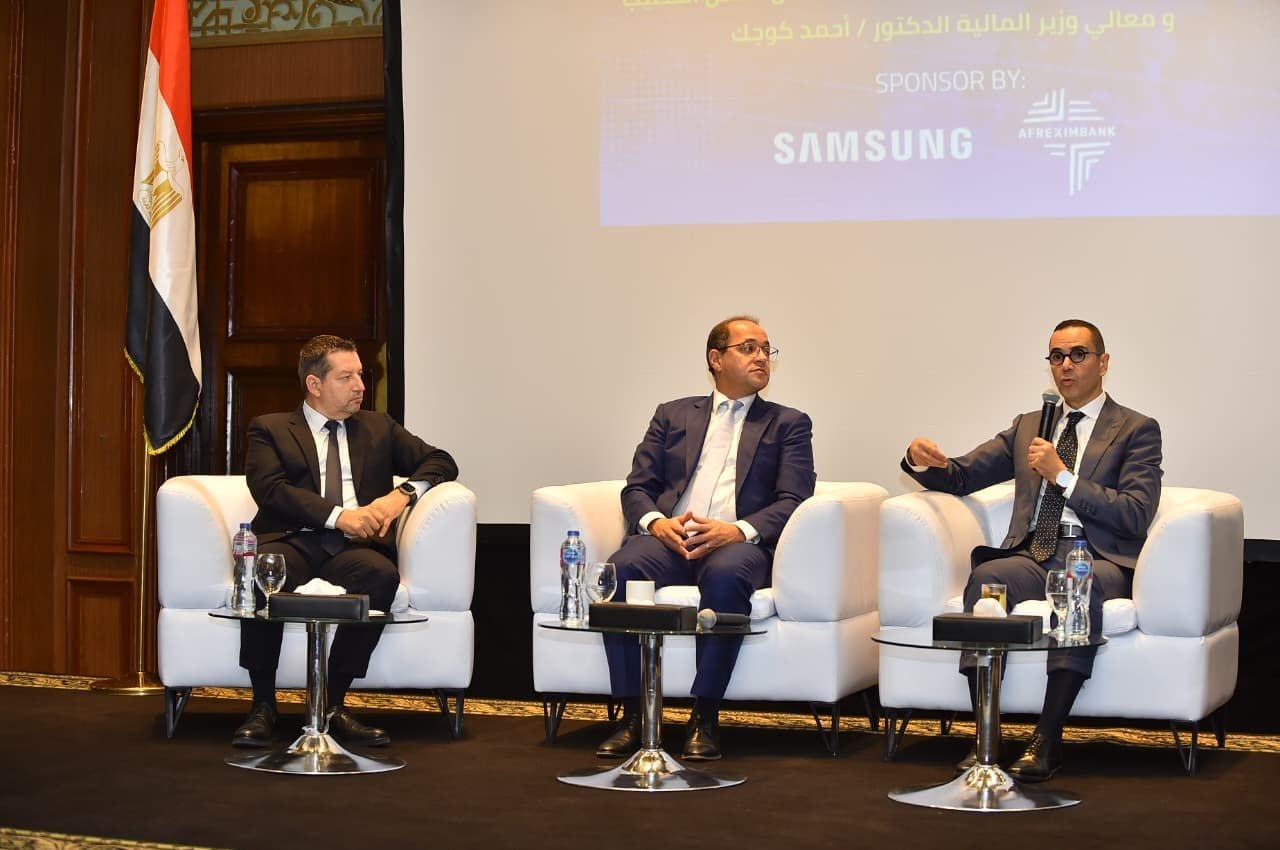
The dialogue, which addressed exporters' questions, highlighted the continuous coordination and shared vision between the two ministries aimed at boosting the competitiveness of the Egyptian economy and underscored the government's full conviction in the essential role of the private sector in driving growth and development.
Kouchouk asserted that the Egyptian private sector is
"flexible, positive, and capable of development, growth, and competition
locally and internationally."
"We are proud of the strong performance of the private
sector in Egypt, which registered a 73% growth in private investments last
year," Kouchouk said. "Thank you to the private sector... we saw your
great confidence in the economic and financial results last year."
The Minister announced that a second package of tax
facilities will be launched at the end of the month and will be open for public
discussion next November. He said the focus will be on existing taxpayers with
a set of stimulating measures "within the framework of trust and tax
certainty."
"We are working on important reforms to reduce tax
burdens and obligations and improve the quality of services to support
taxpayers and deepen trust," Kouchouk added.
He also noted the upcoming launch of a central electronic
platform for clearing government dues against debts to investors to provide
more liquidity. Additionally, the VAT refund system will be developed and
re-engineered to "achieve a breakthrough" in simplifying and
accelerating procedures for taxpayers.
Kouchouk pointed out that the government has already repaid
approximately 7 billion Egyptian pounds in VAT to businesses, which he said is three
times the annual average of refunds.
The government plans to leverage the electronic link between
the tax and customs systems to provide incentives and facilities to investors,
Kouchouk said, adding that they will issue a simplified guide for tax treatment
of exported services to boost the growth and competitiveness of service exports.
He further confirmed a push for full follow-up and
activation of the simplified tax system to encourage small taxpayers across
various economic activities and entrepreneurship.
The Finance Minister stated that the coming period will
focus on supporting small and new exporters to help them grow and compete
regionally and globally. He noted that tax revenues grew by 35% without any
additional burdens following the implementation of the first tax facilities
package.
Kouchouk also highlighted that, for the first time, a 45
billion pound programme to fully fund the export subsidy repayment programme
has been allocated from the budget to stimulate exports.
He confirmed that the government has begun repaying 50% of
outstanding arrears to exporting companies in cash, with the other half being
settled against government debts to the Finance Ministry, insurance, and the
energy sector.
"We are working together with the Ministry of
Investment and Foreign Trade on various files that stimulate investment and
foreign trade," Kouchouk said, including "targeting a more fair
'solidarity contribution' amendment that is responsive to the business
community's demands this year."
For his part, Investment and Foreign Trade Minister El-Khatib
stressed the importance of partnership with the private sector and creating an
attractive investment climate. He said the government supports the sector
through monetary policies handled by the central bank and the stimulating
financial policies that are a core part of the state's current structural
reform.
El-Khatib noted the continuous coordination with the Finance
Ministry and other relevant bodies has overcome many obstacles, which has
reflected in reducing the customs release time for goods. "We aim to
facilitate the entry of products and reduce time and cost," he said.
He emphasized the importance of achieving competitiveness to
rank among the top 50 countries in trade and noted that the new export subsidy
programme reflects the state's commitment to supporting exports.
"We are aware of the challenges investors face and are
working to resolve them through continuous communication," Al-Khatib said,
pointing to a clear plan to boost trade with African nations as well as other
markets like Europe.
El-Khatib confirmed that many automotive companies coming to
Egypt aim to export, and the government is supporting this to encourage major
companies to increase car production and to localise the industry in Egypt.
Sherif El-Sayyad, head of the Engineering Export Council,
praised the great harmony between the two ministers and the numerous government
initiatives, which he said gives cause for optimism. He noted the cooperation
has paved the way for an unprecedented leap in exports through joint work on
speeding up export subsidy repayments, removing obstacles, and approving
customs facilities.
El-Sayyad concluded that engineering exports have recorded an average annual growth of 26% over the past five years, stating that government support has been a decisive factor in enhancing the competitiveness of Egyptian products in global markets.