
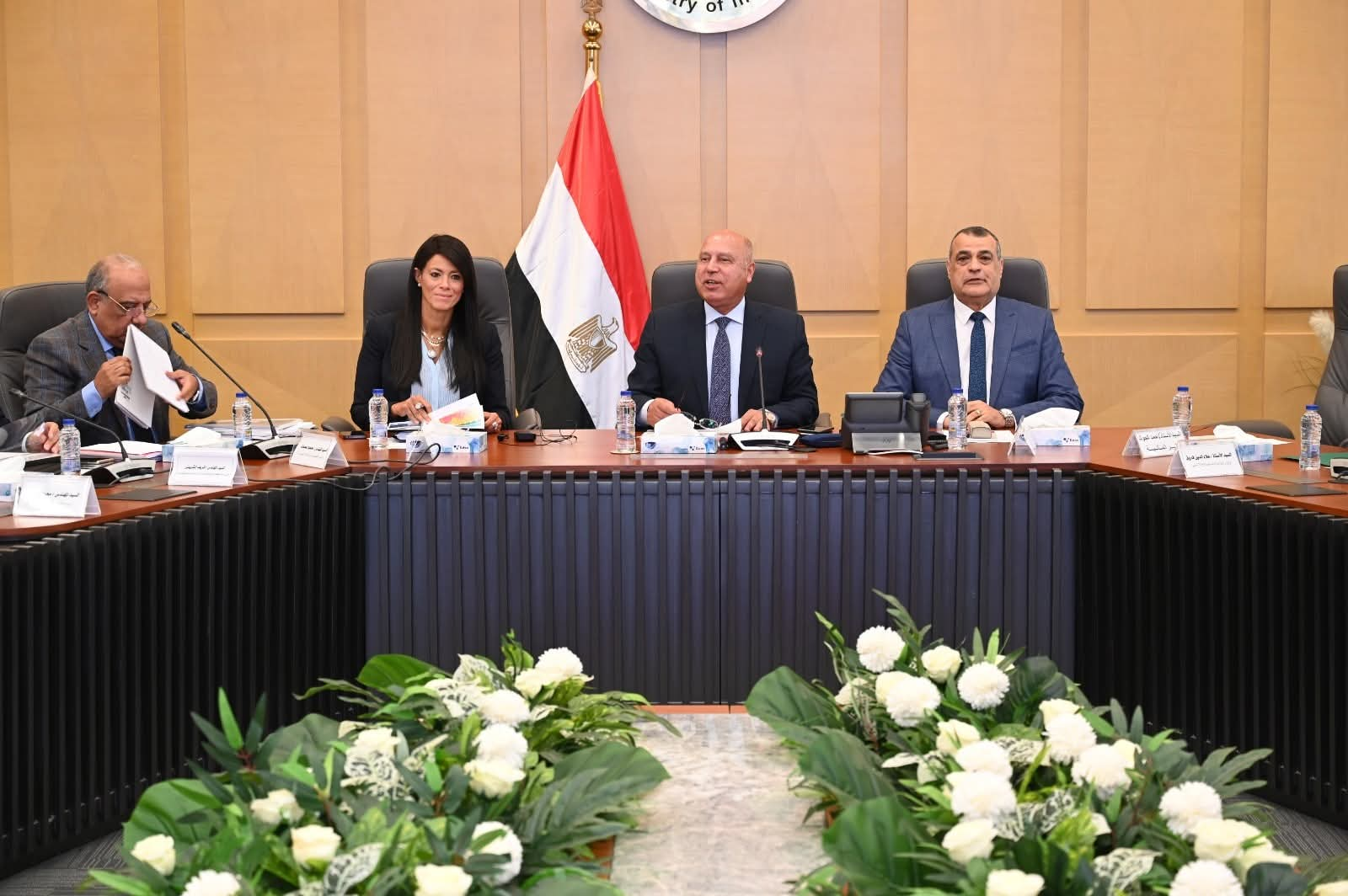
The meeting was attended by Minister of Planning, Economic Development, and International Cooperation Dr. Rania Al-Mashat, Minister of State for Military Production Major General Mohamed Salah El-Din Minister of Electricity and Renewable Energy Dr. Mahmoud Esmat, Minister of Public Business Sector Engineer Mohamed Shimi, Minister of Housing, Utilities, and Urban Communities Engineer Sherif El-Sherbiny, Minister of Petroleum and Mineral Resources Engineer Karim Badawy, Minister of Agriculture and Land Reclamation Alaa Farouk, Head of the Federation of Egyptian Industries Engineer Mohamed El-Sewedy, and Head of the General Authority for Industrial Development Dr. Nahed Youssef, in addition to representatives from the member ministries and bodies.
At the beginning of the meeting, Al-Wazir expressed his
sincere gratitude to the Ministerial Group for their fruitful efforts. He noted
that the positive results were clearly reflected in the manufacturing
community's praise for the group's ability to establish a more disciplined and
governed work system. He also highlighted the reinforcement of a community
dialogue mechanism that brings together various state agencies, ministries, and
the private sector before making decisions related to industry.
The Minister affirmed that the iron and steel industries are
strategic and essential for any economy, serving as a fundamental input for
numerous other sectors like automotive, home appliances, and building
materials. He noted that the local market still needs larger quantities of hot
and cold-rolled sheets, galvanized and colored steel, and billet. The government,
he added, is working to fill these gaps, prevent monopolistic practices, and
expand production to meet local demand and open new avenues for export.
Al-Wazir explained that the Ministry of Industry has
identified 28 promising industrial and investment opportunities to attract new
investments. The goal is to deepen local manufacturing, meet market needs, and
reduce import bills. The ministry is inviting serious investors to expand into
these targeted industries or to inject new capital. To further boost growth,
President Abdel Fattah El-Sisi has directed a study on providing a limited-time
incentive for investors in these sectors. These opportunities were selected
based on the Egyptian market's need for these industries, the availability of
energy, trained technical labor, raw materials, and production technology.
A proposal from the Ministry of Electricity and Renewable Energy was approved during the meeting to create a blacklist of factories that steal electricity. In partnership with the Ministry of Interior, the government will take severe deterrent measures to enforce discipline, protect consumers, and ensure compliant factories can continue their operations. This initiative is aimed at enhancing the competitiveness of local industry. A second proposal from the same ministry was also approved, which involves issuing a periodic directive to ensure adherence to standards for improving and rationalizing energy efficiency.