
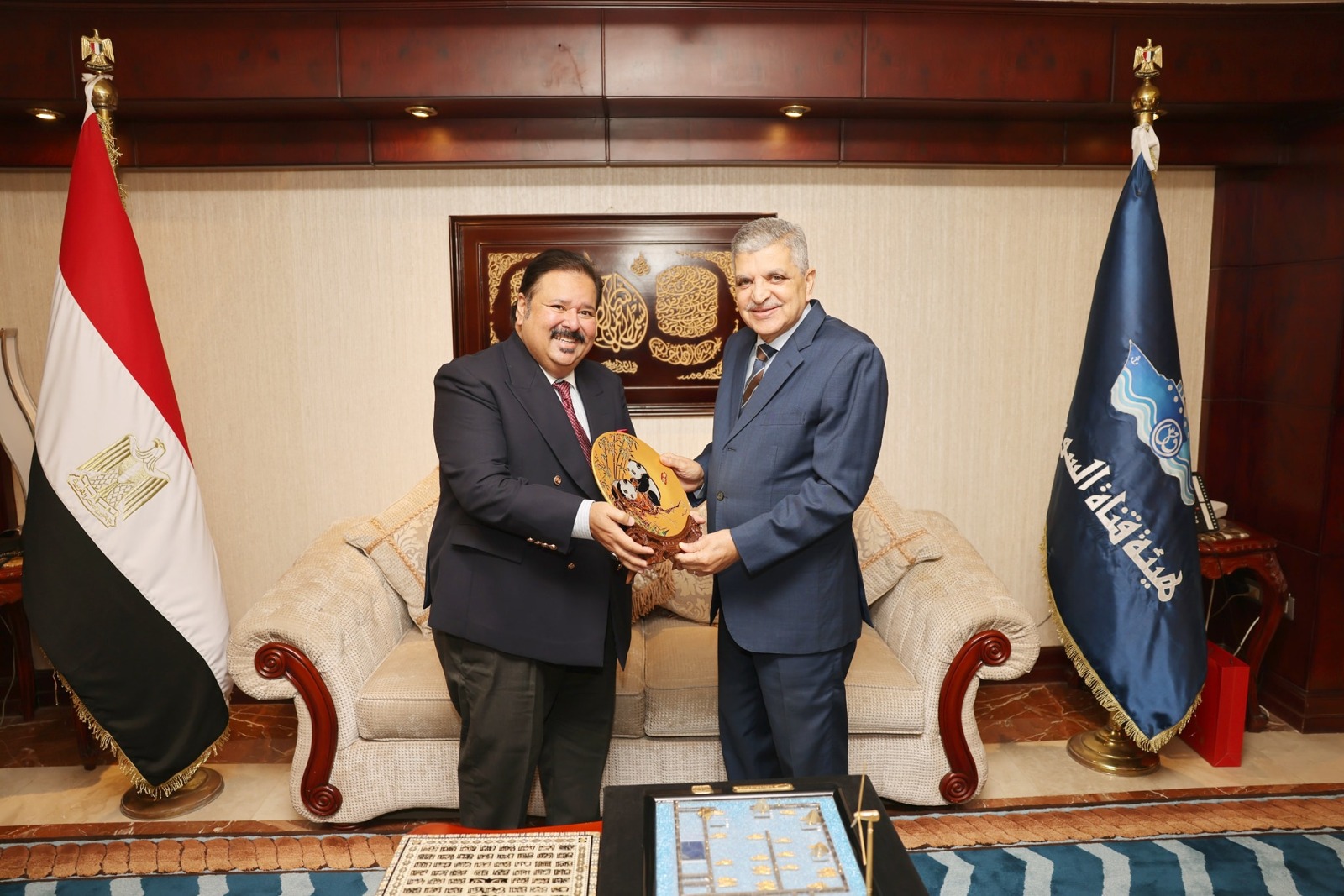
Rabie stressed the Authority’s commitment to maximizing the
use of its assets and resources. He highlighted the Canal’s unique geographic
location as a key advantage for establishing value-added logistics projects
that serve Egypt’s national interests and enhance the Canal’s developmental
role.
He explained that the ongoing negotiations involve three
parties: the Suez Canal Authority, FAMSUN, and IMGS. Their joint efforts aim to
establish a global food logistics hub in Port Fuad.
Rabie noted that the three sides plan to sign a cooperation
protocol soon. The agreement will outline roles and responsibilities and
finalize technical and financial studies, paving the way for actual
implementation in the near future.
Khan expressed his eagerness to cooperate with the Suez
Canal Authority. He pointed to the Canal’s central location as a promising
opportunity for establishing a logistics hub that supports the sustainability
of global food security.
He reaffirmed IMGS’s readiness to share its technical
expertise and cooperate with Egypt in food security projects. He described
Egypt as a strategic gateway to the Middle East and Africa.
He also underlined that the Suez Canal’s global reputation
and strategic location make it a major attraction for international suppliers.
The Canal offers both efficient transportation and sustainable food supply
chains.
IMGS specializes in cargo handling and port services,
including loading, unloading, and freight transport. Meanwhile, FAMSUN is a
global leader in agricultural engineering, technology solutions, and
agro-industrial manufacturing. The company also has extensive expertise in
building strategic storage silos for grains and oils.