
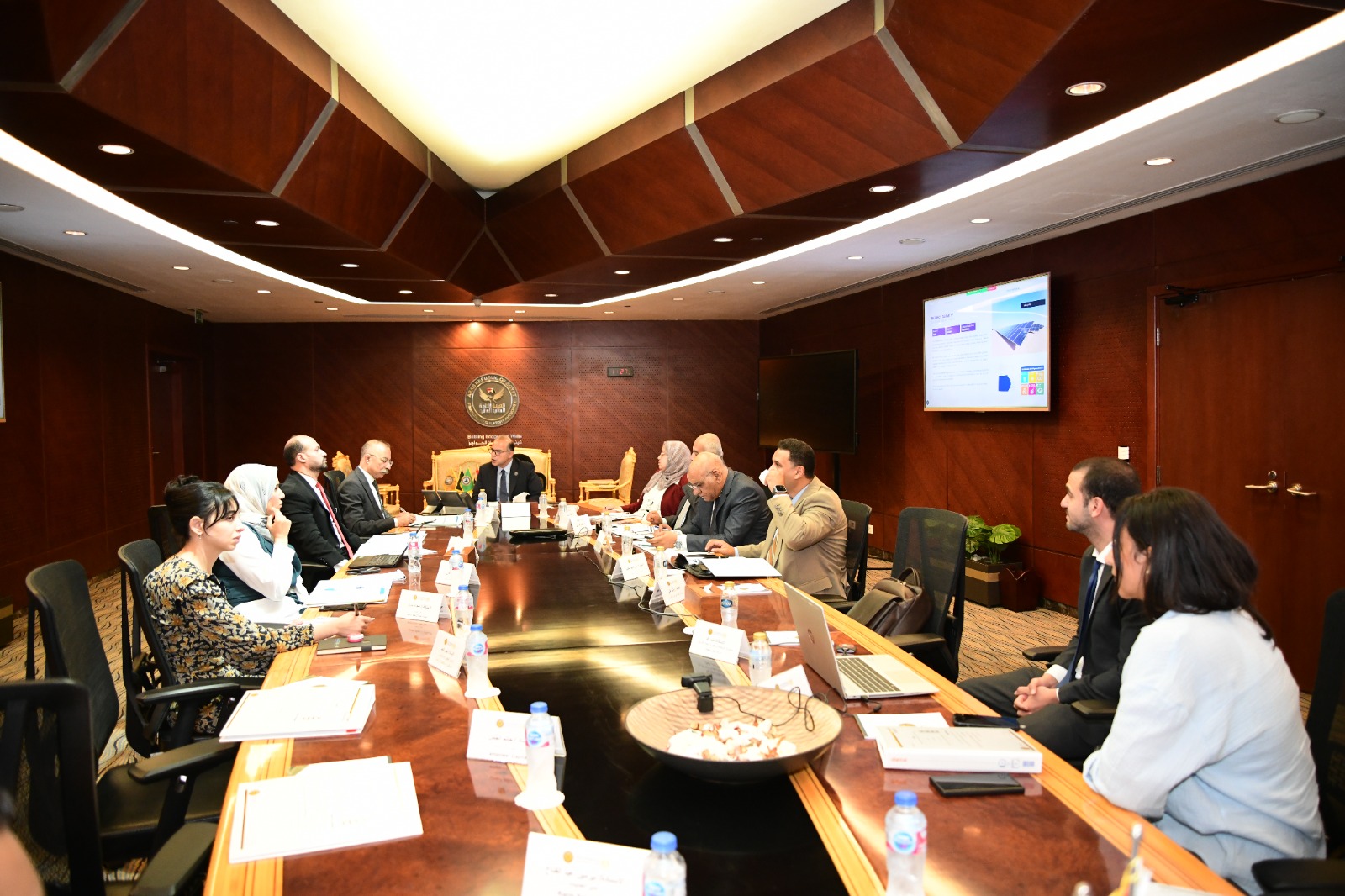
The projects include Abu Minqar Solar PV in the New Valley
Governorate and Soil Organic Enhancement for Climate Change Mitigation (SOC) in
the Oases and Minya. The projects are being developed by Lotus for Agricultural
Development and Investment, Value Network Venture, and Mars for Selling and
Distributing Energy, a subsidiary of KarmSolar operating in renewable energy
production.
The committee also gave initial approval to register Spain’s
Applus as a verification and validation entity for carbon emission reduction
projects with the FRA. The meeting was attended by committee members
representing the FRA, the Ministry of Environment, and the Egyptian Exchange,
in addition to independent experts in carbon markets.
Verification and validation entities registered with the FRA
are responsible for measuring, recording, and certifying environmental projects
that reduce carbon emissions. The entities evaluate project data, including
objectives, technologies used, and estimated emission reductions, to verify the
accuracy of information provided. The process ensures transparency for
investors, institutions, and the public, who can review registered projects and
confirm that they meet their intended goals. The number of registered entities
currently stands at six domestic and international firms.
The total number of voluntary carbon emission reduction
projects registered with the FRA now stands at 34, with 170,000 certificates
already issued and available for trading on the carbon credit platform.
Carbon Credits Registries (CCRs) are centralized electronic
systems that record, issue, and track the transfer of ownership of carbon
reduction certificates generated from projects in accordance with methodologies
established by recognized standard-setting programs.
The Abu Minqar Solar PV project contributes to reducing
carbon emissions through agriculture and renewable energy generation. The SOC
projects reduce emissions by enhancing soil carbon sequestration through
agricultural practices.
The committee also granted preliminary approval for Applus
to operate as an international verification and validation entity after the
company presented a detailed business model and outlined its track record in
several countries.
The FRA reaffirmed its commitment to accelerating the
activation of the voluntary carbon market, which Egypt pioneered as the first
regulated market of its kind in Africa and the region. The market is designed
to enable developers and financiers of carbon reduction projects, whether
agricultural, industrial, or otherwise, to issue carbon reduction certificates
and trade them on dedicated platforms, attracting both local and international
investors.
The FRA emphasized that these efforts align with Egypt’s
strategy to achieve carbon neutrality and reduce emissions, in line with global
objectives to limit the severe consequences of climate change such as wildfires
and floods. The initiative supports Egypt’s pledge made at COP27 to expand
carbon reduction projects, attract new investment, and generate additional
revenue streams for project developers. The objective is to promote sustainable
economic growth and strengthen Egypt’s leadership in this field.
The foundations of the new market were laid by Prime
Ministerial Decree No. 4664 of 2022, which amended the executive regulations of
the Capital Market Law No. 95 of 1992 to classify carbon reduction certificates
as financial instruments. The decree authorized the Egyptian Exchange to
establish a trading platform and created the Supervisory and Oversight Committee
on Carbon Emission Reduction Units, chaired by the FRA Chairman and comprising
representatives of the FRA, the Ministry of Environment, the Egyptian Exchange,
and experts in carbon markets.
The FRA subsequently issued regulations governing the
registration of verification and validation entities for carbon reduction
projects and began receiving applications. Following thorough assessments, six
domestic and international entities were approved. The FRA also introduced
rules for the listing and delisting of carbon reduction certificates on
Egyptian exchanges, as well as standards for accrediting local CCRs. These
registries serve as centralized systems for the issuance, registration, and
tracking of carbon reduction certificates. In parallel, the FRA approved
trading and settlement rules for carbon reduction certificates on the Egyptian
Exchange after extensive consultations and coordination.