
The announcement was based on an official report submitted
by Dr. Mohamed El-Mansi, Head of the Central Administration of Agricultural
Quarantine at the Agricultural Services and Follow-up Sector, which outlined
the latest statistics and progress of agricultural exports.
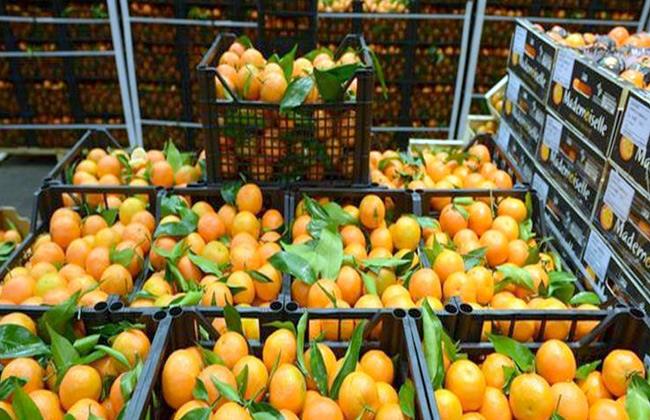
Egyptian citrus topped the list with more than 1.9 million
tons, followed by fresh potatoes with over 1.3 million tons. Fresh onions
ranked third with exports exceeding 246,000 tons, while beans (fresh and dry)
came fourth with more than 216,000 tons. Grapes secured fifth place with
exports surpassing 175,000 tons.
The report also highlighted other leading exports this
season, including sweet potatoes, fresh tomatoes, fresh garlic, mangoes, fresh
strawberries, pomegranates, and guavas.
Minister Farouk stressed that these figures reflect the
steady growth of the agricultural sector and its increasing ability to compete
in global markets. He underlined Egypt’s commitment to developing the sector,
enhancing its competitiveness, opening new markets for agricultural products,
and applying the highest quality standards to ensure their access to
international markets.
He added that the combined efforts of farmers, producers,
exporters, and regulatory bodies, particularly the Agricultural Quarantine
Authority, the ministry’s reference laboratories, and its external agricultural
relations, were central to this success. He affirmed that the ministry will
continue providing the necessary support to strengthen production and boost
exports, contributing to the national economy and achieving food security.
Farouk emphasized that this significant growth in
agricultural exports is a positive indicator of the strength of the Egyptian
economy, as it increases foreign currency inflows and generates new job
opportunities across the production and export chain.
Dr. Mohamed El-Mansi noted the success of opening eight new
export markets for crops including grapes, pomegranates, mangoes, potatoes, and
potato seeds. The Agricultural Quarantine Authority has successfully expanded
into markets such as South Africa, Costa Rica, Uzbekistan, India, and the
Philippines. Strawberry seedlings were also exported to Brazil and Peru in
Latin America.
He added that this surge in exports is the result of
adopting the latest international standards, which play a key role in
maintaining the quality and reputation of Egyptian produce in global markets.
This ensures smooth trade flows and the removal of potential obstacles, while
coinciding with efforts to open more export markets and strengthen oversight
through the crop coding system applied by the Agricultural Quarantine
Authority.