
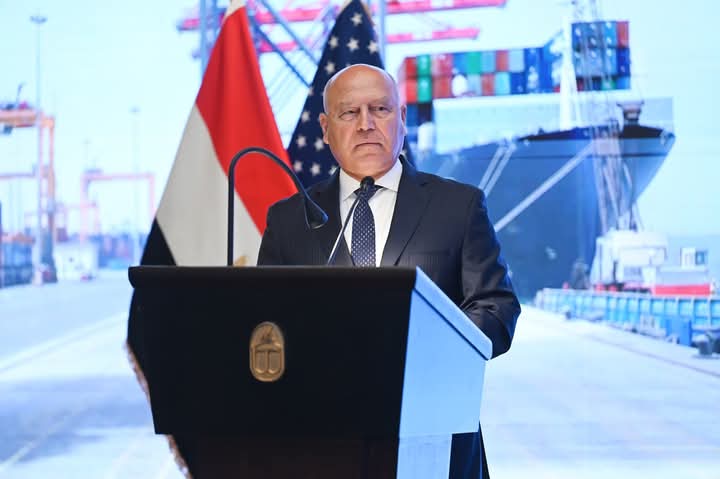
Al Wazir participated in the ministerial session titled "The Future of Connectivity in a Fragmented World," alongside Turkish Foreign Minister Hakan Fidan and senior officials from the United Nations and the International Transport Forum. He emphasized the resilience of Egyptian-Turkish relations and the critical role of transport in fostering sustainable development and regional integration. He stressed that transport integration is no longer optional but essential, given global supply chain challenges, climate change, and accelerating development demands. This forum, he noted, served as a crucial platform for exchanging insights and discussing ways to enhance regional and international transport infrastructure connectivity.
He acknowledged Turkey's pivotal role in the global
transport network due to its strategic location and vast logistical
capabilities. Al Wazir articulated Egypt's belief in strengthening partnerships
with Turkey across maritime, land, rail, and air transport to establish
efficient trade and navigation corridors linking Asia, Africa, and Europe,
thereby facilitating the movement of goods and people.
Al Wazir highlighted that Egyptian-Turkish cooperation could
significantly contribute to African development through joint projects in port development,
cross-border railway lines, and new logistical corridors. These initiatives
would boost intra-African trade and open new markets for African products. He
added that Egypt's national transport strategy aims for a qualitative leap in
the sector by adopting smart and sustainable transport methods, expanding
infrastructure, and enhancing regional and international connectivity,
fostering new avenues of cooperation with friendly nations, particularly
Turkey.
The Minister underscored that in a world witnessing
geopolitical shifts and intense global competition, rapid globalization,
economic changes, and urgent climate challenges, enhancing global transport
connectivity is paramount for sustainable development, economic growth, and
regional integration. He stressed that transport corridors are vital tools for
bringing people closer, achieving common interests, and facilitating
cross-border trade. He emphasized the importance of building flexible and
efficient multimodal transport corridors, based on coordinated planning and
institutional cooperation, to withstand challenges and provide secure,
effective alternatives during crises.
Engineer Al Wazir affirmed that, guided by President
El-Sisi's vision to leverage Egypt's unique geographical position on the Red
and Mediterranean Seas and the vital Suez Canal, the Ministry of Transport has
launched seven integrated international developmental logistical corridors.
These corridors aim to connect production areas (industrial, agricultural,
mining, service) with seaports via fast and secure transport, incorporating dry
ports and integrated logistical zones. The corridors include:
Arish – Taba Corridor
Sokhna – Alexandria Corridor
Safaga – Qena – Abu Tartour Corridor
Cairo – Alexandria Corridor
Tanta – Mansoura – Damietta Corridor
Gargoub – Salloum Corridor
Cairo – Aswan – Abu Simbel Corridor
He further stated that Egypt is working to link these national
logistical corridors with major regional and international ones, reinforcing
its role as a global transit hub connecting key production and consumption
centers worldwide.
Key aspects of this connectivity include:
Integration with China's Belt and Road Initiative: Egypt
serves as a crucial point within this initiative, particularly through the Suez
Canal Axis and its economic zone, which hosts significant industrial and
logistical projects with Chinese participation. Railway and land transport
links with neighboring Arab and African countries further integrate Chinese
transcontinental corridors through Egypt. Collaboration with China extends to
port infrastructure projects, notably Hutchison Ports' investments in Egyptian
ports and the integration of the Sokhna-Alexandria logistical corridor into the
Silk Road Initiative.
Integration into the African Market: Egypt is strengthening
connectivity corridors with the Nile Basin and Horn of Africa nations through
projects like the Cairo-Cape Town axis, the Egypt-Chad road, and river
transport initiatives linking Lake Victoria to the Mediterranean via the Nile
River (VIC – MID), opening new markets in East and Central Africa.
India – Gulf – Europe (IMEC) Corridor: This corridor, with
Eastern (India – Arabian Gulf) and Northern (Arabian Gulf – Europe) routes,
could see Egypt's participation upon completion of the Taba/Arish,
Sokhna/Alexandria, and Safaga/Qena/Alexandria logistical corridors. Egypt has
proposed several ways to integrate these routes into the IMEC project.
Development Road: This project connects Iraq's Grand Faw
Port to the Arabian Gulf, Turkey, and Europe. A quadrilateral MoU was signed in
April 2024 between Iraq, Qatar, the UAE, and Turkey. Egypt is coordinating with
Iraq for Egyptian companies to participate in the railway and highway
construction from Faw Port to Turkey, integrating with the Arab Trade Line
(Jordan – Iraq – Egypt) via the Arish/Taba logistical corridor.
Al Wazir concluded that this integration is reshaping the
region's transport and trade landscape, positioning Egypt not merely as a
transit country but as a global production, logistics, and distribution hub. He
emphasized that such connectivity is crucial for addressing global shifts,
fostering economic partnerships based on mutual interests, adaptability, and
evidence-based planning, and building resilient and crisis-responsive transport
systems.
He also reiterated the Suez Canal's indispensable role as a vital global waterway, handling approximately 100 ships daily. He highlighted the immense capacity of a single vessel carrying 24,000 containers, equivalent to 240 trains, or 2.4 million tons in one direction, underscoring the canal's essential link for world trade between East and West.