
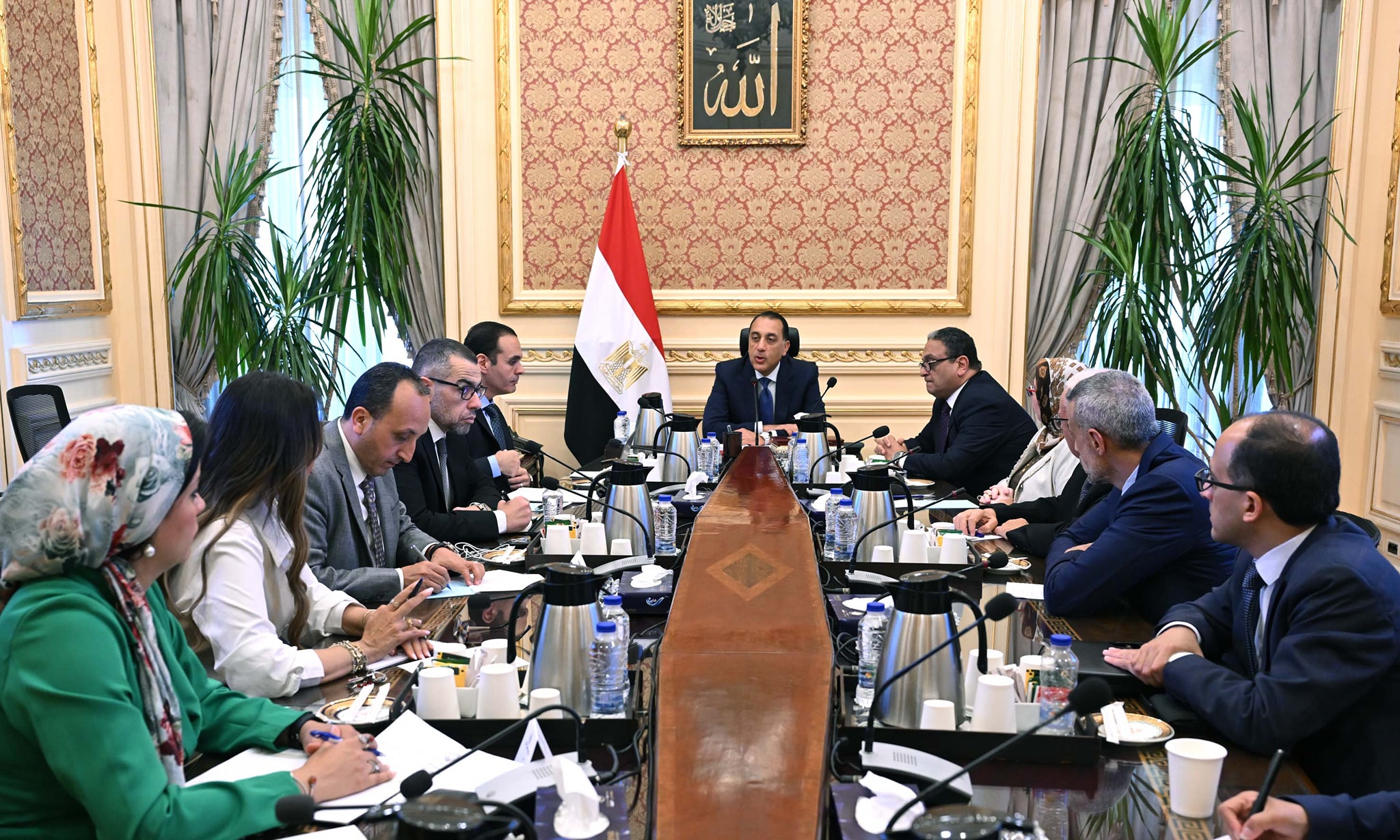
Dr. Madbouly affirmed his keenness to listen to all views and proposals regarding dealing with the ongoing regional events, which are witnessing a significant escalation. He said the government is closely monitoring regional events and assessing their impact on the domestic situation, particularly the economic situation. He noted that a crisis committee has been formed to monitor the repercussions of these events, in addition to the ongoing monitoring by the Ministerial Economic Group.
The Prime Minister affirmed that Egypt's stock of essential commodities is secure and reassuring, adding that there is agreement with the banking system to provide all the foreign currency needs of the various industrial sectors and all production requirements.
Members of the Macroeconomic Advisory Committee reviewed the risks, challenges, and scenarios they proposed for dealing with current regional geopolitical events, particularly with regard to important issues such as energy security, supply chains, the general budget, exchange rate stability, Suez Canal revenues, inflation rates, and other issues. They explained that the regional geopolitical crisis requires careful monitoring of markets, combating hidden inflation, improving energy efficiency, continuing fiscal discipline policies, diversifying energy supply sources, rationalizing consumption, and enhancing plant maintenance.
The committee members stressed the need for close coordination between the government and the Central Bank to contribute to maintaining a stable exchange rate and maintaining exchange rate flexibility, within the framework of the Monetary and Fiscal Policy Coordination Committee. They also highlighted the need to continue and accelerate structural reform measures to attract more foreign direct investment and support digital platforms for export to Africa and the Gulf.