
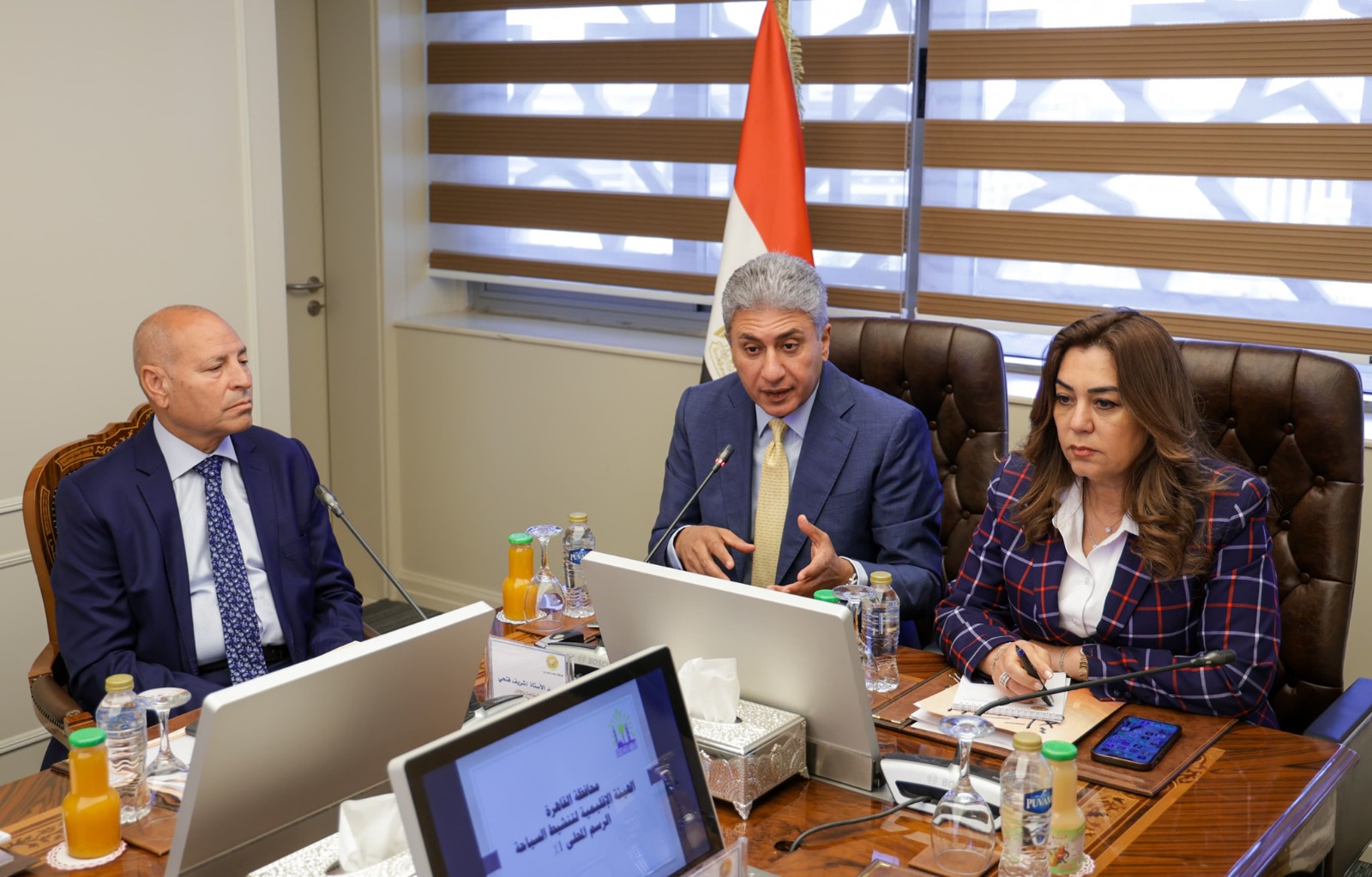
The session focused on collaborative strategies to create a transparent and unified mechanism for governorate-levied fees on hotels and tourism establishments. Discussions involved auditing and revising existing fees, agreeing on standardized values, and ensuring transparent publicization. The goal is to unify fee structures and collection via a single state entity and electronic platform, encouraging tourism investment and easing burdens on investors nationwide.
The meeting also explored strengthening cooperation between
the two ministries on oversight and inspection of tourism establishments to
improve service quality for citizens and tourists. They further discussed
bolstering regional tourism promotion bodies in partnership with the Egyptian
General Authority for Tourism Promotion and considered a future plan to enhance
human resource efficiency to support the state's tourism revitalization vision
and promote Egypt's diverse destinations.
Dr. Manal Awad stressed the Ministry's commitment to
coordinating with the Ministry of Tourism and Antiquities to establish a
unified system for tourism and hotel procedures and fees, aiming to boost
investment. She also directed the development of a training plan at the Saqqara
Local Development Training Center for regional tourism promotion employees,
involving experts from the Ministry of Tourism and Antiquities to standardize
promotional messaging for Egypt, aligning with the political leadership's
vision.
Sherif Fathy emphasized the Egyptian state's strong focus on
the tourism and antiquities sector and the collaborative efforts across
ministries to advance it. He highlighted the commitment to resolving challenges
for tourism investors, improving services at destinations, and supporting
investment to increase hotel capacity for anticipated tourism growth,
leveraging Egypt's unique assets.
During the meeting, Dr. Ibrahim Saber detailed the governorate's initiatives to support tourism activity and the services provided to hotel and tourism establishments. These initiatives include development and efficiency enhancement projects in the areas surrounding these establishments, as well as the nature and utilization of the fees collected from them.