
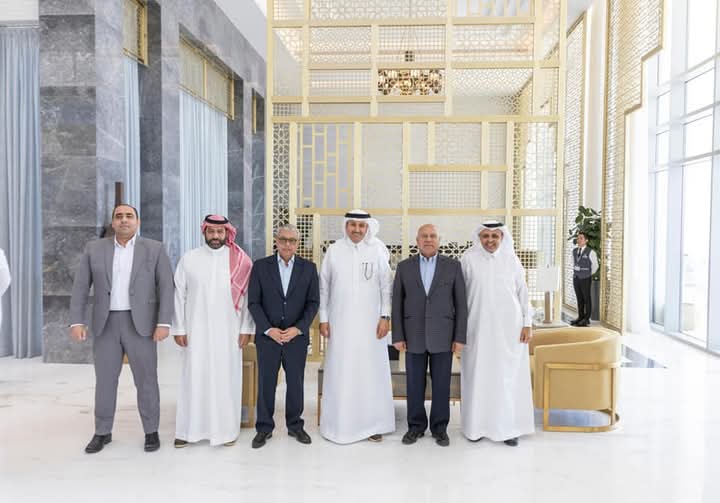
Al-Wazir watched a presentation about the project, its objectives, and its impact on achieving development, increasing growth, and strengthening the national economy.
The project is located in the northwest of the Kingdom, extending
along the coast for a distance of 468 km. It includes several deserts and
pristine beaches rich in coral reefs and marine life. The project area
comprises approximately 41 islands, the most important of which is Sindalah
Island, the project's main island. One of the pillars of the NEOM project is
its seafront overlooking the Red Sea, a major artery for global trade. The
project is one of the Kingdom's most important projects to achieve Saudi Vision
2030.
The four most important areas in NEOM are The Line, the advanced
industrial city of Oxagon, the mountain destination of Trojena, and the marine
destination of Sindalah Island.
The Trojena project, an eco-friendly tourism project, was reviewed.
The Line is a project to build a city of one million people with a new concept
of sustainable urban development, while Sindalah Island, NEOM's first marine
tourism destination, is designed to become a major gateway for cruises on the
Red Sea.
The presentation included a review of the Oxagon project, the NEOM
industrial city and the economic and industrial engine of NEOM. It is the
largest floating industrial complex in the world, located in NEOM, northwest of
the Kingdom on the Red Sea coast. Its strategic location ensures local,
regional, and global accessibility, and its goal is to create a truly circular
economy. Its establishment was announced in November 2021. Oxagon relies on
seven key sectors for industrial development, powered by 100% renewable energy:
sustainable energy, autonomous mobility, innovative water solutions,
sustainable food production, health and well-being, technology and digital
manufacturing, and modern construction methods.
Oxagon will include the
world's largest floating building, the first integrated logistics center
housing most of the industrial city's residents, the world's largest green
hydrogen project, powered by desalinated water generated from clean energy and
electricity, a first-of-its-kind port with a capacity of 3.5 million
twenty-foot equivalent units (TEUs), and an institute for marine science and
research. Oxagon is also developing the world's first integrated supply chain
to provide innovative, customer-centric logistics solutions inside and outside
NEOM.
A presentation was also given about NEOM Port, the closest to
Egyptian ports, especially Safaga Port, which currently has a throughput rate
of 90 to 95%, with both imports and exports arriving via Safaga Port. The port
covers an area of 6 million square meters and has three main terminals: two
container terminals and a general cargo terminal.
It's worth noting that NEOM Port opened to investors and the
business sector in May 2023, attracting a consortium of companies from the
BESIX Group and Modern Building Leaders (MBL), which partnered with BOSKALIS.
These companies are among the first European contracting companies to win
design and construction contracts worth SAR 2 billion from NEOM. This will
begin work on the first phase of the port's development, including awarding
contracts for the construction of several mobile cranes, container terminals,
and other equipment.
NEOM also announced the transfer of management of Duba Port from the Saudi Ports Authority to NEOM. Its name has now been changed to NEOM Port, in line with national transformation policies to organize port operations and transform them into global logistics centers that enhance the Kingdom's connection to international markets. The port is located in the Oxagon on the Red Sea for advanced and sustainable industries and is the main maritime trade gateway into the northwestern region of the Kingdom.