
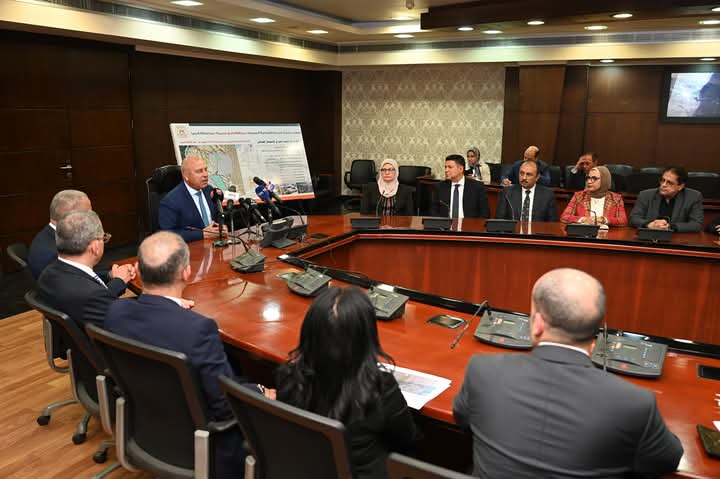
The Minister highlighted the spinning, weaving, and ready-made garments sector as a key driver of Egypt's economic growth and youth employment, citing Egypt's competitive advantages: abundant raw materials, skilled labor, strategic proximity to export ports, extensive free trade agreements, and long-standing expertise in utilizing Egyptian cotton.
He outlined a plan to significantly increase Egyptian
textile exports, particularly ready-made garments, aiming for $11.5 billion
within five years, up from the current $2.8 billion. The announcement was made
in the presence of key industry leaders, including Engineer Ahmed Elsewedy, Chairman of Elsewedy Electric Group, Fadel Marzouk, Chairman of Ready-Made
Garments Export Council), Dr. Nahed Youssef, Head of General Authority for
Industrial Development, and senior officials from the Ministry of Industry.
The Minister detailed the launch of two integrated textile cities, totaling 11 million square meters, in the Wadi El-Saririya area of Minya and the northern Fayoum industrial zone:
Minya Textile City: Planned for Wadi Saririya, Minya Governorate,
this 5.5 million square meter project will involve investments of 12 billion
Egyptian pounds. It marks a significant advancement for the textile industry in
Upper Egypt, becoming the region's first such city and revitalizing Minya's
historical textile heritage. The governorate's strategic location offers
proximity to key transportation arteries like the Upper Egypt Free Road and
major seaports (Ain Sokhna, Safaga, Dekheila), as well as the Minya railway
station. Upon completion, the city is projected to attract $1.5 billion in
direct foreign and local investments and create 250,000 direct and indirect
jobs.
Fayoum Textile City: Situated in northern Fayoum, considered the primary gateway to Upper Egypt, this 5.5 million square meter city will attract investments exceeding 15 billion Egyptian pounds. It is expected to generate 150,000 direct and indirect job opportunities. The site benefits from its closeness to the capital and direct connections to vital routes like the Giza/Fayoum Road and the Regional Ring Road (serving a market of approximately 50 million people across six governorates). Its proximity to the high-speed electric train (4.5 km) and the New October dry port (30 km) further enhances its investment potential. This city is also anticipated to attract $1.5 billion in direct foreign and local investments upon full development.