
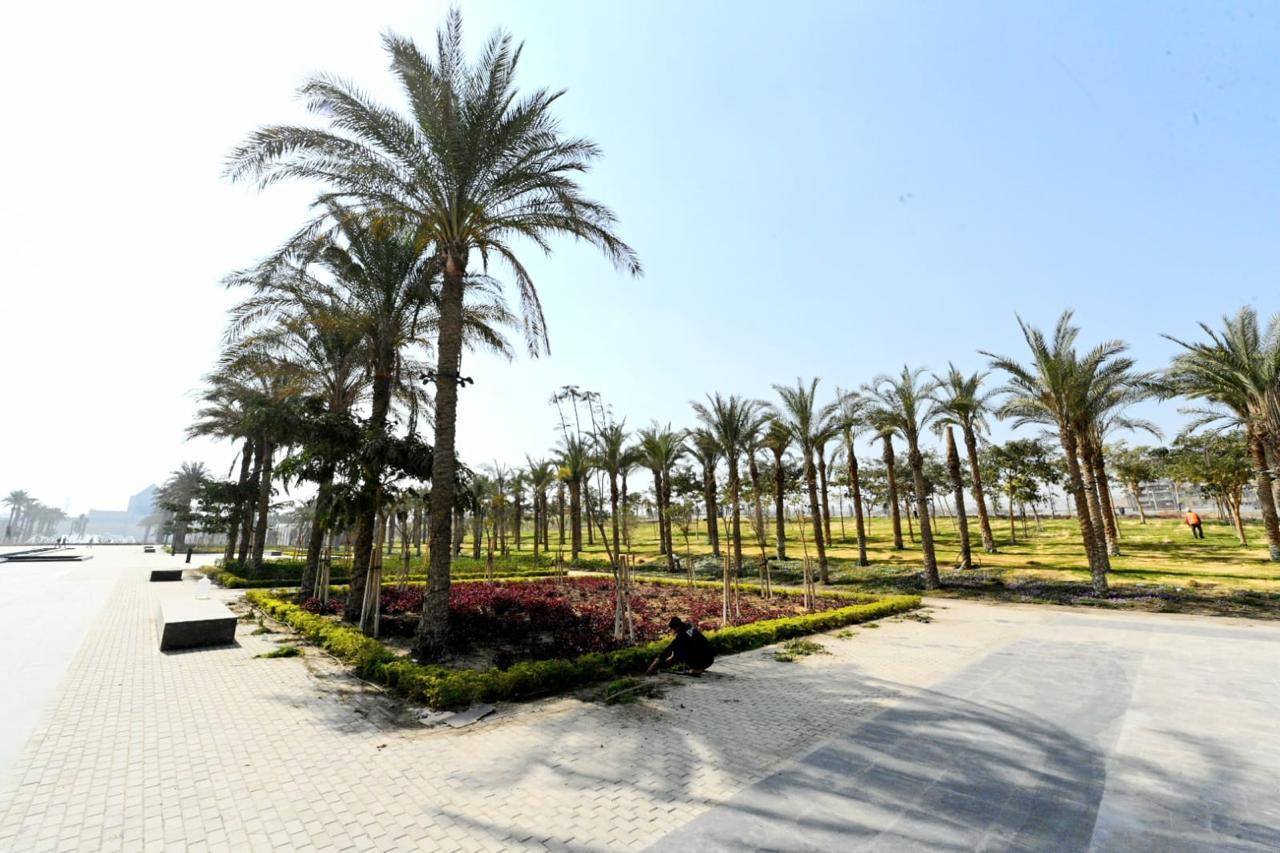
The 500-feddan development, located in the heart of Old Cairo, is positioned as a major cultural and environmental hub. It sits adjacent to the National Museum of Egyptian Civilization (NMEC), the Ain El-Sira lake, and the historic Religious Complex.
The project aims to transform the historic area into a
"civilizational lung" for the capital, blending tourism, heritage,
and green spaces. During the site tour, officials inspected several key zones:
Investment & Entertainment Zone: Spanning 131,000 square
meters, this area overlooks Ain El-Hayat lake and features 12 restaurants, four
malls, and four parking structures. It also includes an "Arena"
district with a Roman theater and water fountains for large-scale official
celebrations.
Cultural District: Located at the park's main entrance, this
zone features a central axis leading to the NMEC, surrounded by plazas for
year-round cultural events and dining.
The Hills and Valley: The park is divided into three
distinct hills connected by a man-made river.
Qasaba Hill: Features a tourist hotel, artificial lake, and
waterfalls.
Excavation Hill: A 47-feddan archaeological site where
visitors can view the remains of the ancient city of Fustat via a one-kilometer
raised walkway.
Heritage Gardens Hill: Offers terraces and restaurants with
panoramic views of Cairo’s Citadel and the Pyramids.
Traditional Markets: A 60,000-square-meter commercial zone
dedicated to reviving Egyptian crafts such as glassmaking, ceramics, and
textiles. This area will also house a three-star hotel.

Minister Al-Sherbiny emphasized that the project reflects
President Abdel Fattah El-Sisi's commitment to urban renewal. Technical teams
are currently addressing final observations to ensure the site is ready for its
high-profile inauguration.
Advisor Khaled Fouda praised the execution of the project, noting its focus on sustainability and highlighting the historical value of the region for both citizens and foreign tourists.