
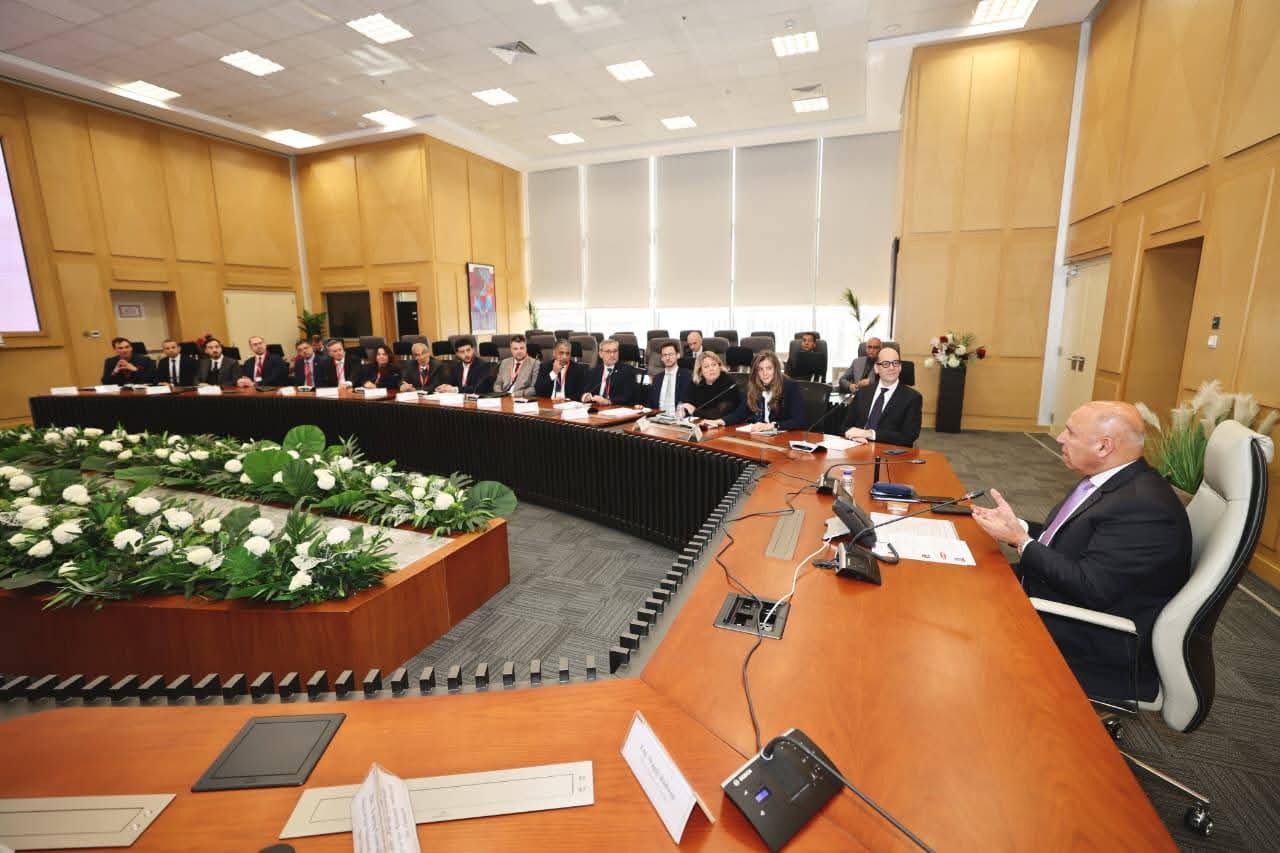
The talks focused on establishing Egypt as a regional hub for the production of transport components and equipment, targeting exports to Africa, the Middle East, and Arab nations. The move aligns with presidential directives to localize various industries, particularly the transport sector.
Al-Wazir emphasized the depth of bilateral ties, stating
that Egypt is no longer merely an import market but is moving toward domestic
production. He expressed readiness to collaborate with global firms committed
to technology transfer.
During the meeting, officials discussed the status of a
2024-2025 supply contract with Plasser & Theurer, a specialist in rail
maintenance machinery. The contract includes the delivery of a modern fleet of
track maintenance equipment, such as tamping machines and ballast regulators.
Discussions also explored establishing a local factory for spare parts or assembling
these machines in Egypt.
The minister also reviewed progress with voestalpine, which
has already established a joint venture to produce railway switches at the
Al-Abbaseya workshops in Cairo. The facility has reached a production rate of
50 switches per month, with plans to scale up to 600 annually for local use and
export. Additionally, the meeting covered the establishment of a high-tech
production line for the switches required by Egypt’s upcoming High-Speed
Electric Train network.
Talks with Lion Industrial Materials centered on a proposal
to build a factory for train wheels and axles for freight, passenger, and metro
trains. Austrian officials welcomed the proposal and agreed to further
technical meetings.
Other firms in the delegation included: Frauscher
Sensortechnik for sensor and control systems, Fronius International for welding
technologies and industrial electronics, Gabriel for shock absorption systems, Getzner
Werkstoffe for vibration and acoustic insulation, Linsinger Maschinenbau Gesellschaft
for heavy rail equipment, and TÜV Rheinland InterTraffic for testing,
inspection, and certification.
Al-Wazir called for intensified meetings between the Austrian companies and Egyptian railway and tunnel authorities to expedite feasibility studies and activate cooperation based on Egypt's infrastructure needs.