
The uptick in demand follows the official implementation of a landmark law allowing non-Saudis to own real estate, which came into effect on Thursday, January 22, 2026.
The Saudi Press Agency (SPA), quoting the Kingdom’s Real
Estate General Authority, confirmed that the new ownership regulations are now
active. The law is part of a broader legislative overhaul aimed at regulating
and opening the Saudi property market to international investors and residents.

Saudi Arabia’s Real Estate General Authority announced
Friday that applications for non-Saudi property ownership are now being
processed through the official digital portal, SRE (Saudi Real Estate).
The service is available to residents, non-residents, and
foreign corporate entities, subject to specific regulatory guidelines and
procedures.
The Authority outlined distinct pathways for different
categories of buyers:
Residents: Domestic residents can apply directly through the
portal using their residence permit (Iqama) number. The system features
automated verification to ensure all legal requirements are met instantly;
Non-Residents: Investors living outside the Kingdom must
first coordinate with Saudi embassies or representative offices abroad to issue
a digital identity before completing their application on the portal;
Foreign Entities: Companies without a physical presence in
the Kingdom must first register with the Ministry of Investment via the Invest
Saudi platform to obtain a unified identification number (starting with the
digit 7) before proceeding with the purchase.

The new real estate regulations will allow foreign
individuals and entities to own property across the Kingdom, though strict
geographical controls remain for its holiest sites.
The Real Estate General Authority clarified that while
ownership is open in major hubs like Riyadh and Jeddah, a specific regulatory
framework will govern Mecca and Medina. Detailed geographical zones are
expected to be announced in the first quarter of this year. Ownership in the
two holy cities will be restricted to Saudi companies and Muslim individuals
from both inside and outside the Kingdom.
The law aims to transform the Saudi property landscape by:
Attracting International Developers: Bringing in specialized
global firms to elevate project quality;
Diversifying the Economy: Stimulating growth across the
residential, commercial, industrial, and tourism sectors;
Job Creation: Generating extensive employment opportunities
for Saudi citizens in urban development and related real estate activities.
The move is a cornerstone of the Kingdom’s strategy to
increase the real estate sector’s contribution to the non-oil GDP sustainably.
Among the projects seeing the highest demand, particularly
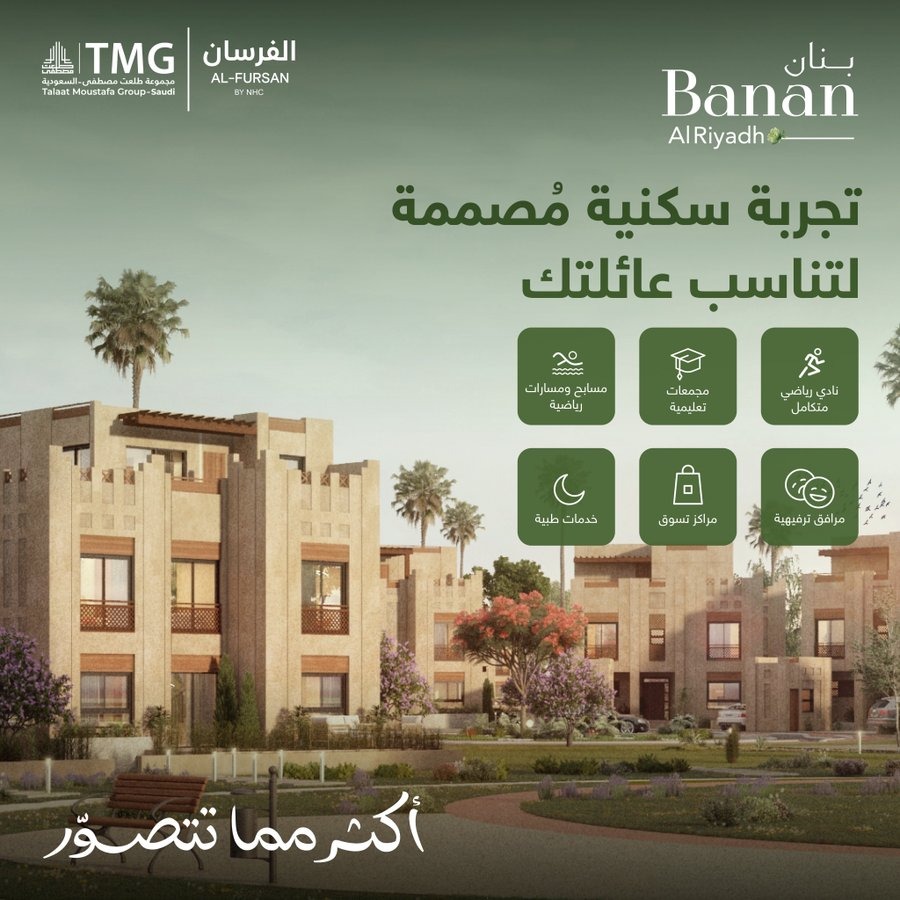
from Egyptian expatriates, is the Banan city development in Riyadh. Developed by
Talaat Moustafa Group (TMG), the project spans 10 million square meters and is
being marketed as a flagship smart city.
The development integrates TMG’s 50 years of experience in mega-city planning with Saudi architectural identity. It features vast green spaces and a comprehensive ecosystem of health, educational, and leisure services, all powered by advanced smart technology aimed at enhancing quality of life.