
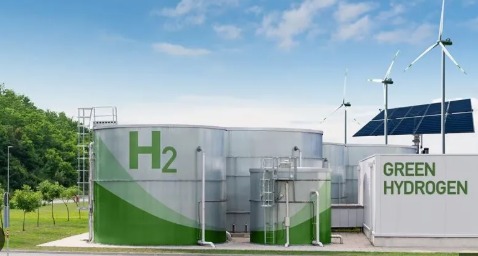
The official explained that all projects will undergo comprehensive reviews and new studies in the coming period, with a reassessment of economic viability in light of higher costs and uncertain hydrogen demand and transport capabilities. He also revealed that several international financiers have withdrawn support for these projects, despite some having received approvals from the German Development and Reconstruction Bank (KfW), citing weak competition and the absence of long-term energy purchase agreements.
The official added that this development comes as the region
witnesses a global race toward clean energy, with countries such as Saudi
Arabia, the United Arab Emirates (UAE), Egypt, and Morocco announcing
large-scale green hydrogen projects. However, economic challenges have prompted
some companies to reconsider their plans. In the same context, the UAE-based
Masdar company redirected billions of dollars from green hydrogen investments
to artificial intelligence projects, according to Bloomberg, reflecting a
decline in demand for a fuel once regarded as a cornerstone of the clean energy
transition.
The official emphasized that implementing companies are
seeking to avoid repeating past mistakes in renewable energy projects.
Previously, the kilowatt-hour price had been set at around 14 cents, whereas it
has now fallen to approximately 2 cents, necessitating a comprehensive
reassessment of the sector before moving forward with project implementation.