
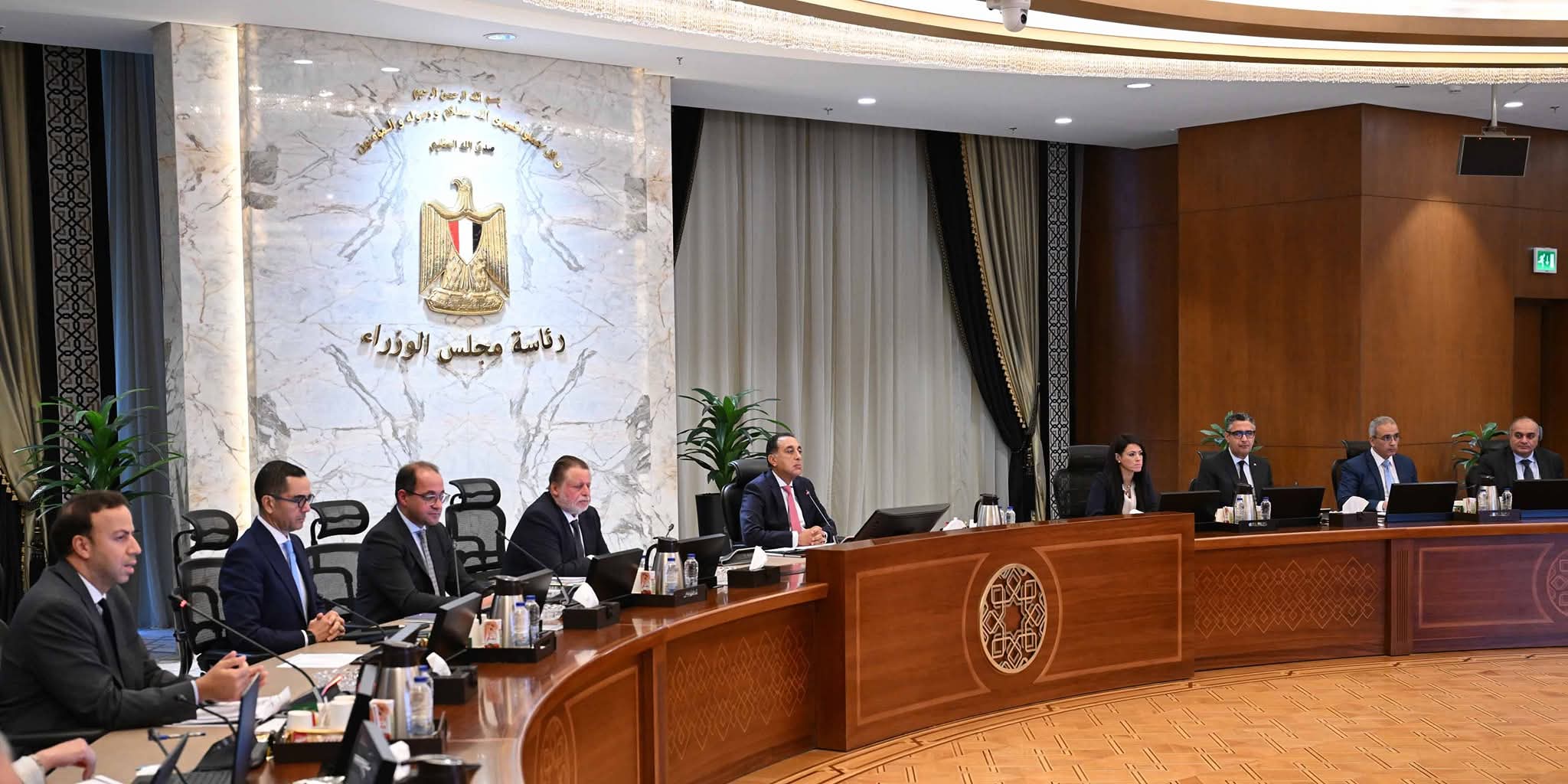
Attending the session were Central Bank Governor Hassan Abdalla, Minister of Planning, Economic Development and International Cooperation Dr. Rania Al-Mashat, Minister of Finance Ahmed Kouchouk, Minister of Supply and Internal Trade Dr. Sherif Farouk, Minister of Investment and Foreign Trade Engineer Hassan Al-Khatib, Deputy Minister of Finance for Financial Policies Yasser Sobhi, and Central Bank Deputy Governor Ramy Aboulnaga, along with other concerned ministry and Central Bank officials.
Cabinet Spokesman Counselor Mohamed El-Homossany stated that
the meeting reviewed recent developments in the inflation rate, noting a marked
decline this year.
"The general inflation rate in August fell to 12%, down
from 24% in January of last year," El-Homossany said. He added that the core
inflation rate also saw a drop from 22.6% in January 2025 to 10.7% in August
2025. This very substantial decline is contrasted with the core inflation
rate's peak in the last quarter of 2023, when it neared 40%.
He emphasized that this reduction was a result of the coordination
and measures taken by the government and the Central Bank. The lower inflation
was driven by a slowdown in monthly developments—which recorded rates lower
than their average before 2022—a recovery in food commodity prices from
previous shocks, and a gradual, albeit slower, reduction in the impact of past
shocks on non-food goods and services.
The spokesman further noted that the economic ministerial
group meeting acknowledged the Ministry of Finance's successful issuance of new
sovereign sukuk (Islamic bonds) valued at $1.5 billion across two tranches,
with subscription requests exceeding $9 billion. This, he noted, reflects a
significant improvement in the perception of the Egyptian economy by
international investors.
El- Homossany also mentioned that the meeting reviewed a
report from the Ministry of Planning, Economic Development and International
Cooperation on Gross Domestic Product (GDP) developments during the fourth
quarter and the full fiscal year 2024/2025.
The report indicated a decrease in inflation rates, an
increase in remittances from expatriate workers, and continued GDP growth,
which recorded an increase of 5%, marking the highest quarterly growth rate in
three years.
The Cabinet Spokesman detailed other discussion points:
Public Investment Governance: The meeting reviewed efforts
to govern public investments during the 2024-2025 fiscal year. The decision to
govern public investments has helped to inventory all state-owned companies and
entities, which contributed to the verification of public investment figures
across various bodies and institutions. This also had a positive effect on controlling
expenditure in the GDP.
Trade Policy Document: Discussions were held on the Egyptian
state's Trade Policy Document. The document aims to integrate investment with
trade within a unified framework and contribute to achieving targets, including
reaching $145 billion in exports by 2030.
The trade policy's objectives, he added, include reducing
the trade balance deficit by maximizing exports and deepening local industry,
without resorting to restrictions that impede imports or production. It also
positions investment as a pivotal tool to stimulate export-oriented production
capacity, narrow the trade gap, and pursue the transformation of Egypt into a regional
hub for industry and services directed at foreign markets.
Finally, the meeting confirmed that the Trade Policy Document is based on protecting national industry from harmful practices through regulated trade tools and adherence to World Trade Organization (WTO) rules. It also focuses on stimulating exports through well-studied action plans targeting priority markets and enhancing competitiveness and facilitating procedures as an alternative to restrictive trade policies.