
Badawi chaired a meeting with key sector leaders, including Petroleum Authority CEO Salah Abdel Karim, Ahmed Adel, an adviser to the government of Fujairah Emirate, and officials from the Fujairah Oil and Gas Corporation.
During the meeting, Badawi underscored the importance of
accelerating executive steps for the project to establish a storage, trading,
and distribution hub for crude oil and petroleum products at Al Hamra port. He
said the project would be modeled after Fujairah port, which he described as a
vital global center for the oil trade.
The Minister directed officials to set a clear timeline for
the project's phases, leveraging Fujairah port's management, operational
systems, international accreditation certificates, and latest safety protocols.
Adel stated that recent meetings were productive and led to
the identification of implementation priorities, crediting the full cooperation
of Egyptian petroleum sector officials. He noted that both sides have the
necessary resources and will to ensure the project's success and timely
execution, adding that it will be implemented in several stages.
WEPCO chairman Ibrahim Massoud briefed the minister on the
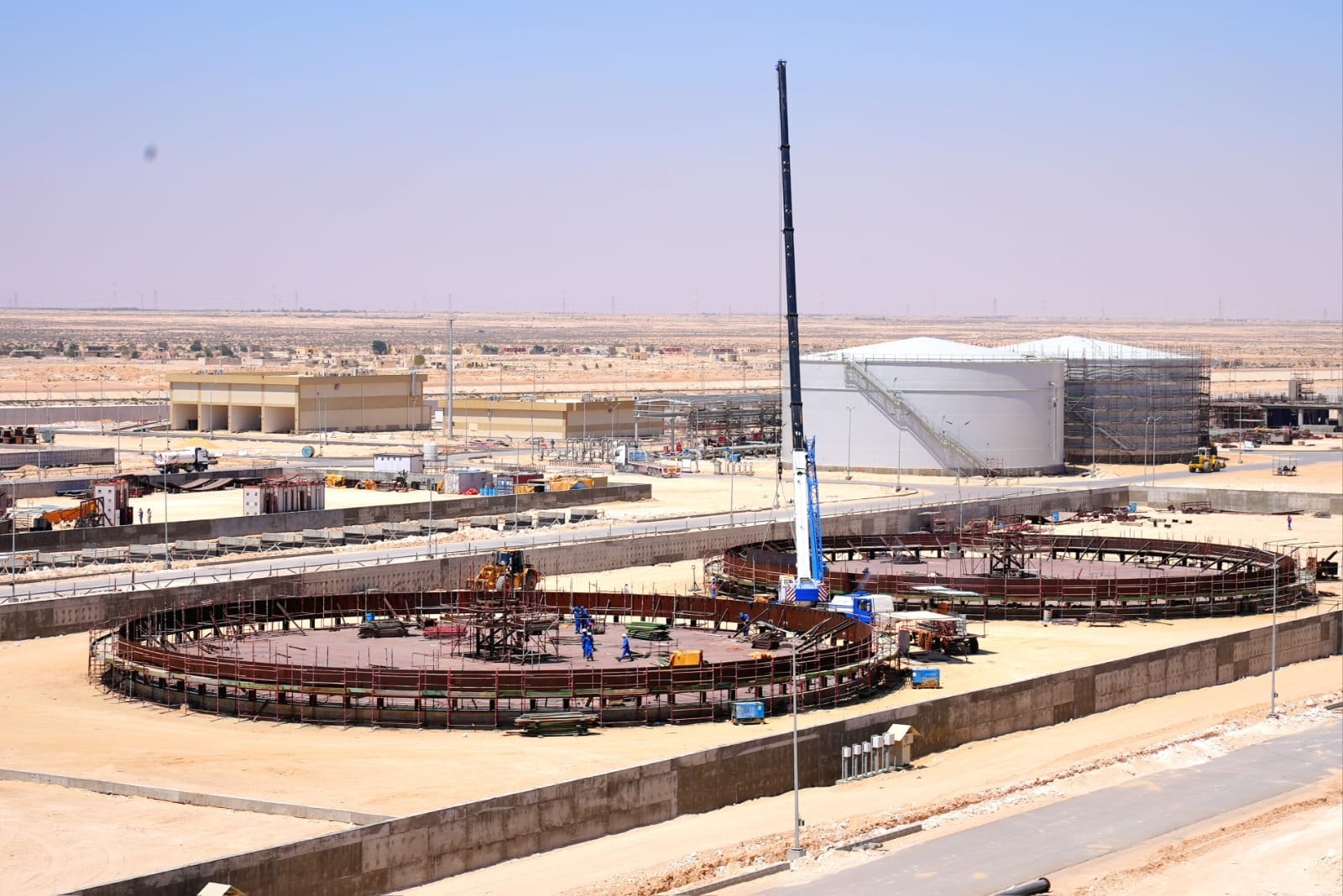
current status of the port's northern and southern expansion zones. In the
northern zone, four new crude oil storage tanks are under construction to
increase the total capacity from 2.8 million barrels to 5.3 million barrels.
Massoud said two of the new tanks are expected to be
operational by the end of this year, with the remaining two entering service in
the first quarter of next year. Foundations for four more tanks have already
been completed.
In the southern zone, Massoud added that a fully integrated
area for storing, handling, and shipping petroleum products with a capacity of
130,000 tons is being built in two phases. The first phase, set to conclude by
year's end, includes two diesel storage tanks. The second phase, scheduled for
the second quarter of next year, will add six tanks for gasoline, diesel, and
jet fuel.
The long-term vision is to boost the port's capabilities by 2030 to store and handle 20 million barrels of crude oil and 400,000 tons of petroleum products, Massoud said.