
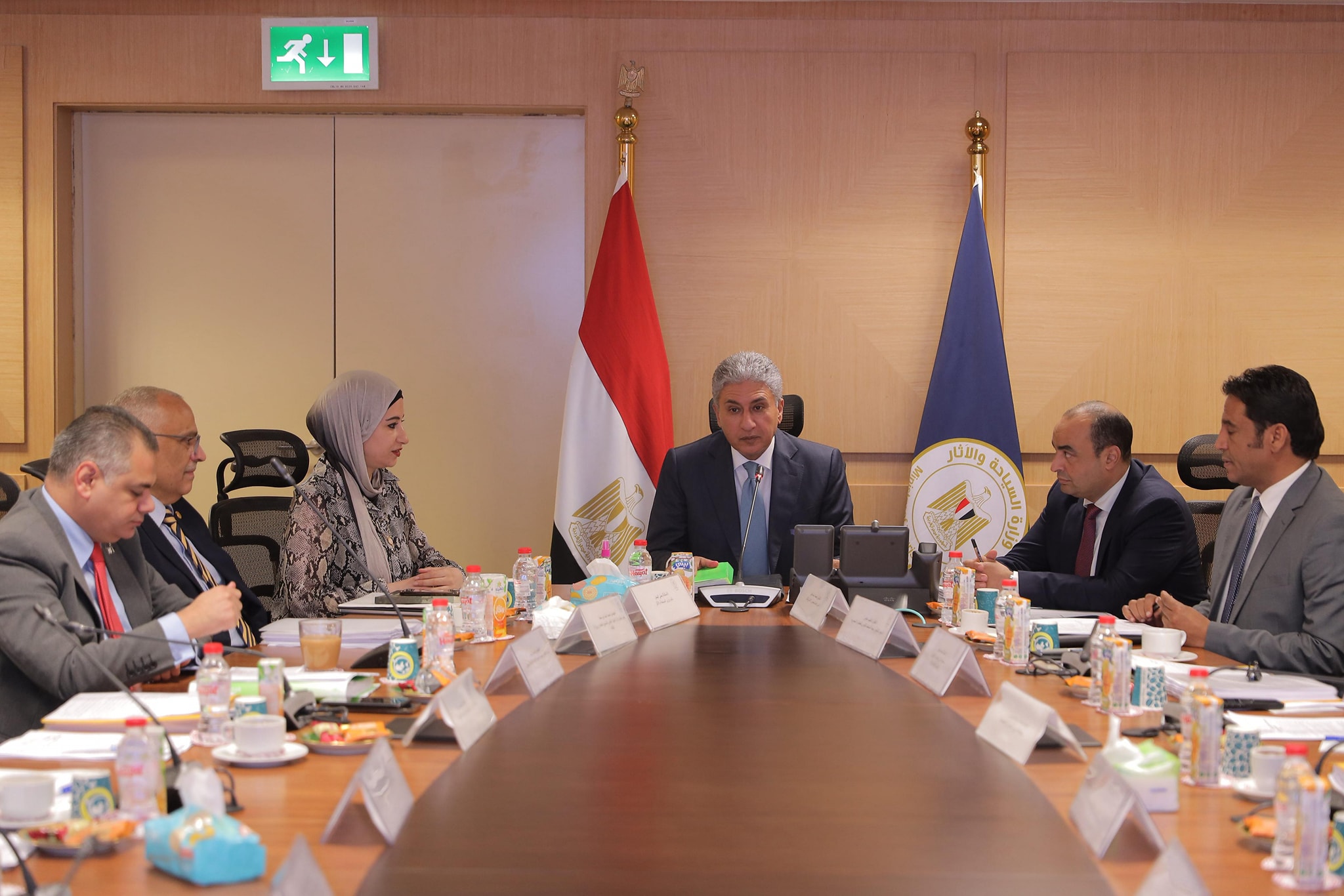
The council’s secretary-general, Dr. Mohamed Ismail Khaled, reviewed the body's financial standing and highlighted recent achievements. These included several archaeological discoveries and the completion of restoration projects at sites such as the domes of Yahya El-Shebehy and Safi El-Din Gohar.
He also shed light on temporary Egyptian exhibitions abroad,
as the "Ramses and the Gold of the Pharaohs" exhibition in the
Japanese capital, Tokyo, was extended until January 2026.
Dr. Khaled reported significant progress on ongoing restoration
work, including the Monastery of El Baramous in Wadi El Natrun, which is 90%
complete. Restoration of stone blocks at the Hibis Temple in New Valley and a
hall in the TT109 tomb in Luxor have also reached 90% completion.
The council also approved a joint statement with China’s
National Cultural Heritage Administration to enhance cooperation on cultural
heritage preservation, including restoration, underwater heritage, and
combating illicit trafficking of artifacts. An additional agreement was
approved to strengthen a long-term strategic partnership on managing World
Heritage Sites.
A memorandum of understanding with the British Museum was
also greenlit, covering temporary exhibitions, research projects, training
programs, and artifact restoration.
In a move to enhance visitor experience, the council gave
preliminary approval for a project to use a smart robot for papyrus drawing at
several archaeological sites, including the Luxor and Karnak temples and the
Valley of the Kings.
The council also accepted several donations, including five
air purification devices for the Great Pyramid of Khufu, and approved
recommendations for operating services at various archaeological sites and
museums.
Additionally, the council endorsed decisions from its permanent committees, including the registration of new artifacts, the organization of archaeological missions, and the completion of restoration work on the Sultan Qaytbay complex.