
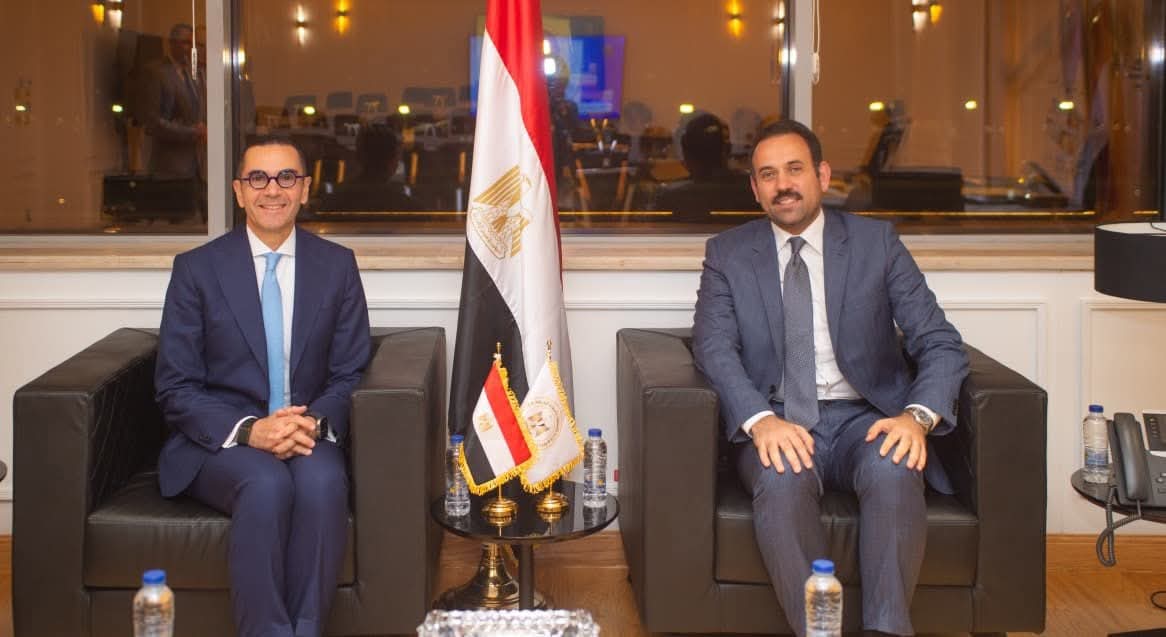
The collaboration, held at the authority's headquarters, focuses on goods the authority helps supply to the Egyptian market, with the goal of enhancing food security and sustainable development.
The two sides agreed to form a joint working team to consult
on bilateral cooperation topics and ensure swift implementation of agreed
measures.
Dr. El-Ghannam also invited Minister El-Khatib to tour the
authority's various projects to identify opportunities for attracting new
investments and boosting private sector participation in the authority's
initiatives.
The Minister lauded the vital role played by the Future of
Egypt for Sustainable Development Authority in implementing the state’s
sustainable development plans through its projects across different sectors.
The Minister affirmed that the ministry is operating on two
integrated tracks: Improving the investment climate by attracting foreign
direct investment (FDI) and supporting local investors, and boosting foreign
trade by increasing Egyptian exports and opening new markets for Egyptian
products.
The meeting reviewed the steps taken by the Ministry of
Investment and Foreign Trade on both tracks over the past year, which have
reflected positively in increased investment rates and export growth.
For his part, Dr. Bahaa El-Ghannam, the authority's CEO,
stated that cooperation with the Investment and Foreign Trade Ministry is a
crucial step to enhance the authority's capacity to support supply chains and
provide strategic commodities to the local market. This will contribute to
achieving food security and boosting the competitiveness of Egyptian exports.
Al-Ghannam emphasized that the authority operates according
to the state's vision to expand agricultural and industrial production and open
new horizons for local and foreign investments.
He added that the authority prioritizes deepening partnerships with various state institutions to ensure integration across government efforts in development and production. He concluded that the authority's projects have become a model for resource management and maximizing the economic return from agricultural and industrial land, thereby supporting the state's plan to increase exports and achieve self-sufficiency in strategic goods.