
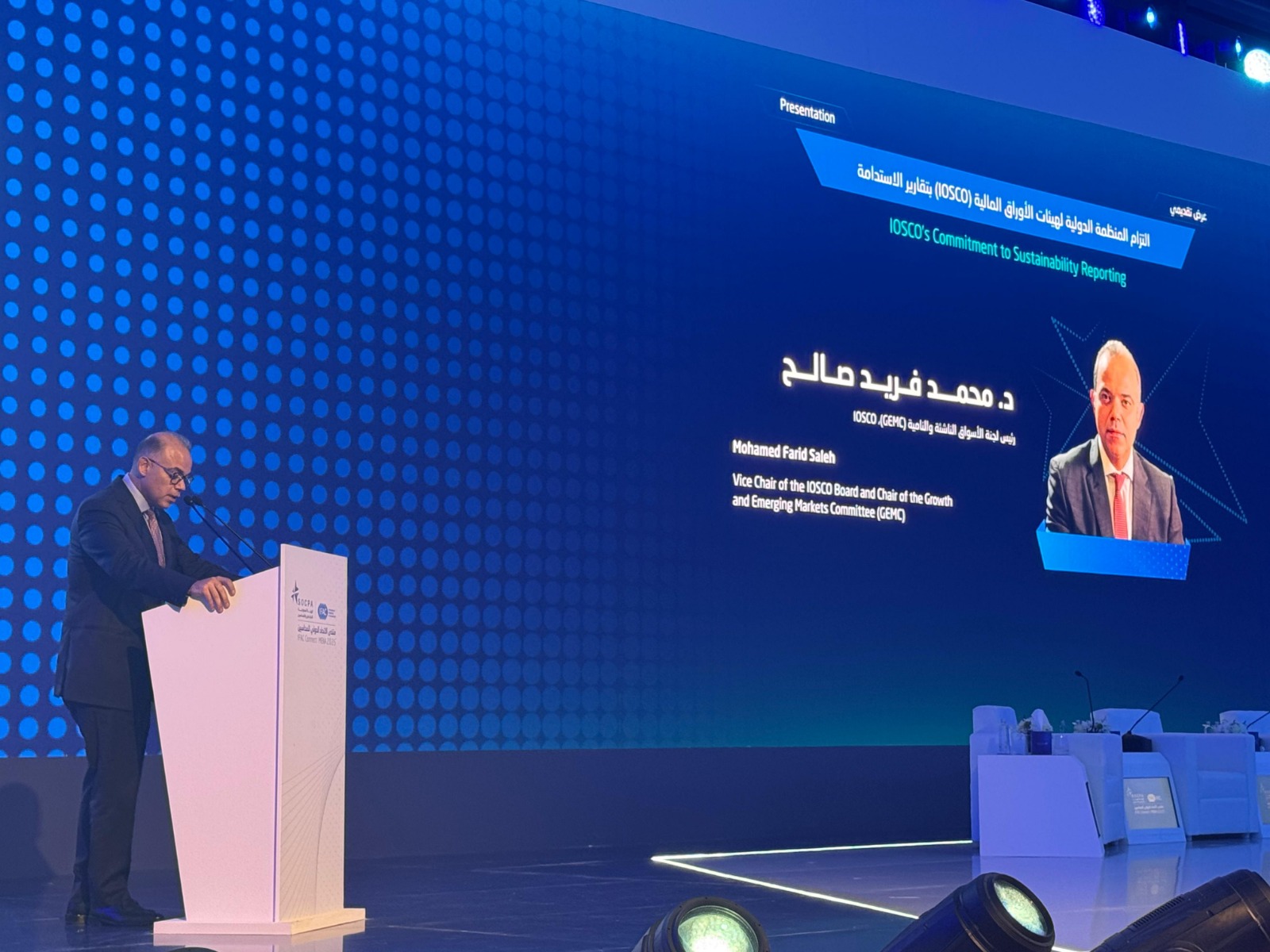
The forum, organized by the International Federation of Accountants (IFAC) in partnership with the Saudi Organization for Chartered and Professional Accountants (SOCPA) from October 1 to 2, drew wide participation from regional sector leaders and decision-makers.
The meeting aimed to foster dialogue among regulators,
standard-setters, professional accounting organizations and other public and
private sector stakeholders on developing the profession, and promoting integrity,
transparency and innovation in the public interest.
Held under the theme, "Driving Transformation and
Innovation: Global Priorities, Regional Solutions," the conference sought
to shape the future of the profession amid rapid global shifts, including
digital transformation, artificial intelligence and sustainability
requirements.
The conference agenda featured key sessions on the future of
corporate sustainability reporting, the impact of modern technologies on
auditing and assurance work, ethics, governance, and enhancing the profession's
appeal to future generations. Discussions also covered regional cooperation to
accelerate the adoption and implementation of international accounting
standards, updating professional education, supporting more inclusive work
environments, and developing clear professional qualification and leadership
pathways to attract and retain talent, especially women. Participants also
discussed the role of technology and AI in reshaping the profession and
boosting market trust and resilience.
Farid stressed that the FRA’s participation reflects its
commitment to keeping pace with global developments in accounting and auditing,
and to cooperating with regional and international institutions to adopt best
practices that support the development and competitiveness of non-banking
financial markets.
Speaking at a roundtable on the work program of the International
Public Sector Accounting Standards Board (IPSASB), held on the sidelines of
IFAC Connect 2025, Farid said Egyptian accounting standards largely reflect
global practices and developments, noting that advanced and continuous training
is key to tackling current challenges in accounting and auditing. He confirmed
the FRA's ongoing efforts to develop accounting standards to achieve full
integration with international standards.
The FRA chairman noted that IOSCO has so far endorsed the
first two standards issued by the International Sustainability Standards Board
(ISSB), IFRS S1 and IFRS S2, underscoring the importance of establishing a
unified global baseline for sustainability and climate reporting.
He added that the experience of applying these standards has
shown that consistent, comparable and reliable information enhances investor
confidence and improves access to financing. Farid suggested that the IPSASB
could leverage this experience to develop a similar global baseline for the
public sector, enabling governments to report reliably on how they manage
sustainability risks and opportunities, mirroring the corporate sector.
He highlighted that the IPSASB can achieve similar benefits
in public sector reporting by focusing on phased implementation, alignment with
global standards, digitization, and providing incentives, ensuring governments
are fully equipped to lead the sustainable development path and promote financial
transparency.
Farid pointed out that implementation requires investment in
people, systems, and training. He suggested the IPSASB enhance partnerships
with regional institutions, such as the Financial Services Institute and the Regional
Center for Sustainable Finance in Egypt, as well as SOCPA, to provide
education, technical support and experience-sharing among countries in the
region.
The future of sustainability reporting lies in digitization,
Farid explained, noting that IOSCO has supported the development of digital
taxonomies for the ISSB standards to make disclosures machine-readable and
comparable. He affirmed that the IPSASB could take a similar step by creating a
framework for digital reporting and tagging sustainability-related information
in the public sector, linking it directly to financial disclosures, which would
increase transparency and usability for analysis, decision-making and auditing.
He concluded that sustainability reporting should be viewed
not just as a regulatory obligation, but as a gateway to opportunities,
stressing that governments that provide transparent and reliable disclosures will
be better positioned to access green bonds, concessional financing, donor
support, and blended finance mechanisms.
The IFAC Connect 2025 meeting follows successful events in Nairobi, Singapore, Bogota and Dubai, with further events planned for Mexico City and Jakarta this year, reinforcing its role as an international platform for exchanging expertise and formulating practical solutions that support the public interest.