
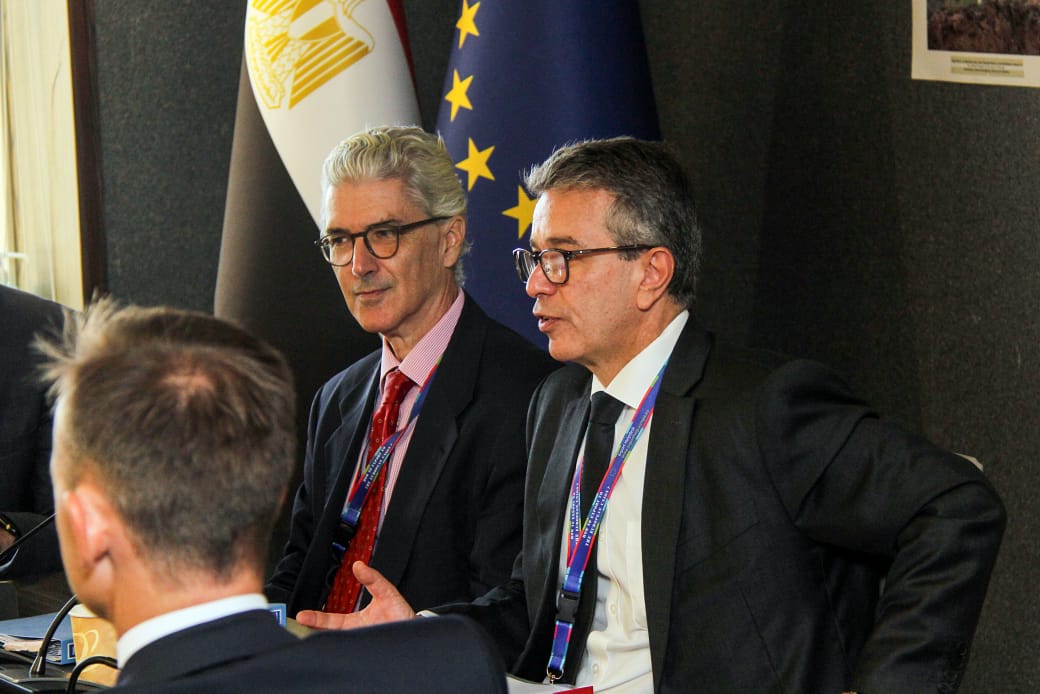
The customs chief said during an open dialogue with trade
and investment advisors at EU embassies that the authority aims to deepen
cooperation with its European partners. This, he explained, will be achieved
through the exchange of expertise, addressing shared challenges, facilitating
trade flows, encouraging investment, and combating smuggling and illicit trade
practices.
Amawi outlined the modernization plan, which centers on full
digital transformation through the Nafeza single-window platform. The system
has simplified and integrated procedures, automated transactions, and reduced
clearance times, resulting in more efficient operations. Current priorities
also include expanding the Advance Cargo Information (ACI) system for maritime
imports, strengthening the risk management framework, and offering new
incentives under the Authorized Economic Operator (AEO) program. The authority
also plans to launch a pre-arrival cargo inquiry service soon.
He highlighted further progress in e-payment systems,
licensing public customs warehouses in dry ports, and allocating storage for
abandoned goods. These steps, Amawi said, enhance customs administration and
improve the business environment. Work is also underway to introduce an
AI-powered system for cargo classification and valuation, extend pre-clearance
to all ports, and activate joint inspection committees with relevant
authorities.
EU representatives praised Egypt’s efforts to modernize its
customs system in line with global best practices, noting the positive impact
on trade and investment between Egypt and the bloc.