
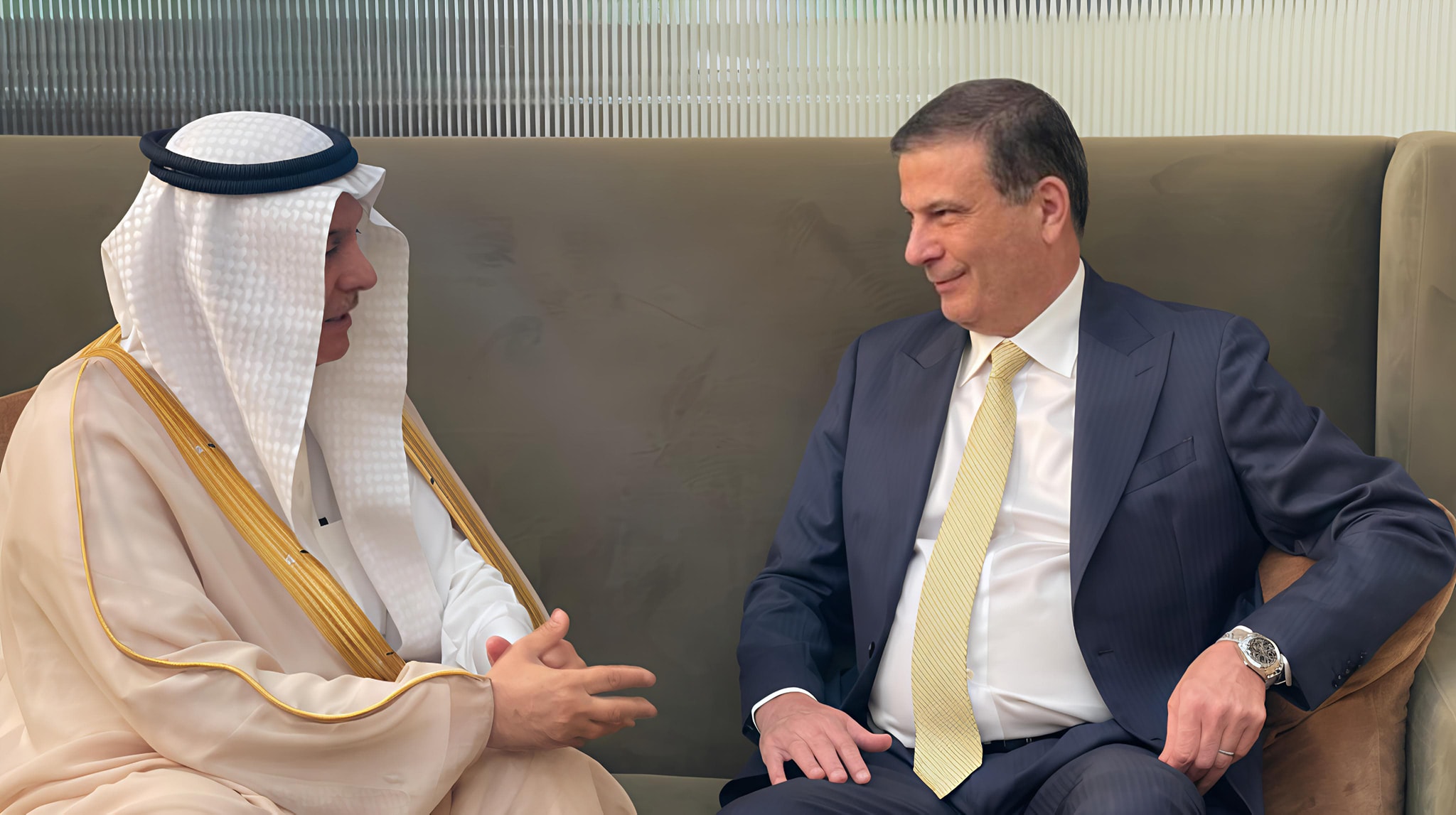
The meeting took place on the sidelines of the G20
Agriculture Ministers’ Working Group currently being held in Cape Town, South
Africa.
Farouk emphasized that Egyptian-Saudi relations are not
merely diplomatic ties but fraternal and historical relations rooted in decades
of solidarity and cooperation. He noted that this strong and stable partnership
provides a solid foundation for expanding cooperation across all sectors,
particularly agriculture, which is a cornerstone of food security and economic
development in both countries.
He pointed out that the continuous understanding and
coordination between the leaderships of Egypt and Saudi Arabia serve as a
strong driver for translating shared visions into tangible projects that
benefit both nations. Farouk expressed Egypt’s keenness to deepen its
partnership with Saudi Arabia and to seize every opportunity to achieve food
security and agricultural sustainability, contributing to the prosperity and
stability of the wider region.
The minister reaffirmed Egypt’s full readiness to provide
technical support and expertise by training Saudi cadres in various
agricultural fields at the Egyptian International Center for Agriculture,
highlighting Egypt’s extensive experience in agriculture and related
activities. He referred to the comprehensive agricultural renaissance and
infrastructure development Egypt has witnessed in recent years with unprecedented
political support, making Egypt an attractive investment hub offering
significant opportunities for growth and development.
Al-Fadhli underlined the depth of the fraternal ties linking
Saudi Arabia and Egypt, stressing that the agricultural sector is a key pillar
in strengthening these relations and achieving joint food security.
He highlighted the importance of continuous coordination
between the two countries to open new horizons for joint investment, exchange
technical expertise, and sign a memorandum of understanding between research
institutions to enhance cooperation in agricultural research.
The two ministers also discussed boosting trade in
agricultural commodities and creating new opportunities for joint investments
in this vital sector. They agreed to continue coordination through designated
contact points in both countries to translate the discussions into practical
steps that serve their common interests and contribute to achieving food security
and agricultural sustainability.