
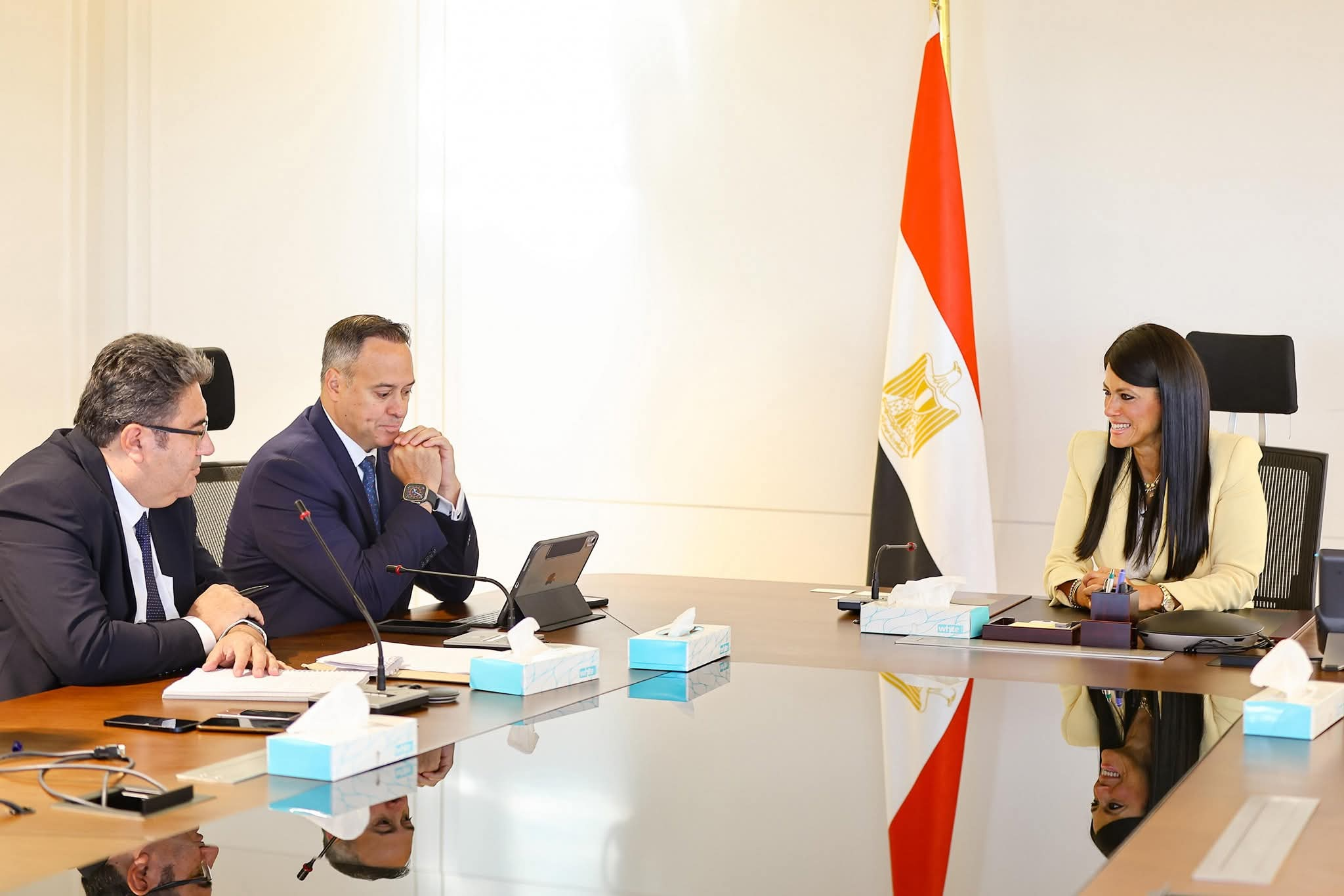
The S&P delegation included Roberto Sifon-Arevalo, Global Head of Sovereign and Multilateral Institutions Ratings, Benjamin Young, Executive Director and Head of Sovereign Ratings for Europe, the Middle East, and Africa, and Ravi Bhatia, Director of Sovereign and International Public Finance Ratings.
During the meeting, Al-Mashat highlighted the government's
continued commitment to economic and structural reforms aimed at building on
the progress made since March 2024. She emphasized the ongoing efforts to
empower the private sector and boost both domestic and foreign investment.
She noted that the Egyptian economy achieved a positive
growth rate of 4.2% during the first nine months of the last fiscal year
(2024/2025), a significant increase from 2.4% in the same period the previous
year. This growth, she explained, was driven by vital sectors such as
non-petroleum manufacturing, exports, ICT, and tourism.
Al-Mashat also pointed out that private investment saw a
year-on-year increase of 24.2% in the third quarter of the last fiscal year,
reaching EGP 142.8 billion. This marks the third consecutive quarter that
private investment has surpassed public investment, accounting for 62.8% of
total implemented investments (excluding inventory).
The Minister stated that Egypt is moving steadily towards
comprehensive economic development by maintaining the momentum of its economic
reforms and implementing the National Structural Reform Program. This program
aims to enhance macroeconomic stability, improve the business and investment
climate, and drive the transition to a green economy.
Al-Mashat also discussed the country's focus on securing
development financing for the private sector from international partners. She
underscored the government's commitment to strict governance in managing these
funds and to reducing external debt through various measures to ensure debt
sustainability.
In a related context, Al-Mashat mentioned the launch of the "National
Economic Development Narrative." This framework integrates the
government's work program for 2024/2025-2026/2027 with Egypt's 2030 Vision. It
aims to shift towards an economic model based on macroeconomic stability,
focusing on highly productive and export-oriented sectors.
She said this narrative is a program for economic reform and
a tool for promoting Egypt's economic pillars. It highlights policies that
support growth, attract investment, and enhance private sector participation.
Al-Mashat also revealed that for the first time, a three-year economic and social development plan will be prepared starting from the 2026/2027 fiscal year, as part of a medium-term budgetary framework.