
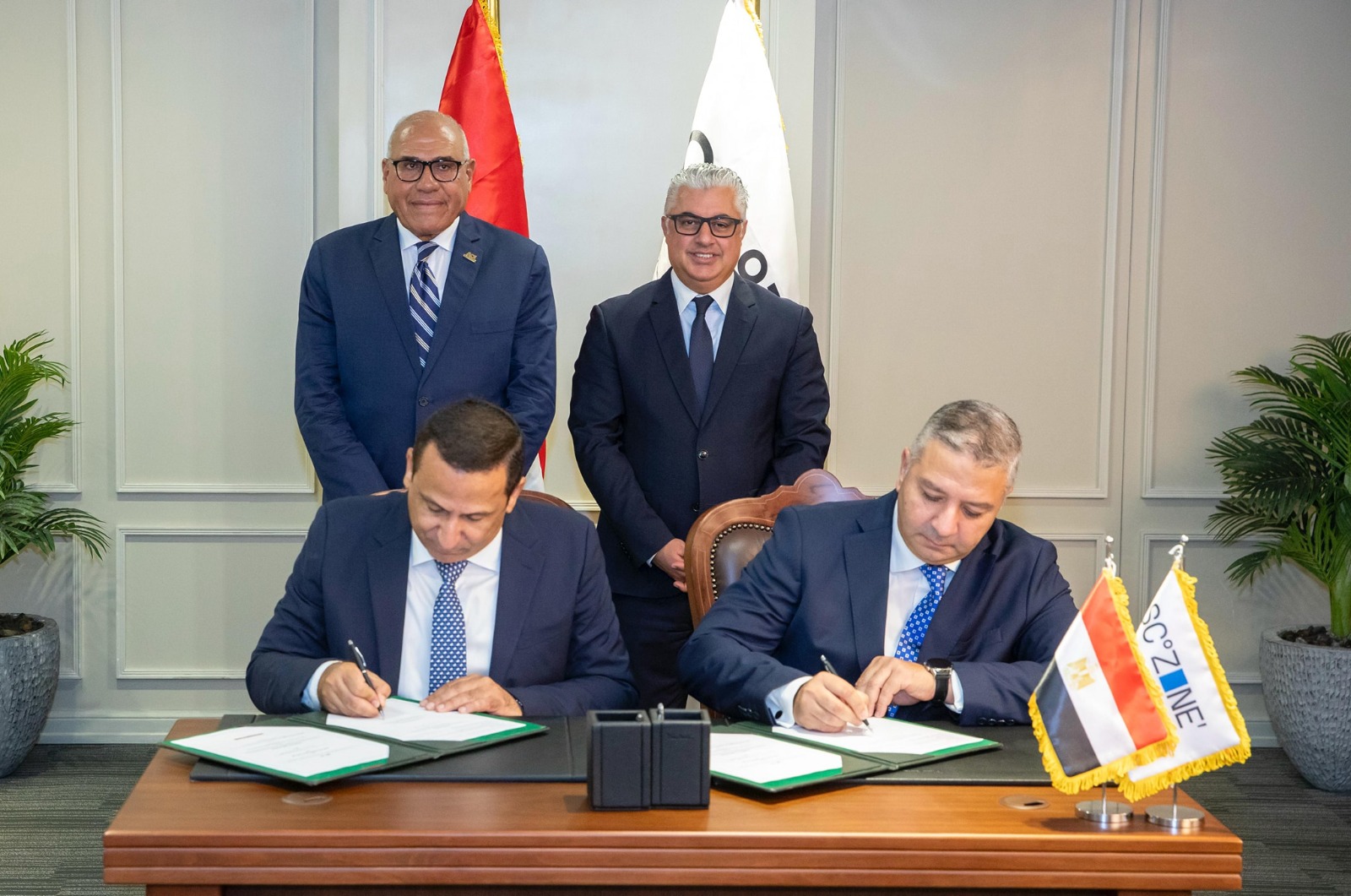
The Suez Canal Economic Zone (SCZONE) and the Arab Organization for Industrialization (AOI) on Monday signed an agreement with an Egyptian-Turkish consortium to establish two new logistics projects.
The signing ceremony, held at SCZONE headquarters in the new
administrative capital, was attended by SCZONE Chairman Walid Gamal El-Din and
AOI Chairman Major General Mokhtar Abdel Latif.
The consortium, which includes the AOI, Egypt's United Egy
Group, and Turkish companies Sigma Logistics and Containers and LogiTrade, will
create "SIGMA EGYPT." The venture aims to establish two customs yards
for storing, handling, and repairing containers, covering a total area of
100,000 square metres.
One 50,000-square-metre yard will be located in Qantara
West, becoming the 33rd project in the industrial zone, while the other
50,000-square-metre yard will be in Sokhna. The project is fully self-financed
with an investment of $4.2 million (203 million Egyptian pounds) and is
expected to create 100 direct jobs.
The agreement for the Qantara West project was signed by
SCZONE Vice Chairman for the Northern Sector, Major General Mohamed Ahmed, and
the consortium's representative, United Egy Group Chairman Diaa El-Din Ibrahim
Khalaf. For the Sokhna project, the agreement was signed by SCZONE Vice Chairman
for the Southern Sector, Captain Ahmed Gamal, and Diaa El-Din Ibrahim Khalaf.
Walid Gamal El-Din said the projects reflect growing
investor confidence in the economic zone and highlight its pivotal role in
attracting advanced logistics investments that serve regional and international
trade.
He added that establishing the customs yards in Qantara West
and Sokhna marks a qualitative leap in integrating logistics activities within
the zone, which will help reduce supply chain costs and boost container handling
efficiency.
Major General Abdel Latif praised the fruitful cooperation with the SCZONE and the Turkish and Egyptian private sector companies. He called the container manufacturing venture a strategic step that will support national industry, reduce reliance on imports, and create new export opportunities.