
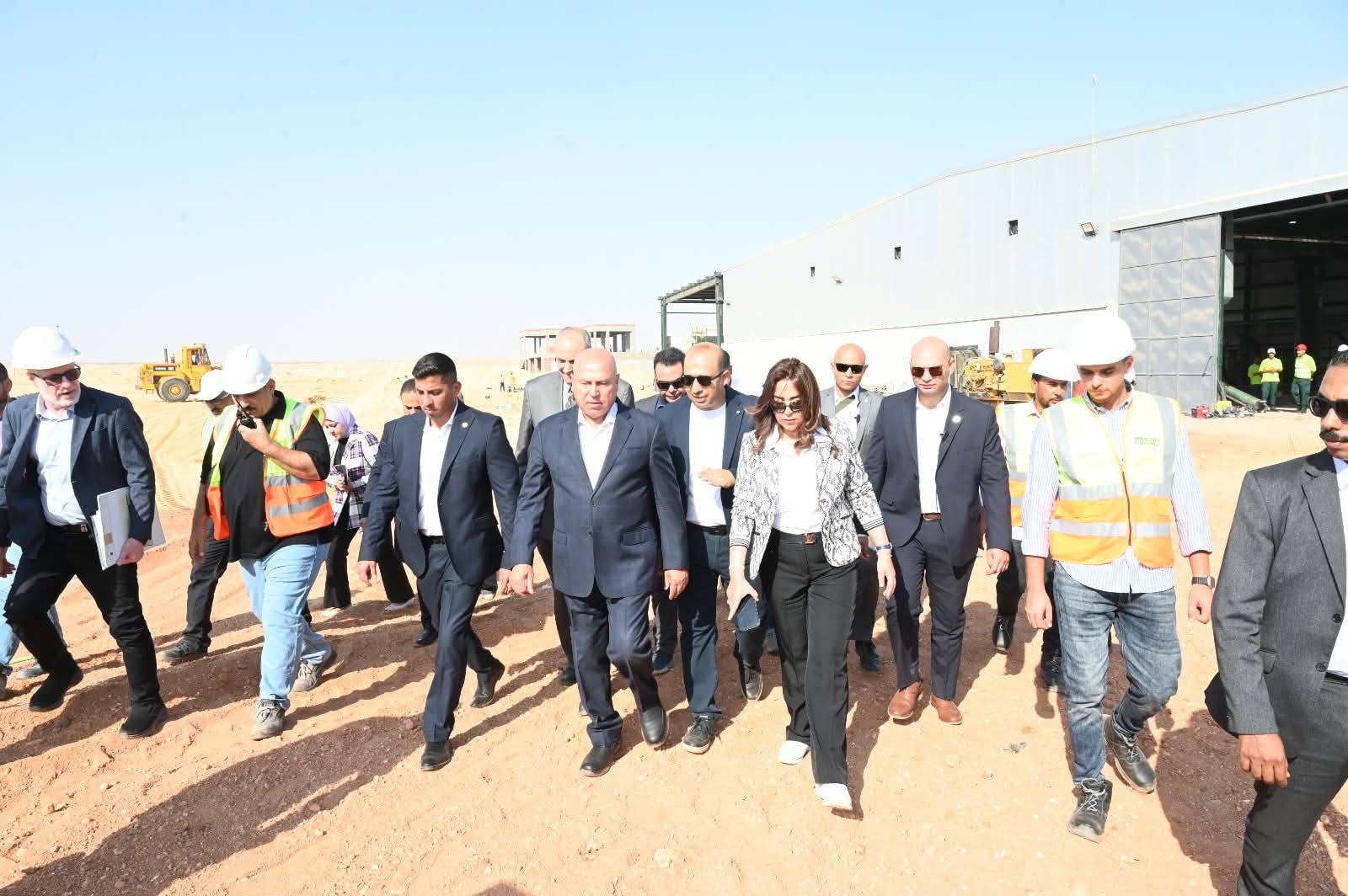
The $200 million project, funded by the World Bank, aims to reduce air pollution from open burning and vehicle emissions. It seeks to establish a modern waste management system that handles all types of waste, whether municipal, industrial, medical, and construction, with the goal of minimizing landfill use and promoting sustainability.
During the tour, Dr. Mohamed Hassan, the National
Coordinator of the project, reviewed the detailed plan for the complex. The
plan includes activities such as stations for processing municipal, industrial,
and medical waste, sanitary landfills, and special waste reception stations. It
also outlines future plans for developing the infrastructure, roads, and
various facilities, as well as the closure and rehabilitation of the Abu Zaabal
landfill and the establishment of intermediate stations in the Cairo and Qalyubia
governorates.
Al-Wazir stressed the need for recycling and building
factories to convert waste into valuable products like fertilizers, energy, and
alternative fuels. He called for a detailed report on the economic potential of
recycled materials, particularly from construction waste, and said the findings
would be discussed by the Ministerial Group for Industrial Development.
The Minister also emphasized the importance of coordinating
with the General Authority for Roads, Bridges, and Land Transport to expedite
the completion of roads leading to the project. This will ensure easy access
and improve operational efficiency. He stressed the need for full compliance
with engineering and technical standards in completing the project's internal
roads to achieve the highest levels of quality and safety. Furthermore, he
highlighted the necessity of implementing an integrated governance system to
ensure the maximum benefit from the massive investments directed toward this
strategic project.
He directed the establishment of specialized factories within
the complex to convert rubble and demolition and construction waste into
essential building materials and valuable construction products (such as
interlock bricks, tiles, bricks, and cement). These materials can then be used
in construction and infrastructure projects, which will enhance the project's
economic return and support the state's direction toward a green economy.
Dr. Awad confirmed
that the complex's engineering designs were complete and that on-site work was
proceeding quickly. The goal is to process all types of waste, including
municipal, industrial, demolition and construction, and medical waste, using
the latest global techniques and technologies to achieve the lowest possible
rate of sanitary landfilling for rejected materials, ensuring the site's
sustainability for the longest possible period. She noted the project aligns
with Egypt's Vision 2030 and the UN Sustainable Development Goals, and is a
collaborative effort involving multiple ministries, governorates, and the
private sector.
The project is a strategic move by the Egyptian government to improve air quality, combat climate change, and support sustainable industrial development by transforming waste into a valuable resource.