
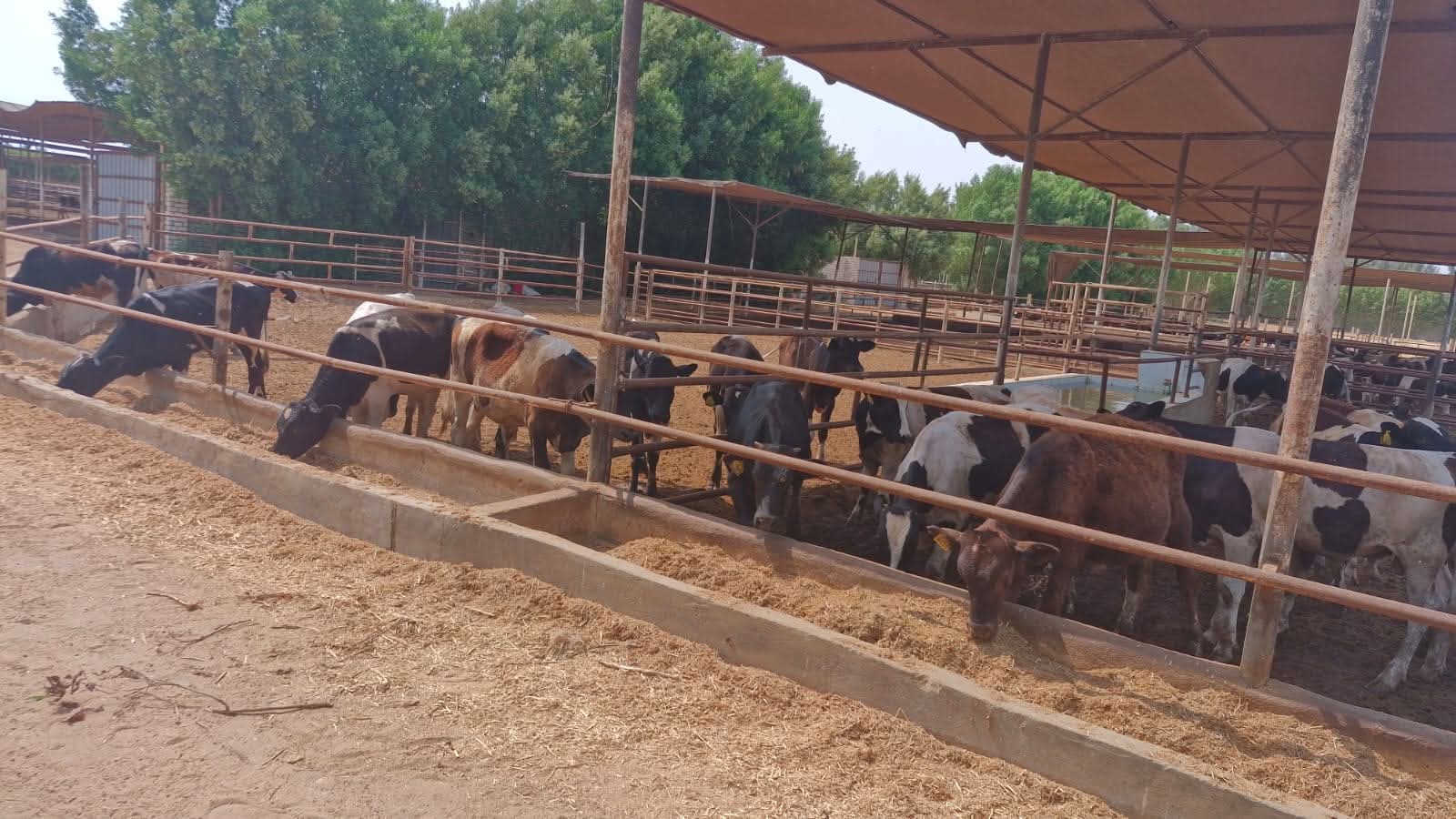
The ministry's General Organization for Veterinary Services (GOVS) began monitoring the regional and international epidemiological situation, and confirmed the spread of the SAT1 strain through international reports from global reference labs. This led to an integrated effort to provide vaccines in record time.
Agriculture Minister Alaa Farouk said that protecting livestock
and food security is a national responsibility that cannot be delayed.
He said the ministry's teams were highly efficient and fast,
which allowed for proactive action before the situation could escalate. A
comprehensive vaccination campaign will begin on Saturday to protect cattle in
all governorates, with a focus on high-risk border areas.
Farouk noted that the ministry had been undergoing a
restructuring to improve its coordination, enabling it to respond to any
emergency and meet the needs of farmers and breeders as quickly as possible. He
also praised the staff and specialists at the General Organization for Veterinary
Services (GOVS) for their effective monitoring of new variants, as well as the
work of the digital transformation and hotline units.
He praised the efforts of the General Organization for
Veterinary Services (GOVS) and its research institutes for successfully
isolating the new strain and preparing for the production and calibration of
vaccines in record time.
He also acknowledged the role of the ministry’s digital
transformation unit in opening communication channels with farmers and
producers, which accelerated the monitoring process. The unified hotline,
19561, received reports from citizens and breeders, allowing epidemiological
surveillance teams to identify potential suspected cases promptly.
The ministry will implement a plan for an immediate response
to global epidemiological developments, including a comprehensive vaccination
campaign via veterinary convoys in all villages. A door-to-door campaign for
farmers and breeders will begin on Saturday, August 16.
Farouk stressed the need for intensified efforts and cooperation
with community leaders to ensure the campaign's success.
He added that collaboration between the General Organization
for Veterinary Services (GOVS) and the Agricultural Research Center (ARC),
along with a restructuring of the ministry, has improved the efficiency of veterinarians
and research teams. He said this has been crucial in taking proactive measures
to protect Egypt's livestock and maximize production.
Minister Farouk stressed the need to continue monitoring and
activating communication with citizens and breeders through the hotline to
ensure a healthy and safe environment for Egypt's livestock and productive
capacity, thus preserving food security.
Deputy Agriculture Minister Moustafa El Sayyad said the ministry had conducted a livestock census and developed the "Veal Project." The project has financed nearly 500,000 cattle and benefited more than 45,000 rural families with financing exceeding 9 billion pounds ($189 million). According to El Sayyad, these efforts have increased Egypt's food self-sufficiency from 40% before 2014 to over 60% in 2025, despite the country's population growth.