
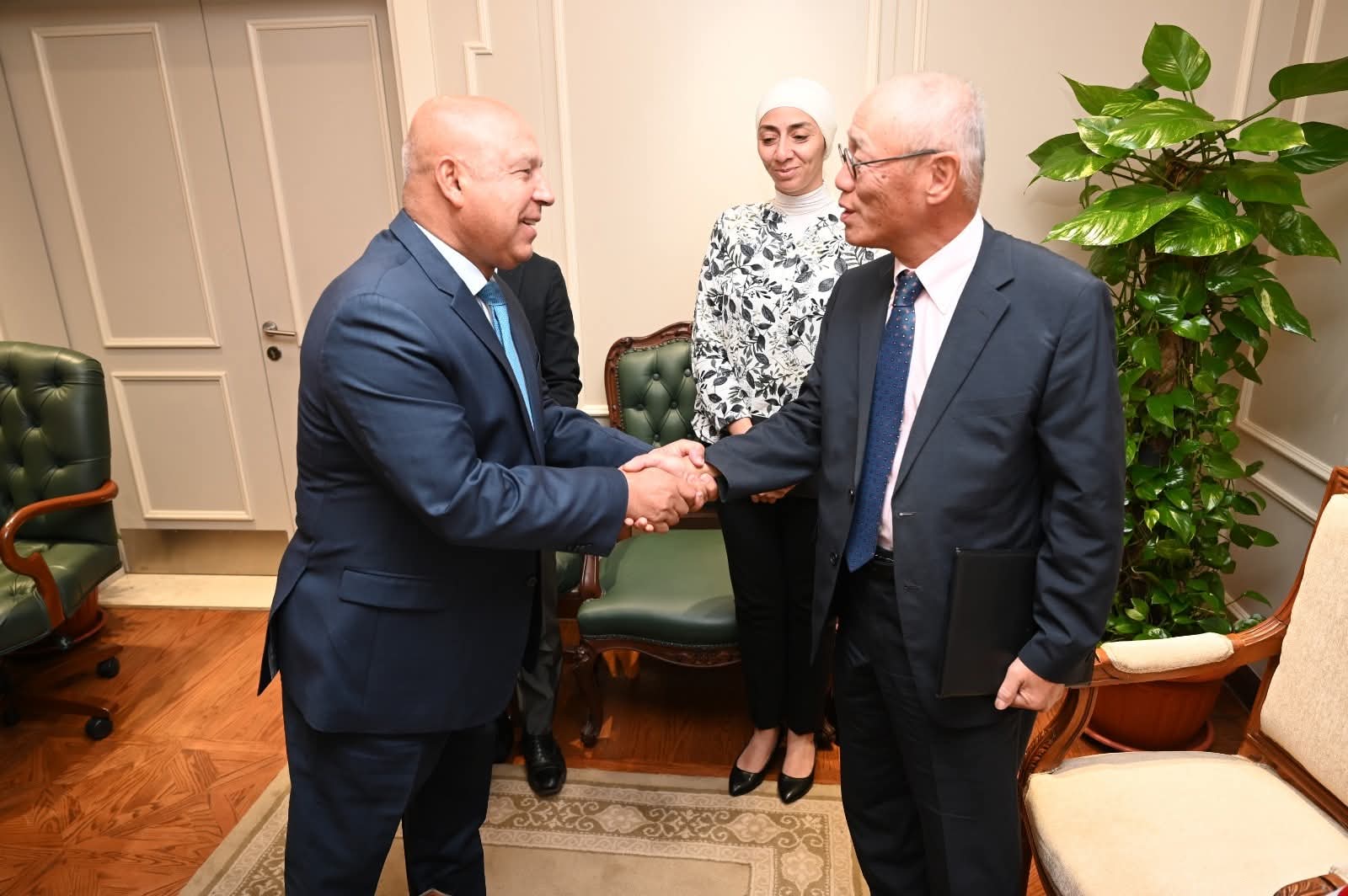
Attendees included key Egyptian officials such as Engineer Wagdy Radwan, Deputy Minister of Transport for Rail Transport, Major General Ashraf El-Louzy, Assistant Minister of Transport, and Major General Tarek Gewely, Head of the National Authority for Tunnels. Ambassador Ihab Nasr, the Minister of Industry’s Advisor for International Cooperation, also participated.
Minister Al-Wazir underscored the deep-rooted relationship
between Egypt and Japan, praising their successful collaboration on several
transport projects. He expressed a desire to expand this cooperation into both
the transport and industrial sectors.
Ambassador Iwai reciprocated, expressing his satisfaction
with the meeting and commending the partnership on projects such as the first
phase of Metro Line 4. He noted the significant interest of Japanese companies
in investing in Egypt, citing the country's favorable investment climate.
The discussions also covered a range of other topics,
including strengthening cooperation between Egypt's ElAraby Group factories and
Japanese companies in the home appliance sector. A major point of discussion
was a protocol, supported by the Japan International Cooperation Agency (JICA),
aimed at enhancing technical and technological education in Egypt. This
initiative seeks to create a skilled workforce, particularly in electronics and
green energy technologies, that can meet both domestic and international market
demands.
Al-Wazir underscored the importance of providing practical
training in Japanese factories in Egypt to complement students' theoretical
education. This approach, he noted, would ensure a large, highly skilled
workforce capable of operating with the latest technologies.
The officials also highlighted the benefits of Egypt's
automotive manufacturing incentive program, which is designed to be mutually
beneficial for the government, manufacturers, and consumers. They noted the
positive impact the program has had on all car manufacturers in Egypt,
including Japanese companies like Nissan.
A significant portion of the discussion was dedicated to the
ongoing collaboration on the first phase of Metro Line 4. This 19-kilometer
line will connect 6th of October City to Fustat with 17 stations. The project
involves a partnership with Japan's Mitsubishi Corporation, which is providing
the electromechanical works, the workshop, and a fleet of 23 trains. The first
train is expected to arrive in Egypt in May 2026.
Finally, a feasibility study is currently underway for the second phase of Metro Line 4. This phase will extend the line by 31.8 kilometers with 21 stations, connecting key areas and an integrated transport hub in New Cairo. Plans are also being considered for a third phase to serve a densely populated area and a fourth phase that would connect to the Capital International Airport and the LRT train.