
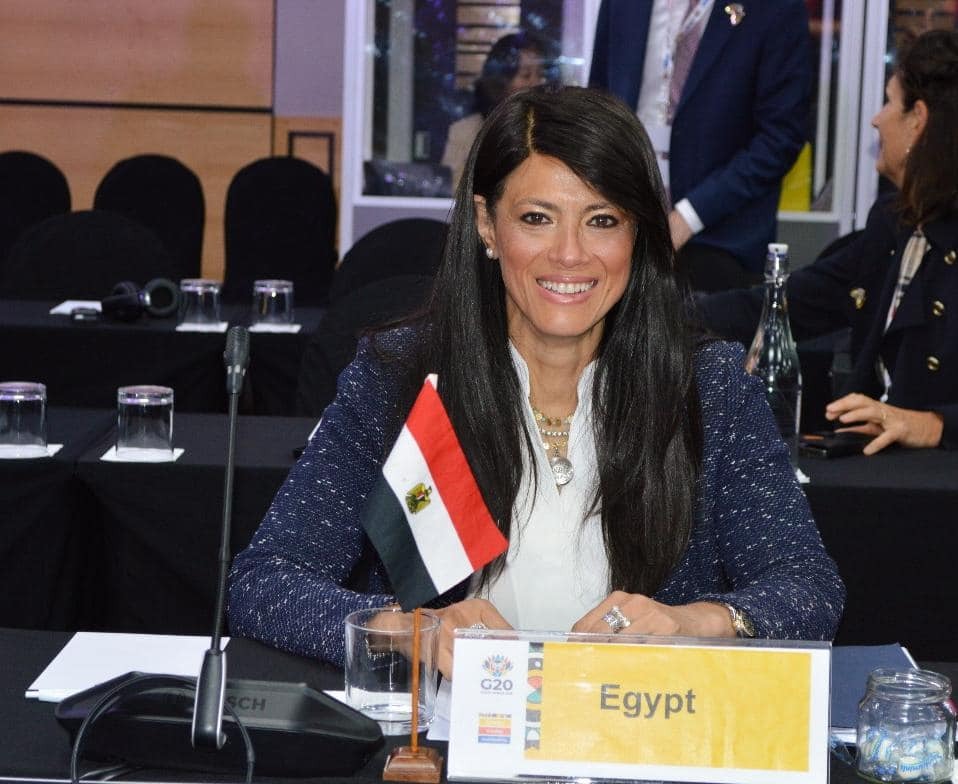
The declaration highlighted the urgent need to boost
domestic resource mobilization, combat illicit financial flows, and bolster
multilateral and innovative financing mechanisms. It reaffirmed the G20's
commitment to the 2030 Agenda for Sustainable Development, pledging to leave no
one behind and foster shared responsibility in addressing global challenges
from debt to climate change.
Al-Mashat showcased Egypt's "Country Methodologies for
Sustainable Development and Climate Action Financing" initiative, part of
the Seville Platform for Action. Co-led by Egypt, South Africa, the UN
Development Programme, and others, the initiative aims for 100 countries to
implement integrated financing programs by 2030, leveraging public, private,
and philanthropic sources. Egypt is already collaborating with Mexico on
national platform design.
Al-Mashat also stressed the need for private sector
involvement in development finance, improved governance in international
financial institutions, and a stronger UN role in global economic rule-setting.
She underlined the importance of debt sustainability and fairer Debt Sustainability
Analyses for developing nations, particularly in Africa, to overcome persistent
debt challenges.
Aligning with the G20's focus on the estimated $4.5 trillion
annual SDG financing gap, Al-Mashat called for scaling up blended finance,
public-private partnerships, and debt-for-development swaps. She cited Egypt's
successful swap programs with Italy, Germany, and China, which have created
fiscal space for high-impact projects in food security, women's empowerment,
and climate action. Egypt has mobilized approximately $15.6 billion in private
sector financing from international partners between 2020 and May 2025, with $4
billion directed to the private sector via its "NWFE" program.
The G20 declaration emphasized the critical need to provide
global public goods, despite the lack of a universal definition. It called for
action to support low-income and developing countries in implementing the 2030
Agenda according to their national priorities, contributing to global
well-being.
Al-Mashat concluded by stressing that development finance and
investments in essential sectors are vital for sustainable economic and social
growth and human well-being. She urged a shared vision, in line with the G20
declaration, to mobilize long-term, affordable finance and rethink multilateral
cooperation. With over $460 trillion in global assets, she stated, closing the
SDG financing gaps is achievable if capital is redirected towards inclusive and
sustainable priorities.
The meeting's outcomes, she added, must mark a practical shift from commitments to tangible progress, driven by strong political will to ensure no country is left behind in the pursuit of a more sustainable and equitable future.