
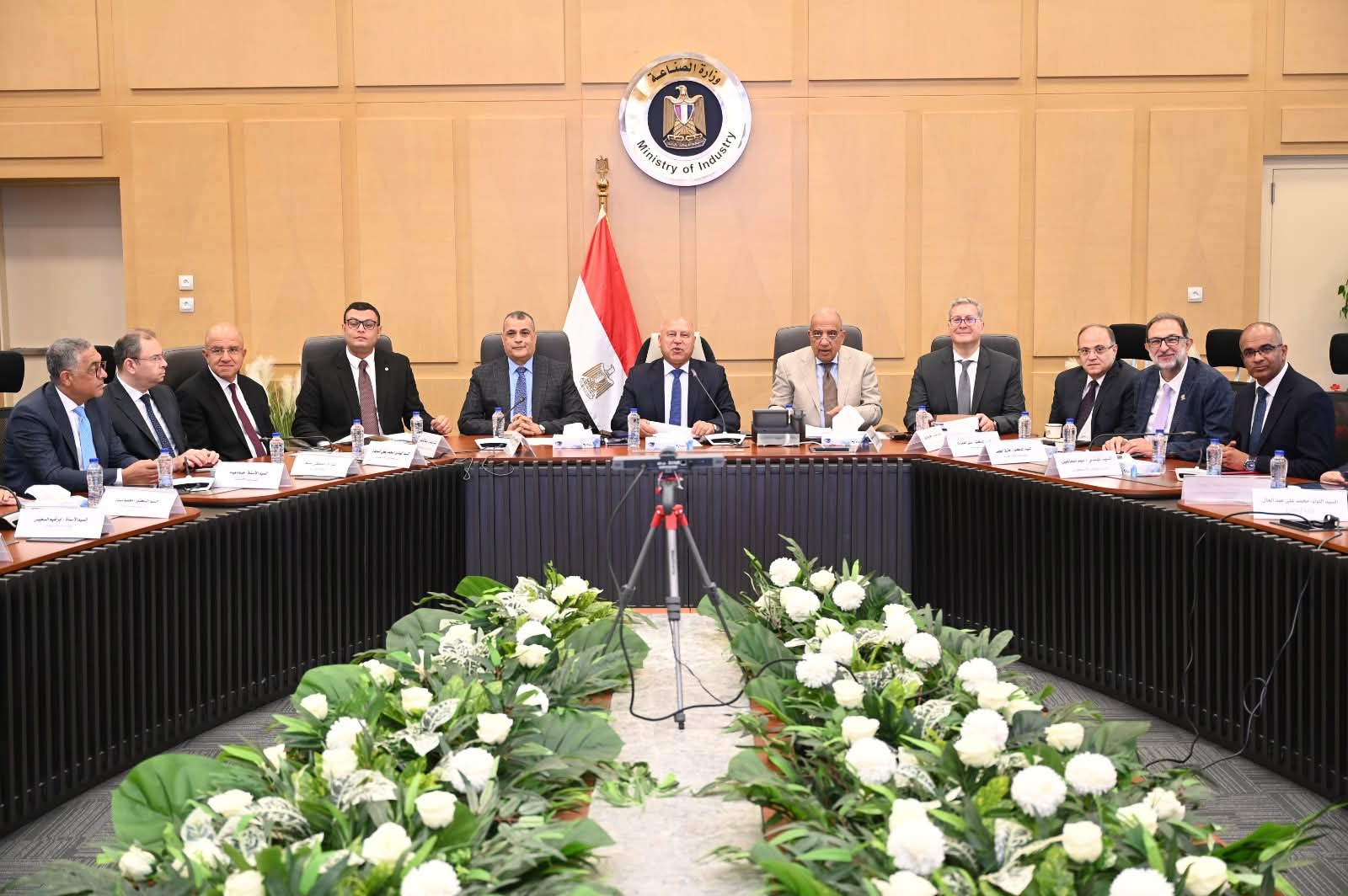
The meeting saw the participation of several key ministers,
including Lieutenant General Mohamed Salah El-Din, Minister of State for
Military Production, Dr. Mahmoud Esmat, Minister of Electricity and Renewable
Energy, Engineer Sherif El-Sherbiny, Minister of Housing, Utilities, and Urban
Communities, and Engineer Karim Badawy, Minister of Petroleum and Mineral
Resources.
Via video conference, Dr. Rania Al-Mashat, Minister of
Planning, Economic Development, and International Cooperation, Engineer Mohamed
Shimi, Minister of Public Business Sector; Engineer Hassan El-Khatib, Minister of
Investment and Foreign Trade, Major General Mokhtar Abdel Latif, Head of the
Arab Organization for Industrialization, and Dr. Nahed Youssef, Head of the
General Authority for Industrial Development, also attended. Representatives
from various ministries, agencies, and leaders from the Ministries of Industry
and Transport were also present.
Al-Wazir emphasized the Ministerial Group's ongoing
commitment to reviewing all applications for industrial projects under the special
free zone system or those seeking a "Golden License" (single
approval). He highlighted that all relevant ministers and bodies involved in
these approvals are members of the group. He stressed the need to activate a "one-stop
shop" at the Industrial Development Authority, as it is the sole entity
authorized to issue industrial licenses, aiming to simplify procedures and
resolve complexities among various authorities overseeing industrial lands or
issuing permits.
The meeting reviewed three proposals from industrial
companies for projects under the special free zone system. These included:
A PVC panel and flooring manufacturing project in the New
Alamein Industrial Zone, with investments of $108 million, creating 2,150 jobs,
A ready-made garment manufacturing project in the Medium
Industries Zone of New Beni Suef City, with investments of $30 million,
providing 9,000 job opportunities,
A textile manufacturing project in the 10th of Ramadan City,
Sharqia Governorate, with investments of $78.5 million, creating 4,000 jobs.
The committee approved all three projects after they met the
required conditions for special free zones. El-Wazir noted that the PVC project
introduces a new and in-demand industry to the Egyptian market, located in the
promising New Alamein City. He added that the ready-made garment and textile
projects are targeted by the state for increased investment due to their
labor-intensive nature, low energy consumption, and Egypt's strong competitive
advantages, extensive expertise, and skilled workforce in these sectors.
Al-Wazir further explained that the government aims to
increase industrial investments in Beni Suef, Minya, and Fayoum governorates,
as they possess abundant skilled labor. The Ministry of Industry has launched
two integrated textile cities in Wadi El-Saririya (Minya) and the industrial
zone north of Fayoum to accommodate the high number of workers in these
governorates and meet both local and export demands for these industries.
In line with Egypt's transition to a green economy and
increased reliance on clean transportation, the meeting discussed key aspects
of the electric vehicle (EV) sector. This included ongoing efforts to develop
new incentives, such as providing EV charging stations across various
governorates to serve citizens and investors and promote EV adoption. The
discussion also covered studying the most energy-intensive EV categories to
develop a fair and well-researched pricing mechanism for charging.
The group approved adopting the European standard as the
primary criterion for EVs permitted for import or local production. It
emphasized prohibiting the entry of vehicles equipped with unapproved Chinese
chargers due to potential safety and operational risks. The importance of
strengthening the Egyptian Organization for Standardization and Quality
laboratories was highlighted to ensure accurate inspection of vehicles and chargers
and compliance with technical specifications. El-Wazir also directed
coordination between the Ministries of Finance and Investment and their
affiliated bodies to establish clear regulations for EV imports, including a
new customs policy that ensures fairness for all stakeholders and protects
national industry from unregulated practices.
The meeting also reviewed mechanisms for improving
facilities in industrial zones to optimize infrastructure utilization and
achieve economic development goals. El-Wazir stressed the need to reorganize
the technical and administrative system supporting infrastructure development
in industrial zones to ensure continuous and efficient service delivery. He
directed the formation of a joint technical committee comprising
representatives from the Ministries of Industry, Planning, Finance, Housing,
Local Development, and the Federation of Egyptian Industries. This committee
will study the reorganization of the Industrial Zones Facilities Support Fund
and the development of unserviced industrial areas, focusing on administrative,
financial, and technical structures to maximize its role in industrial
development and improve the efficiency of industrial zone facilities and lands.
Finally, the meeting discussed proposed policies to enhance the sustainability of natural gas supplies to the industrial sector, considering energy cost challenges and factory operational conditions. The importance of rescheduling accumulated factory debts to the Ministry of Petroleum and Mineral Resources was emphasized, with flexible mechanisms to allow companies to continue production while safeguarding state rights. Efforts by the Ministry of Petroleum to secure national grid gas supplies were also reviewed, including increased local extraction and the provision of regasification vessels, which have ensured factories' gas needs and the continuity of production.