
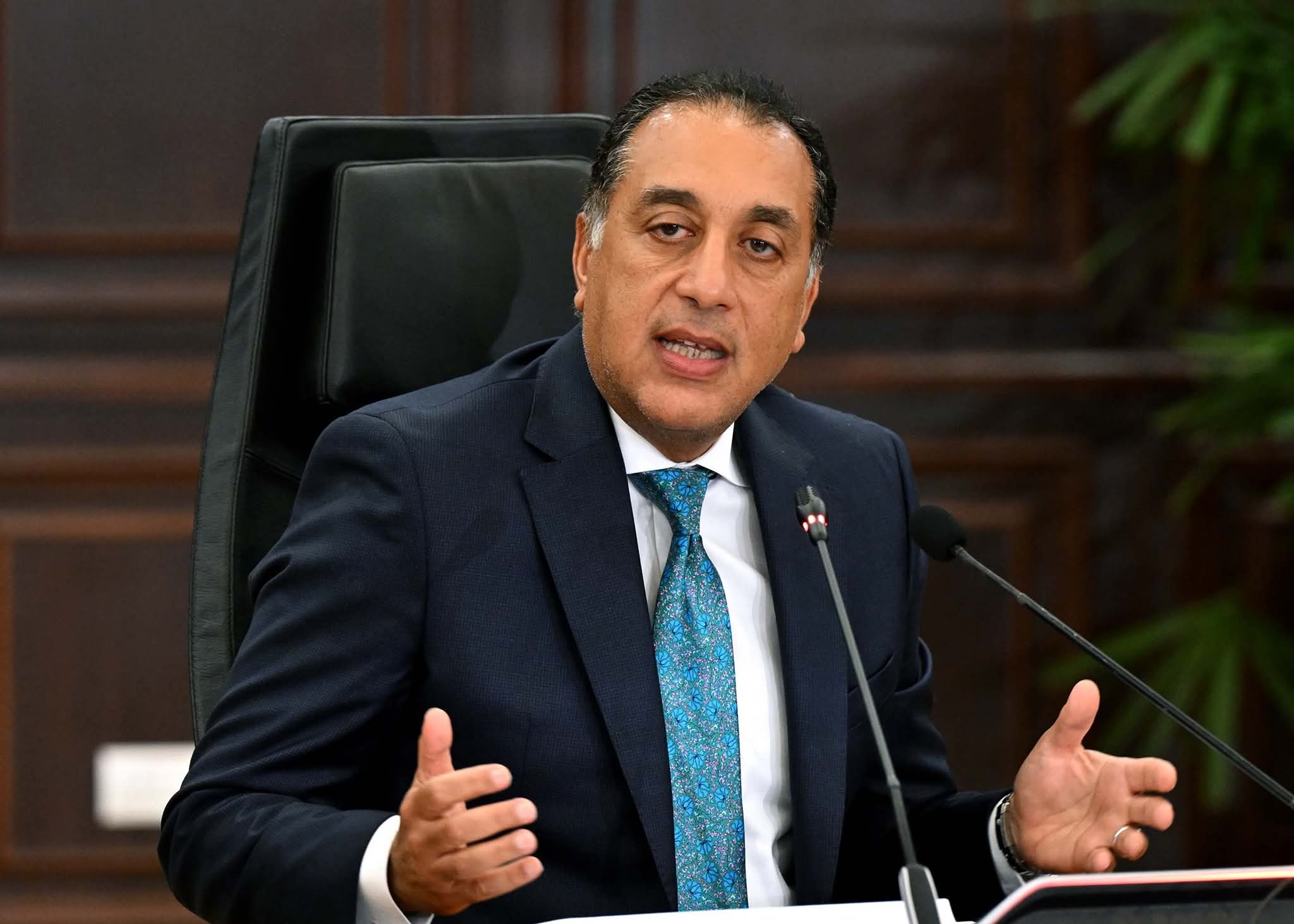
Madbouly also addressed recent economic indicators, pointing
to official figures showing that inflation declined to 14.4% in June, down from
16.5% in May. He said this development signals growing stability in the local
market. He added that he personally monitors the availability and pricing of
key commodities on a daily basis and cited his recent field visit to Alexandria
as part of ongoing efforts to ensure stable supplies and fair pricing.
According to Madbouly, market conditions are being closely monitored by the
relevant state authorities.
He noted that a recent report by the Institute of
International Finance (IIF), one of the world’s most prominent financial
institutions, praised the resilience of Egypt’s economy in the face of major
global crises, including the recent Iran-Israel conflict. The report stated
that the war’s negative impact on Egypt was temporary and effectively
contained, with no direct repercussions on the national economy. It also
highlighted the flexibility of Egypt’s exchange rate and the Central Bank’s
monetary policies, which helped boost investor confidence and reflected the
government’s commitment to a non-interventionist currency approach.
Madbouly also reviewed recent developments in the energy
sector. He confirmed that all liquefied natural gas (LNG) regasification
vessels have been brought into service and are now fully connected to the
national gas grid. Three vessels are currently stationed in Ain Sokhna and,
although not operating at full capacity, serve as strategic reserves in case of
unexpected disruptions to domestic gas supply. Two additional LNG vessels are
expected to arrive in the coming weeks, one at Alexandria Port and the other at
Jordan’s Aqaba Port, as part of summer contingency planning.
The prime minister went on to announce that Egypt has
recently paid over $1 billion in arrears owed to foreign oil and gas companies.
He described this step as part of a broader plan to reduce accumulated debt and
restore fiscal balance in the sector. He noted that Egypt remains committed to
meeting its monthly payment obligations and that an additional $1.4 billion
will be paid before the end of the year.
Madbouly stressed that long-term recovery in local output
depends on maintaining regular payments and continuing to clear overdue
liabilities accumulated during previous crisis periods. He emphasized that
energy self-sufficiency is a strategic objective aimed at reducing reliance on
imports and ensuring long-term economic resilience.