
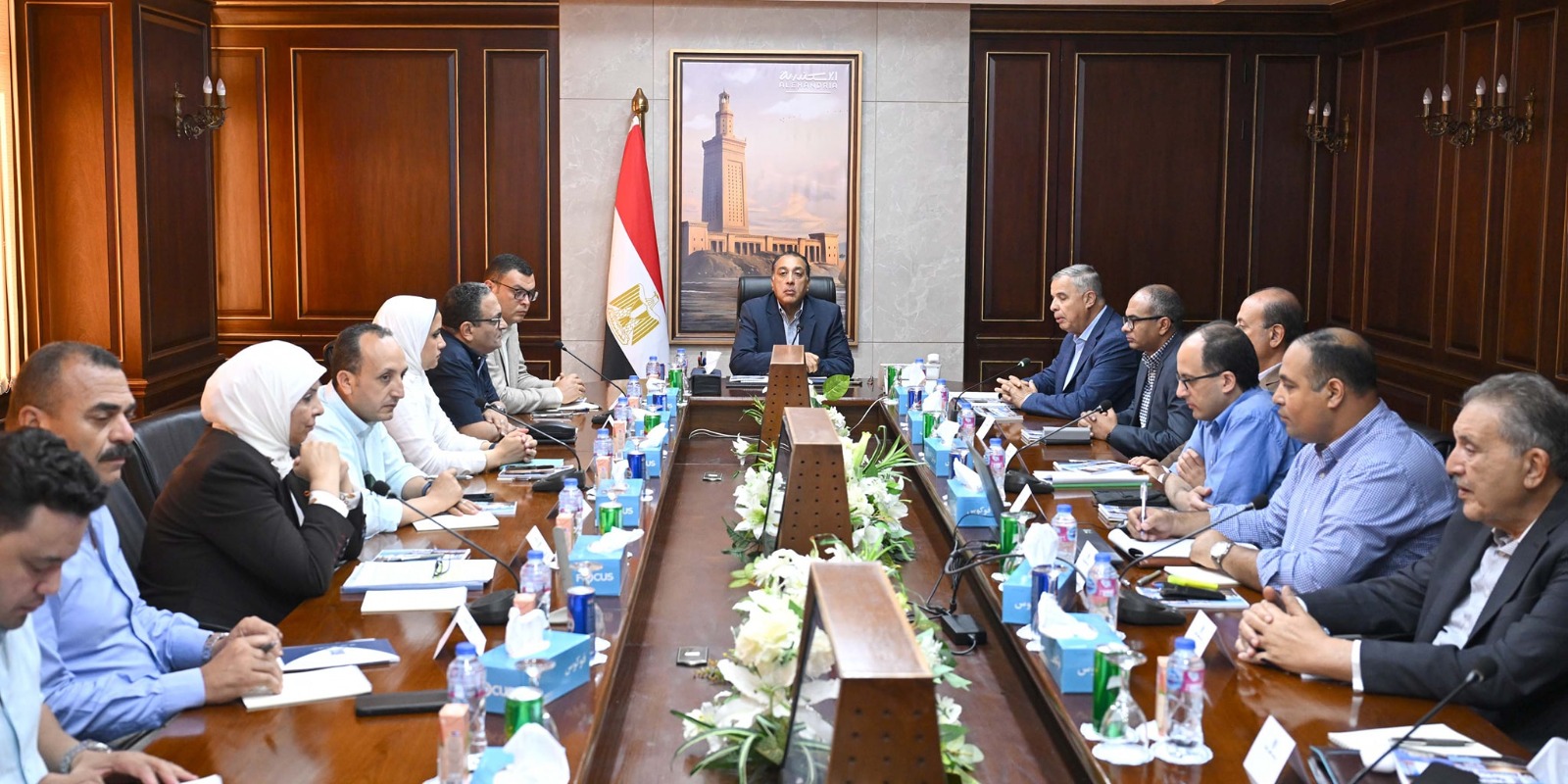
A project for establishing a healthcare network, a joint
initiative between the governorate, an investment consortium, and the
Federation of Egyptian Chambers of Commerce, was presented during the meeting.
Attendees included Housing Minister Sherif El Sherbiny,
Alexandria Governor Ahmed Khaled Hassan Said, Deputy Housing Minister Sayed
Ismail, Deputy Governor Amira Salah Abdel Hakeem, Head of the Central Agency
for Reconstruction Mahmoud Nassar, Head of the General Federation of Egyptian
Chambers of Commerce Ahmed El Wakeel, and federation board member Emad Abdel
Wahab.
Businessman Ahmed Tarek briefed Madbouly on the healthcare
network project, which aims to develop and restructure Alexandria's healthcare
system. He stated it would be the city's first large-scale,
technology-dependent primary healthcare network, comprising 70 smart digital
clinics spread across the city. The project, with investments exceeding one
billion Egyptian pounds ($21 million), seeks to provide comprehensive primary,
preventive, curative, and diagnostic services, and foster medical tourism to
Africa and the region.
Tarek explained that the network would include 70 integrated
primary care units, strategically chosen based on population density. He added
that 35 clinics would be fully funded and operated by an investment consortium
led by the Alexandria Governorate, the Alexandria Chamber of Commerce, and
local investors, ensuring equitable geographical coverage. The remaining 35
clinics would be owned by groups of three to four doctors, enabling over 100 to
150 Egyptian doctors to become partners in the national health transformation.
He noted that the investment consortium would provide backup financing to
ensure continuity.
Tarek outlined the network's main objectives: expanding
access to healthcare across Alexandria through easily accessible smart services,
delivering high medical quality via accredited smart facilities and globally
trained medical teams, and offering services at the lowest cost through
integration with the Universal Health Insurance System. He also highlighted
plans for an AI-powered smart model for bookings, medical diagnosis, and
decision-making support. He stressed the role of the Ministry of Health,
Alexandria Governorate, and the Universal Health Insurance Authority in
providing technical and logistical support, while the Ministry of Communications
would supply necessary AI applications.
Madbouly affirmed his support for such partnerships between
the state, civil society, and the private sector. He approved the proposal,
stating, "A meeting will be held immediately to discuss the executive plan
for this project, in the presence of the Deputy Prime Minister for Human
Development and the Minister of Health and Population." He pledged full
support for the project's success and requested a clear, realistic
implementation plan.
Alexandria Governor Ahmed Khaled Hassan Said said the governorate had already engaged with international technology companies for the project's technical infrastructure. He added that the governorate had initiated institutional and legislative preparations, coordinating with the Universal Health Insurance Authority and committing to implementing its standards. He also underscored the significant role of the private sector in the governorate's healthcare improvement.