
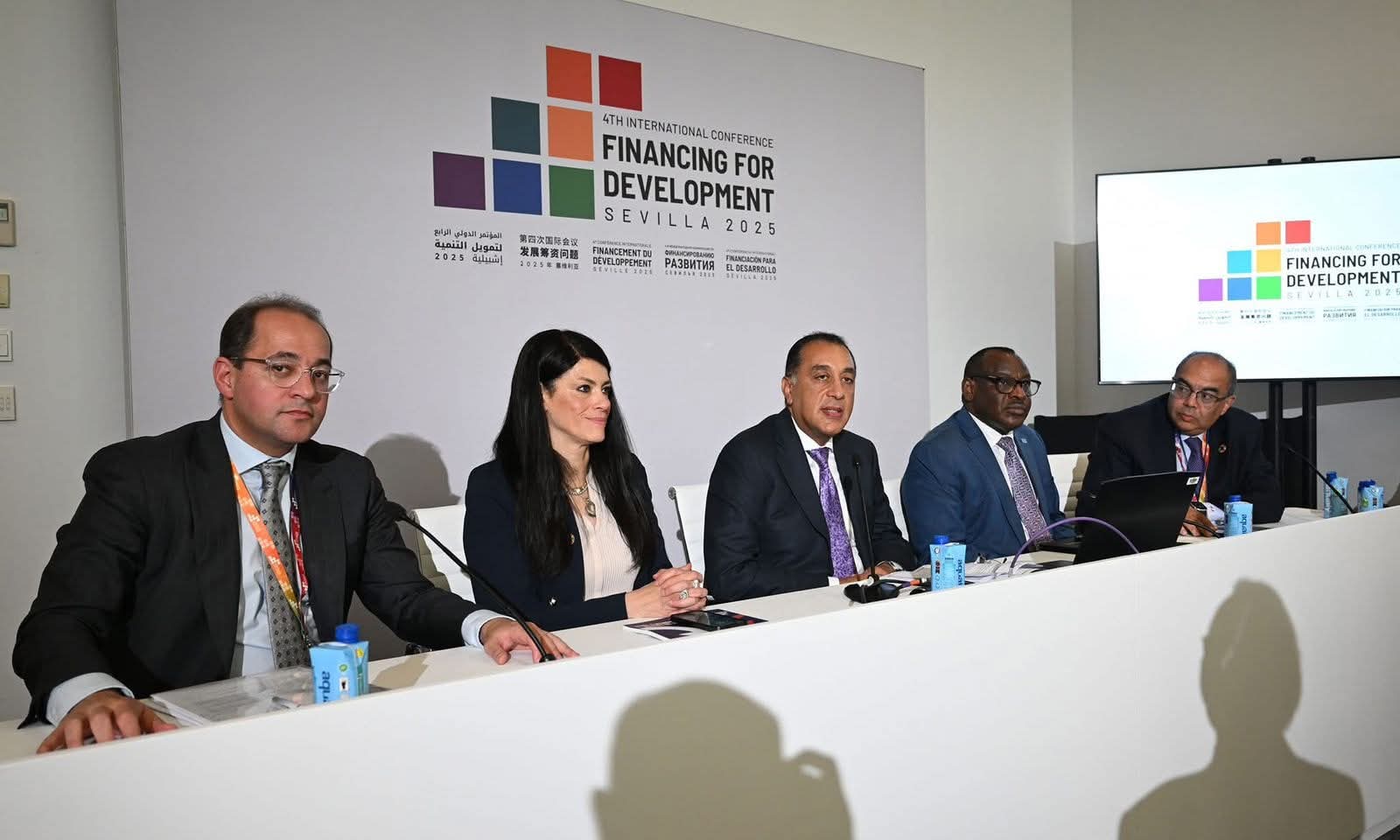
The session, organized by the Ministry of Finance and the United Nations Development Programme (UNDP), also saw the participation of Prime Minister Dr. Moustafa Madbouly and Finance Minister Ahmed Kouchouk.
Al-Mashat underscored that low- and middle-income countries
spent $1.4 trillion on debt service in 2023. Excluding China, this burden was
nearly $1 trillion—double the amount from a decade prior. She warned that
borrowing costs soared in 2023, with these nations facing the highest interest
rates since the global financial crisis. More than 60% of low-income countries
are now in debt distress or at high risk, and without intervention, global
public debt is projected to surpass 100% of global GDP by 2030.
The Minister detailed Egypt's proactive strategy for
sustainable debt management. This includes debt swap programmes with Germany
and Italy, exceeding $900 million, and a groundbreaking agreement with China.
These initiatives have successfully redirected repayment obligations toward
critical sectors like health, education, and climate action, aligning external
financing with national development goals.
She also mentioned the launch of the Egyptian Integrated
National Financing Strategy (E-INFS), a model for mobilizing sustainable
financing to address development gaps and mitigate future financial and debt
risks.
Egypt has also pursued debt-for-investment swaps, notably a
historic agreement with the United Arab Emirates, which aims to boost foreign
direct investment while easing financial burdens. The country has cemented its
leadership in green finance through the issuance of green bonds and is
exploring sustainability-linked and blue finance instruments to diversify
funding sources and better integrate environmental and social sustainability
into its debt portfolio.
Al-Mashat stressed the necessity of a more resilient and
development-focused global financial system. She advocated for a comprehensive
reform agenda that prioritizes innovative, transparent, and equitable
approaches to sovereign debt management. She also called for inclusive
mechanisms for sovereign debt resolution, based on multilateral frameworks, to
address the limitations of current fragmented approaches.
Finally, Al-Mashat urged the adoption of globally accepted principles for responsible lending and borrowing, including automatic payment freezes during crises. She emphasized the need to reduce borrowing costs and risks for developing countries by expanding the use of innovative tools such as SDG-linked bonds.