
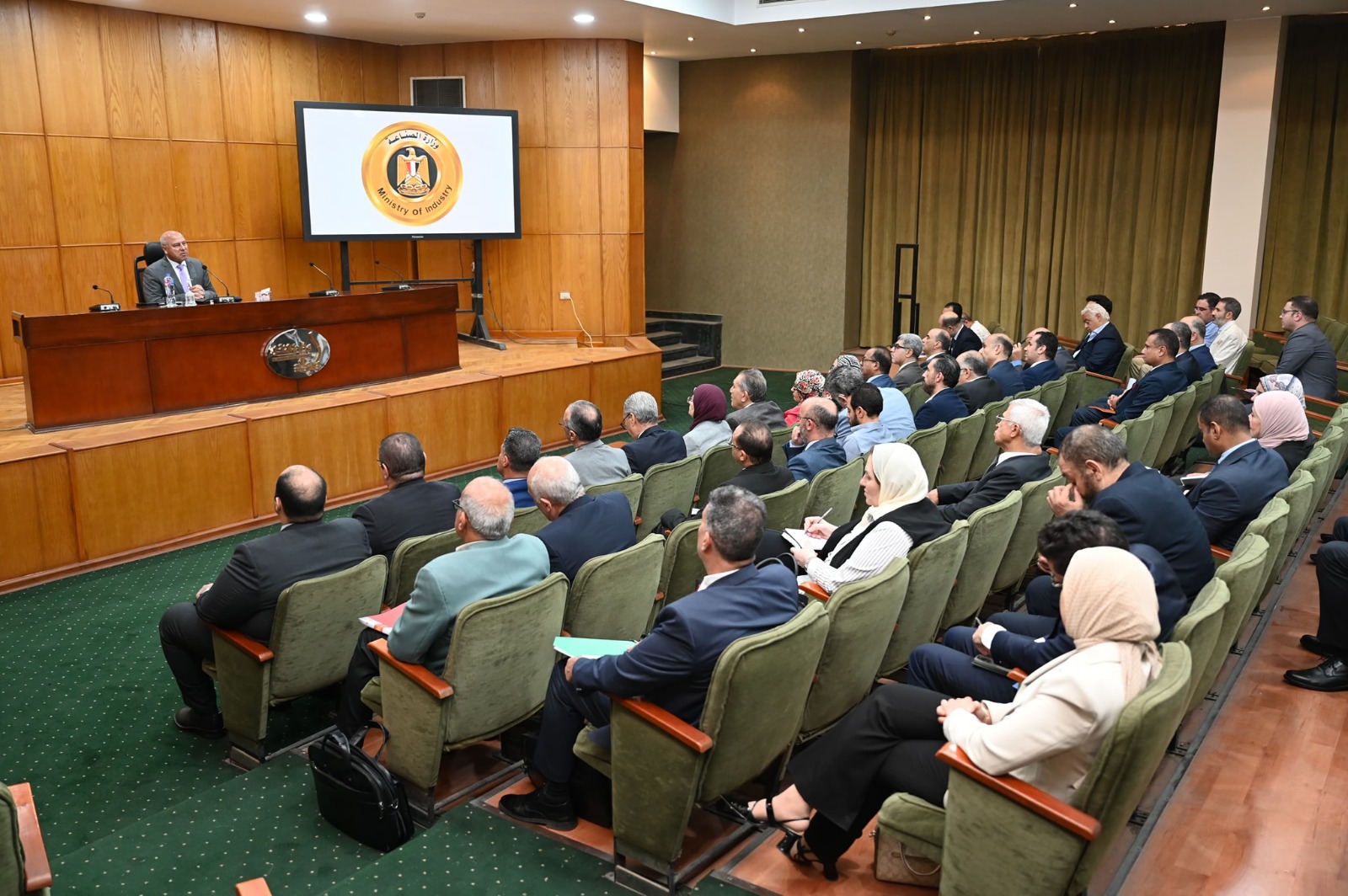
The directive comes after observations of halted production in several factories. El Wazir stressed that meeting domestic cement demand is a "top priority," with any surplus to be exported to bolster the national economy.
The Ministry emphasized its commitment to uninterrupted
production and preventing supply shortages to stabilize markets and ensure
product availability at suitable prices. This includes optimizing all idle
capacities to secure supply chains and protect consumer rights for what is
considered a strategic commodity.
To ensure compliance, the Ministry of Industry will conduct comprehensive
inspections of all cement factories nationwide to verify full operation of
licensed production lines and optimal utilization of capacity.
The ultimatum follows an extensive meeting chaired by El
Wazir with cement manufacturers, which resulted in several key recommendations:
Abolishing the cement production quota system permanently,
allowing factories to operate at full capacity.
Mandating factories to clearly print the maximum selling
price on cement bags for both ex-factory and end-consumer sales, in line with
Ministerial Decision No. 339 of 2009, to ensure transparency and prevent
monopolistic practices.
Providing support to nine partially suspended production
lines by directly addressing their challenges to facilitate their re-operation.
Allowing cement factory owners to export surplus production
at agreed-upon rates, without compromising local market needs.
Additionally, the Ministry of Industry will coordinate with
the Consumer Protection Agency, the Competition Protection and Anti-Monopoly
Agency, and the Internal Trade Agency to regularly monitor the cement market.
This oversight aims to ensure factories, agents, and distributors adhere to
fair prices and to take action against any price manipulation or
anti-competitive practices.
Periodic meetings will also be held with cement manufacturers, involving the Minister of Investment and Foreign Trade and relevant bodies such as the Federation of Egyptian Industries and the General Federation of Chambers of Commerce, to review policies and update market regulation mechanisms, ensuring continued balance and stability.