
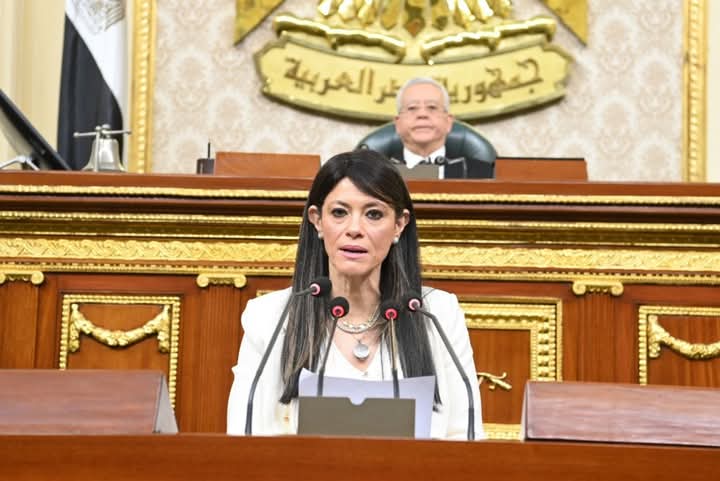
The economy has demonstrated robust performance, lifting the average growth rate for the first nine months of the current fiscal year to approximately 4.2%. This marks a substantial increase from 2.4% during the same period last fiscal year.
This strong showing underscores the economy's sustained
recovery and increasing resilience amidst global uncertainty. The growth is primarily
attributed to the government's ongoing commitment to its reform agenda under
the National Structural Reforms Program. This program is critical for
maintaining macroeconomic stability, enhancing the governance of public
investments, and boosting the economy's competitiveness by strengthening the
private sector's role across various productive sectors.
Growth in Q3 of fiscal year 2024/2025 was driven by notable
expansion in several key sectors: non-petroleum manufacturing continued its
upward trajectory, tourism (represented by restaurants and hotels) showed
strong performance, and communications and information technology. Despite this
overall positive trend, some sectors continued to decline, including the Suez
Canal and the extractive industries.
On the expenditure side, growth was notably supported by net
exports, which contributed approximately 2.7 percentage points to the total
real GDP growth. This positive contribution was fueled by a strong expansion in
goods and services exports, with total exports increasing by 54.4%,
significantly outpacing the 18.7% rise in imports.
Private investment, at constant prices, also accelerated by 24.2%
year-on-year in Q3 of fiscal year 2024/2025. This marked the third consecutive
quarter where private investment outstripped public investment, accounting for
approximately 62.8% of total executed investments (excluding inventory).
However, this private investment growth was insufficient to
offset a sharp decline in public investment, which contracted by 45.6% compared
to the same quarter of the previous year at constant prices. Consequently,
investment's contribution to economic growth was negative, reducing the GDP
growth rate by about 2.44 percentage points. Public investment's share continued
to decline, reaching 37.2%, reflecting the state's efforts to restructure
investment spending, rationalize public investments, and increasingly foster
the private sector's role.
Periodic indicators confirm the continued improvement in
Egypt's economic activity during Q3. The industrial production index (excluding
crude oil and petroleum products) increased by 16.03% in Q3 of fiscal year
2024/2025, a significant rebound from the approximately 4% contraction recorded
in the same period last year. This recovery is attributed to increased
production in several key industries, including: automobiles (93%), ready-made
garments (58%), beverages (34%), paper industry (20%), and textiles (17%).
Despite ongoing global uncertainty, preliminary indicators
remain positive for Egypt's GDP growth in fiscal year 2024/2025. The Egyptian
economy is expected to achieve a growth rate exceeding the target of 4%,
supported by increased private investment, a significant recovery in the
industrial sector, and the strong performance recorded during the first nine
months of the year.
In the ongoing effort to boost productivity and
export-driven growth, key trade-supporting sectors witnessed high growth rates:
tourism (restaurants and hotels): 23%, non-petroleum manufacturing: 16.03%, and
communications and information technology: 14.7%
Other sectors also experienced significant recovery,
including financial intermediation, insurance, electricity, wholesale and
retail trade, and construction, further bolstering growth in this quarter.
Non-petroleum manufacturing continued its recovery for the
fourth consecutive quarter, growing by 16% in Q3 of fiscal year 2024/2025,
overcoming the contraction of approximately 4% in the previous fiscal year.
This sector was the largest contributor to GDP growth during the quarter,
adding 1.9 percentage points to the overall growth rate. This high growth
coincides with efforts to increase investments in the industrial sector and
provide more facilities for industrial activities.
This industrial growth was also linked to a marked
improvement in export performance, with finished goods exports registering a
year-on-year increase of 12.7% in Q3, reinforcing the industrial sector's role
as a driving force for growth. The ready-made garment sector serves as a
prominent example, achieving over 23.7% annual growth during the same period,
benefiting from shifts in global trade patterns, which reflects the ready-made
garment sector's resilience and ability to respond quickly to global demand.
On the other hand, some economic activities continued to
decline in Q3 of fiscal year 2024/2025: Suez Canal activity saw a 23.1% decline
in the quarter, though at a decreasing rate compared to the 51.6% contraction
in the corresponding quarter, which marked the beginning of the crisis due to
reduced ship traffic amidst geopolitical tensions impacting canal revenues to
date.
The extractive industries continued their decline, with both
oil and natural gas sectors experiencing contraction during the quarter.
However, investment in new discoveries and field development is expected to
gain momentum in the coming period, which will support future production
capacity and help mitigate the sector's decline.
On the expenditure side, growth was significantly supported by net exports, which contributed approximately 2.7 percentage points to the total real GDP growth. This positive contribution was driven by a strong expansion in goods and services exports, with total exports increasing by 54.4%, significantly exceeding the 18.7% increase recorded in imports.